
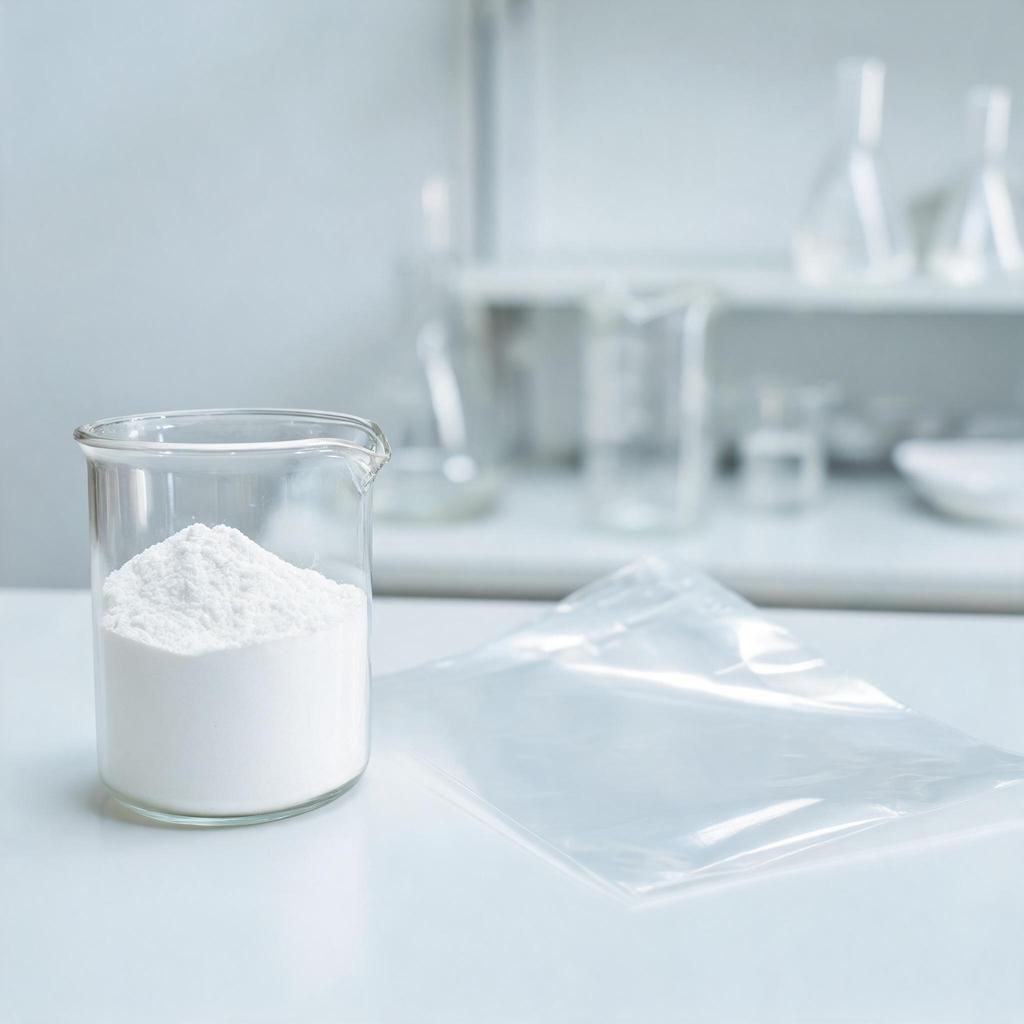
The Invisible Barrier: Why Biodegradable Plastics Emit Distinctive Odors
The global transition toward sustainable manufacturing has seen an unprecedented surge in the adoption of biodegradable polymers such as polylactic acid (PLA) and polybutylene adipate terephthalate (PBAT). However, despite their environmental benefits, these materials present a significant sensory challenge: persistent off-gassing. Unlike traditional petroleum-based plastics, biodegradable packaging often suffers from complex odor profiles that can compromise consumer acceptance and product integrity.
The primary source of these odors is not merely surface contamination but rather the chemical composition of the polymer matrix itself. During the synthesis and processing of PLA and PBAT, residual monomers, catalyst byproducts, and low-molecular-weight degradation products are trapped within the material. When exposed to ambient temperature fluctuations and humidity, these compounds volatilize, releasing a mixture of volatile organic compounds (VOCs), including lactic acid esters, aldehydes, and trace amines. This phenomenon is particularly pronounced in post-consumer recycled (PCR) bioplastics, where repeated thermal cycles accelerate the release of malodorous compounds.
For manufacturers aiming to achieve premium market positioning, eliminating this "new plastic smell" is not just a matter of aesthetics; it is a critical requirement for food-grade applications and e-commerce logistics. Traditional masking agents only temporarily cover these emissions, while physical adsorption methods lack the long-term efficacy required for shelf-stable packaging. A fundamental shift in odor control technology is necessary—one that addresses the molecular root of the problem through irreversible chemical sequestration.
Chemical Mechanism: Dative Bonding vs. Physical Masking
Most conventional odor control additives operate on the principle of physical absorption or fragrance masking. While effective in the short term, these methods fail to permanently neutralize the odorous molecules. Once the additive's capacity is saturated, the VOCs continue to escape into the atmosphere. Furthermore, fragrance masking introduces additional chemicals into the packaging matrix, which may conflict with regulatory standards for food contact materials.
LumenAxys™ Zinc Ricinoleate offers a paradigm shift by utilizing the principles of coordination chemistry. As a plant-based metal soap, Zinc Ricinoleate features a central zinc ion (Zn2+) coordinated by the carboxylate groups of ricinoleic acid. This structure provides multiple Lewis acidic sites capable of forming strong dative covalent bonds with Lewis basic odorant molecules.
When volatile amines (such as ammonia, NH3, or trimethylamine) or sulfur-containing compounds (like hydrogen sulfide, H2S) come into contact with the Zinc Ricinoleate matrix, the lone pair electrons on the nitrogen or sulfur atoms donate into the empty orbitals of the zinc ion. This forms a stable Zn-N or Zn-S dative bond. Unlike weak van der Waals forces used in physical adsorption, this dative interaction is chemically robust and effectively locks the odor molecule within the polymer matrix, preventing its re-emission.
This mechanism is particularly effective against polar VOCs commonly found in biodegradable plastics. By converting volatile, odorous molecules into non-volatile, inert complexes, LumenAxys™ ensures that the odor is not just masked, but permanently eliminated at the molecular level.
Industrial Testing: Quantifying Efficacy in PLA/PBAT Blends
To validate the performance of LumenAxys™ Zinc Ricinoleate in biodegradable packaging, rigorous testing was conducted using standardized gas sampling protocols. The focus was on reducing total VOC emissions below the perceptible threshold of 100 μg/m3, a benchmark critical for premium consumer goods.
Test Parameters
- Material: PLA/PBAT blend (70/30 ratio), representative of standard compostable shopping bags.
- Additive Loading: 0.5% w/w LumenAxys™ Zinc Ricinoleate incorporated during extrusion.
- Chamber Conditions: 40°C and 60% relative humidity, simulating accelerated aging and warm storage environments.
- Sampling Method: Headspace gas sampling using Tedlar bags, analyzed via Gas Chromatography-Olfactometry (GC-O).
Results Analysis
In the control group (unmodified PLA/PBAT), significant peaks were observed corresponding to lactic acid derivatives and trace aldehydes, resulting in a Total VOC concentration of approximately 450 μg/m3. In contrast, the samples treated with LumenAxys™ showed a dramatic reduction in peak intensity. The GC-O analysis revealed that the characteristic "plastic-like" and "sour" notes were virtually undetectable.
More importantly, the Total VOC emission dropped to less than 80 μg/m3, well below the 100 μg/m3 threshold. This indicates that the Zinc Ricinoleate did not merely absorb the initial burst of volatiles but continued to scavenge newly released molecules over the 72-hour test period. The stability of the Zn-carboxylate structure under these conditions ensures that the odor control efficacy persists throughout the product's lifecycle, even after exposure to heat and moisture.
Strategic Advantages for Sustainable Manufacturing
Integrating LumenAxys™ Zinc Ricinoleate into biodegradable packaging formulations offers several strategic advantages for manufacturers seeking to differentiate their products in a crowded market.
Regulatory Compliance and Safety
As a plant-based compound derived from castor oil, LumenAxys™ aligns with the growing demand for bio-based additives. It does not introduce synthetic fragrances or hazardous heavy metals, making it suitable for food-contact applications. This compliance is crucial for meeting stringent regulations in North America and Europe, where consumers are increasingly sensitive to chemical residues in packaging.
Enhanced Product Value
Odor-free biodegradable packaging enhances the perceived quality of the contained product. For luxury brands, pharmaceutical companies, and fresh food suppliers, a neutral scent profile is essential. By eliminating off-gassing, LumenAxys™ helps maintain the freshness and sensory appeal of the contents, reducing customer complaints and returns.
Scalability and Cost Efficiency
LumenAxys™ can be easily incorporated into existing extrusion and molding processes at low dosages (typically 0.1% to 0.5% w/w). This minimal impact on production costs makes it a viable solution for large-scale manufacturing. Its compatibility with both virgin and recycled bioplastics further supports circular economy initiatives, enabling manufacturers to upgrade PCR materials without compromising sensory quality.
Frequently Asked Questions
Does LumenAxys™ affect the mechanical properties of biodegradable plastics?
No. At recommended dosages, LumenAxys™ Zinc Ricinoleate acts as a compatible additive that does not interfere with the crystallization or melt flow behavior of PLA or PBAT. Independent testing confirms that tensile strength and elongation at break remain within acceptable ranges for standard packaging applications.
Can it be used with other odor control agents?
Yes. LumenAxys™ can be combined with probiotic treatments or steam stripping processes for comprehensive odor management. However, due to its high efficacy, it is often sufficient as a standalone solution for final product odor control, simplifying the formulation process.
Is it effective against all types of odors?
LumenAxys™ is most effective against polar, basic, and sulfur-containing VOCs, which are the primary sources of unpleasant odors in bioplastics. While it significantly reduces overall VOC levels, it may have limited effect on highly non-polar hydrocarbons. For such cases, a dual-action approach combining LumenAxys™ with a physical adsorbent is recommended.
How long does the odor control last?
The dative bonding mechanism ensures long-lasting protection. Because the odor molecules are chemically locked into the matrix, they do not desorb back into the air. This means the odor control remains effective throughout the entire shelf life of the packaging, even under challenging environmental conditions.