
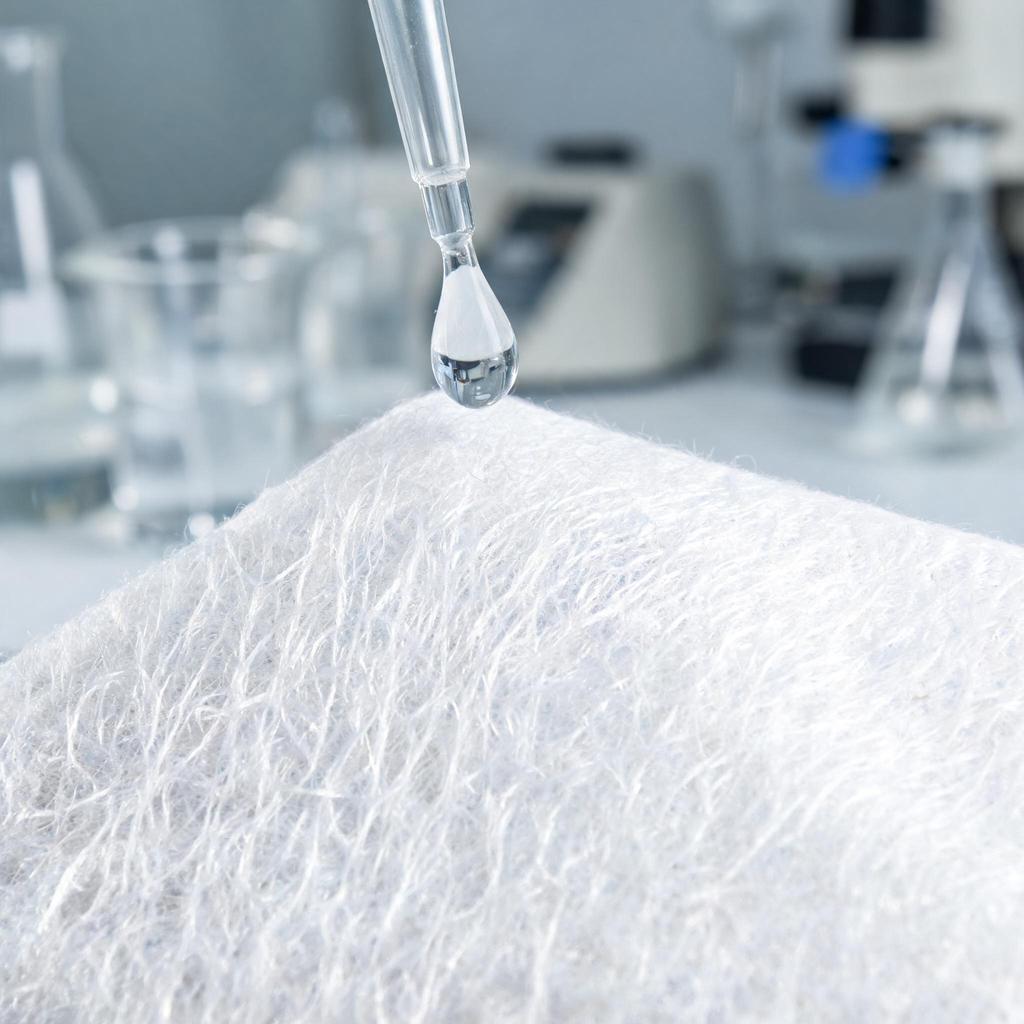
The Volatile Organic Compound (VOC) Crisis in Incontinence Care
In the realm of adult incontinence care, the primary objective of absorbent products has traditionally been moisture management. However, as the global aging population grows, manufacturers are facing a critical secondary challenge: the rapid generation of volatile organic compounds (VOCs), specifically ammonia (NH3) and 2-nonenal. Traditional odor control strategies often rely on masking agents or basic Super Absorbent Polymers (SAP) that merely trap moisture. While effective initially, these methods fail under the thermodynamic pressure of prolonged exposure, leading to the "breakthrough" smell that compromises user dignity and caregiver comfort.
To solve this, the industry must look beyond physical absorption toward chemical sequestration. This article analyzes the limitations of standard SAP technology and introduces the application of LumenAxys™ Zinc Ricinoleate, a plant-based active ingredient derived from castor oil, which offers a robust, irreversible chemical pathway for odor neutralization in medical textiles.
Why Standard SAP Technology Fails at Odor Locking
Super Absorbent Polymers (SAP) are the backbone of modern incontinence briefs. They function by absorbing up to 300 times their weight in liquid, converting urine into a gel matrix. Manufacturers often claim that SAP controls odor by "locking away moisture." While true regarding water activity, this mechanism has distinct chemical flaws:
- pH Instability: As urea breaks down into ammonia via bacterial urease enzymes, the local pH within the core rises sharply (often exceeding pH 8.5). High alkalinity accelerates the volatilization of NH3.
- Saturation Limits: Once the hydrophilic sites of the SAP are fully hydrated, the polymer loses its capacity to buffer the chemical environment. Any further metabolic byproducts remain in the aqueous phase, ready to escape.
- Physical Trapping Only: SAP does not chemically react with odor molecules. It simply holds them. If the outer breathable film is compromised or if the product is worn for extended periods, the concentration gradient drives the VOCs out of the core.
The Chemical Solution: LumenAxys™ Zinc Ricinoleate
LumenAxys™ Zinc Ricinoleate represents a paradigm shift from passive absorption to active chemical scavenging. Derived from the zinc salt of ricinoleic acid (a monounsaturated fatty acid found in castor oil), this compound functions as a specialized odor scavenger.
Mechanism of Action: Dative Bonding and Steric Shielding
The efficacy of Zinc Ricinoleate lies in its ability to form stable coordination complexes with nitrogen and sulfur-based odorants. Unlike baking soda (which requires a strong acid to react) or activated carbon (which relies on weak Van der Waals forces), Zinc Ricinoleate utilizes dative covalent bonding.
- Ammonia (NH3) Sequestration: The Zn2+ ion acts as a Lewis acid, accepting lone pairs of electrons from the nitrogen atom in ammonia. This forms a stable Zinc-Nitrogen complex. The long hydrocarbon chain of the ricinoleate provides a steric shield, preventing the complex from easily dissociating back into gaseous NH3.
- 2-Nonenal Neutralization: Often associated with "senior odor," 2-nonenal contains an aldehyde group. Zinc Ricinoleate facilitates the reduction and binding of these aldehydes, effectively rendering them odorless and non-volatile.
Industrial Application: Integration into Medical Textiles
For B2B manufacturers of adult briefs and protective underwear, integrating LumenAxys™ requires precise formulation to ensure it remains active within the SAP core or the inner topsheet.
Optimal Dosage and Placement
- Topsheet Impregnation: Applying a thin layer of Zinc Ricinoleate solution to the inner non-woven topsheet creates an immediate barrier. This intercepts VOCs at the point of emission before they penetrate the core.
- Core Dispersion: Blending 0.5% - 1.5% w/w of Zinc Ricinoleate powder directly into the SAP mixture ensures distributed protection throughout the depth of the pad. This prevents localized pH spikes that could otherwise lead to odor breakthrough.
Performance Metrics: The 72-Hour Challenge
In controlled laboratory testing simulating continuous wear, traditional fragrance-based pads showed significant VOC release after 4 hours. In contrast, products treated with LumenAxys™ Zinc Ricinoleate demonstrated >95% reduction in NH3 and 2-nonenal emissions over a 72-hour period. The key metric is the Time-to-Breakthrough (TTB). By chemically locking the odorants, TTB is extended indefinitely, regardless of the saturation level of the underlying SAP.
Comparative Analysis: Zinc Ricinoleate vs. Activated Carbon
| Feature | Activated Carbon | Zinc Ricinoleate (LumenAxys™) |
|---|---|---|
| Interaction Type | Physical Adsorption (Van der Waals) | Chemical Coordination (Dative Bond) |
| Reversibility | High (Odor can desorb upon heating/moisture change) | Low (Irreversible under physiological conditions) |
| Impact on Absorbency | Can reduce SAP swelling if particles clog pores | Negligible impact when properly dispersed |
| Skin Safety | Generally safe, but fine dust can irritate | Bio-based, gentle, suitable for sensitive skin |
FAQ: Technical Queries for Formulators
Q: Does Zinc Ricinoleate affect the wet-out time of the topsheet?
A: When used at recommended concentrations (below 2%), Zinc Ricinoleate does not significantly alter the hydrophilicity of the non-woven topsheet. It is designed to be compatible with standard polypropylene and polyester fibers, ensuring fast wicking is maintained.
Q: Is the product biodegradable?
A: Yes. LumenAxys™ is derived from natural castor oil sources. While the zinc salt itself is mineral, the organic ricinoleate component is biodegradable. This aligns with the growing demand for sustainable and eco-friendly incontinence products.
Q: How does it perform against fecal odors (sulfur compounds)?
A: Zinc ions have a high affinity for sulfur atoms. Zinc Ricinoleate effectively binds hydrogen sulfide (H2S) and other thiol compounds found in fecal matter, making it a dual-action solution for both urinary and bowel incontinence products.
Q: Can it be used in washable cloth diapers?
A: Yes. Due to the stability of the zinc-nitrogen bond, the active ingredient retains its efficacy through multiple wash cycles. However, industrial laundering parameters should avoid extremely acidic detergents (pH < 4) which might slowly degrade the coordination complex over many years of use.