
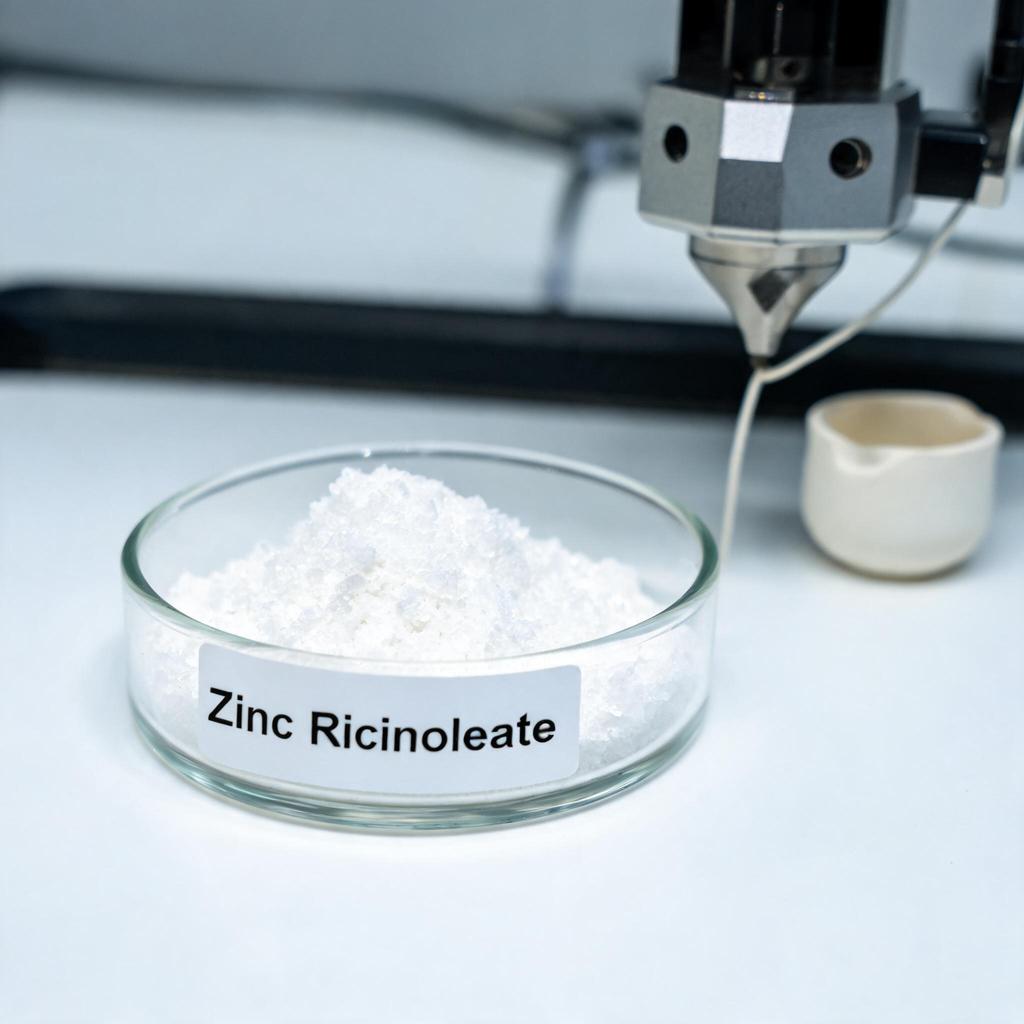
The Hidden Hazard of Polymer Thermal Breakdown
In modern manufacturing, the transition from traditional wax models to 3D printed thermoplastic models has revolutionized investment casting. However, this shift introduces a critical environmental and occupational health challenge: the uncontrolled release of Volatile Organic Compounds (VOCs) during the thermal elimination (burnout) phase. As polymers like Polylactide (PLA), Acrylonitrile Butadiene Styrene (ABS), and Polyamide (PA) are subjected to high temperatures within the mold cavity, their molecular chains undergo scission, releasing a complex volatilome.
Characterizing the Volatilome via TGA-FTIR
Recent chromatographic screenings using Coupled Thermogravimetry with Infrared Spectroscopy (TGA-FTIR) have identified specific toxic byproducts. For instance, ABS filaments release significant quantities of styrene monomers, while polyamides emit nitrogenous volatiles such as butanol and various amines. In rubber vulcanization processes, heating samples to 180°C triggers the release of sulfur-containing compounds. These emissions pose risks to respiratory health and require robust mitigation strategies that go beyond simple ventilation.
Why Physical Adsorption Fails at Elevated Temperatures
Traditional odor control methods often rely on physical adsorption media, such as activated carbon. However, physical adsorption is a reversible, exothermic process driven by weak van der Waals forces. In high-temperature environments like foundry burnout ovens or vulcanization presses, the thermal energy easily overcomes these weak forces, causing the adsorbed VOCs to desorb back into the atmosphere. This re-release phenomenon renders physical filters ineffective and potentially dangerous.
LumenAxys™ Solution: The Power of Irreversible Coordination
To address this challenge, LumenAxys™ Plant-Based Zinc Ricinoleate offers a fundamentally different approach rooted in coordination chemistry. Unlike physical adsorption, Zinc Ricinoleate forms irreversible coordination bonds with the specific functional groups present in thermal degradation byproducts.
Mechanism of Action
The active center of the molecule is the zinc ion (Zn2+), which acts as a potent Lewis acid. When exposed to the VOCs released during polymer breakdown—such as styrene (containing a reactive double bond) or amines (containing a lone pair of electrons on Nitrogen)—the zinc center coordinates with these molecules.
- Styrene Sequestration: The zinc ion interacts with the pi-electrons of the vinyl group in styrene, effectively locking it into a stable complex.
- Amine Neutralization: For nitrogenous volatiles from polyamides, the zinc atom coordinates directly with the nitrogen lone pair, forming a stable tetrahedral complex that prevents gas-phase diffusion.
- Sulfide Trapping: In rubber processing scenarios, the zinc center captures hydrogen sulfide and mercaptans via strong metal-sulfur coordination bonds.
Industrial Validation: Quantitative Testing Protocols
To validate the efficacy of LumenAxys™, rigorous laboratory protocols are employed. Using Headspace Gas Chromatography-Mass Spectrometry (HS/GC-MS), samples of polymer residues are heated (e.g., to 180°C for 10 minutes). The limit of quantification for these semi-quantitative profiles is approximately 100 ng of VOCs per gram of polymer. Results consistently demonstrate that formulations containing LumenAxys™ Zinc Ricinoleate show a near-total absence of target peaks (styrene, ethylbenzene, amines) compared to control samples.
Application Scenarios: From 3D Printing to Investment Casting
In the context of investment casting, 3D printed models (made of HIPS, PLA, or PA12) are placed in ceramic molds. During the firing process, these models are thermally decomposed. Integrating LumenAxys™ additives directly into the polymer matrix or applying it as a coating ensures that the toxic gases are neutralized at the source, preventing the accumulation of noxious fumes in the foundry environment.
Broader Impact on Rubber and Plastic Manufacturing
Beyond casting, this technology applies to EVA foams and synthetic leather finishing, where thermal processing releases similar nitrogen-sulfur volatiles. By replacing traditional zinc salts with plant-based ricinoleates, manufacturers achieve superior odor locking without compromising the mechanical integrity of the final product.
Frequently Asked Questions
Q: What specific VOCs does LumenAxys™ target?
A: It specifically targets hazardous volatiles released during polymer thermal breakdown, including styrene, butanol, cyclohexanone, ethylbenzene, and various amines and sulfides.
Q: How does it differ from activated carbon filters?
A: Activated carbon relies on reversible physical adsorption, which fails at high temperatures due to thermal desorption. LumenAxys™ Zinc Ricinoleate forms irreversible chemical coordination bonds, permanently trapping the molecules regardless of heat stress.
Q: Is the product compatible with 3D printing filaments?
A: Yes. It can be compounded directly into thermoplastic filaments (like PLA or ABS) or applied as a post-processing treatment to neutralize emissions during the mold burnout phase.
Q: What is the detection limit in standard HS/GC-MS testing?
A: In standard thermal degradation tests (heating to 180°C), the limit of quantification is typically around 100 ng of VOCs per gram of polymer, allowing for precise measurement of emission reduction.