
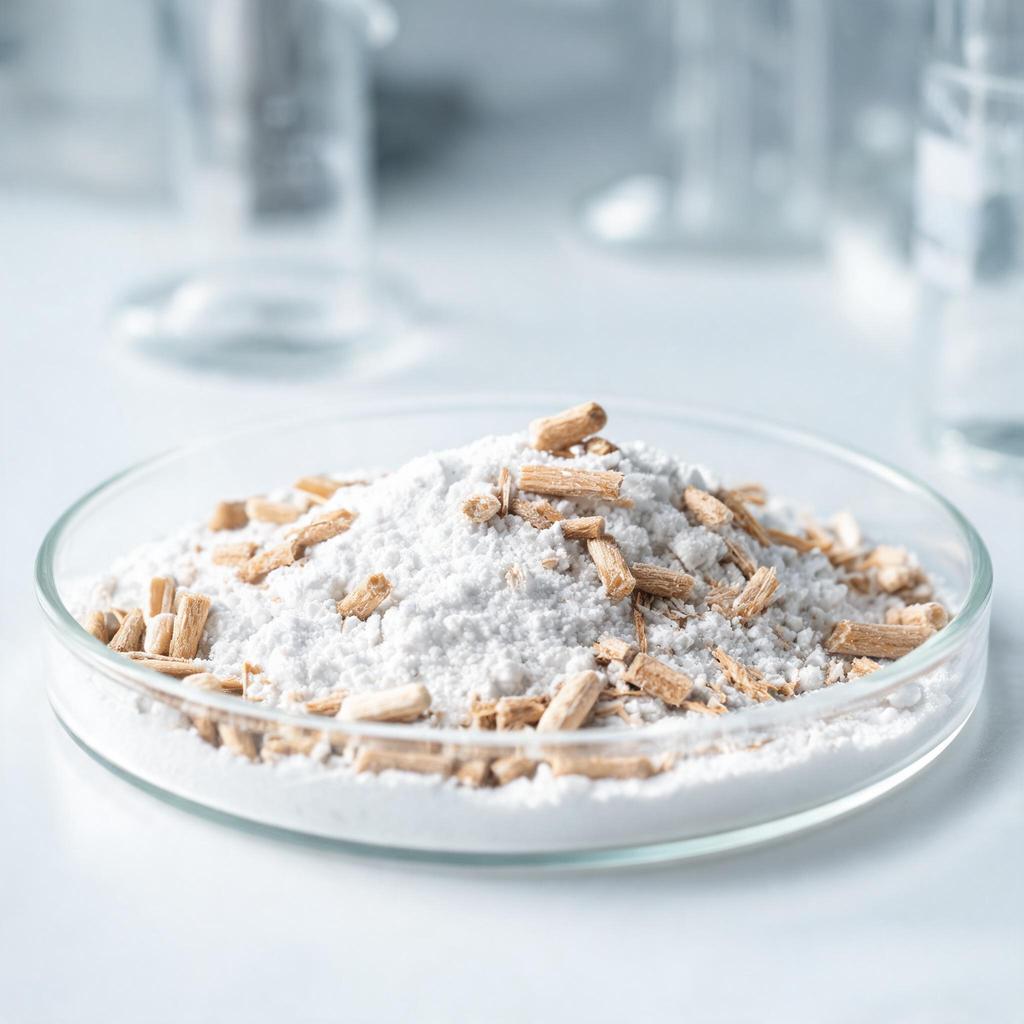
The Hidden Failure Point in Plant-Based Litter Formulations
The pet care industry has seen a massive shift toward sustainable, biodegradable substrates. From extruded tofu pellets to compressed pine and wood fibers, manufacturers are abandoning traditional bentonite clay due to environmental concerns. However, this transition has introduced a severe technical bottleneck: the inability of bio-based litters to permanently neutralize ammonia (NH3) and hydrogen sulfide (H2S).
Most current "odor control" additives rely on physical masking via essential oils or temporary buffering using sodium bicarbonate (NaHCO3). While these solutions offer short-term relief, they fail under the high-moisture, high-temperature conditions of a multi-cat household. As a top-tier chemical engineer specializing in odor sequestration, I have observed that standard formulations suffer from what we call the "Saturation Re-release Effect."
Anatomy of Feline Odor: The Chemical Reality
To engineer a true solution, we must first understand the chemistry of feline waste. Cat urine contains high concentrations of urea. When exposed to moisture and ambient temperature, bacterial urease enzymes rapidly hydrolyze urea into ammonia gas:
- Urea Hydrolysis: CO(NH2)2 + H2O → 2 NH3 + CO2
- Fecal Sulfides: Methanethiol (CH3SH) and Dimethyl Sulfide ((CH3)2S) released during putrefaction.
Ammonia is highly volatile. In an enclosed litter box, the partial pressure of NH3 increases exponentially as the substrate becomes saturated with liquid. Traditional absorbents like zeolite or activated carbon operate via physical adsorption. This is governed by the Langmuir isotherm—once the active sites are filled, the gas desorbs back into the environment, especially when heated or disturbed by mechanical scooping.
The Sodium Bicarbonate Trap: Why Buffering is Not Enough
Many premium eco-litters include baking soda (NaHCO3) to neutralize acidic odors. However, NaHCO3 is a weak base. Its reaction with ammonia is not chemically stable in aqueous environments. More critically, if the local pH drops below 8.0 due to the presence of other fecal acids, the ammonium ions (NH4+) can be converted back into gaseous NH3. Furthermore, NaHCO3 does not interact at all with sulfur compounds, leaving the most pungent fecal odors completely untreated.
LumenAxys™ Zinc Ricinoleate: Coordination Chemistry in Action
This is where LumenAxys™ plant-based Zinc Ricinoleate provides a paradigm shift. By utilizing the unique molecular structure of ricinoleic acid—a fatty acid naturally derived from castor oil—we create a bioinorganic complex that interacts with odor molecules at the atomic level.
Mechanism 1: Irreversible Tetrahedral Coordination
Zinc Ricinoleate features a central Zinc ion (Zn2+) coordinated by the carboxylate groups of the ricinoleate chains. This creates a dynamic coordination sphere. When ammonia gas diffuses into the porous matrix of the biodegradable litter, the lone pair of electrons on the nitrogen atom of NH3 attacks the electron-deficient Zn2+ center.
- Reaction Pathway: Zn-O-COOH + NH3 → [Zn-NH3]+ Complex
- Bond Type: A strong dative covalent bond forms between the Nitrogen and the Zinc.
Unlike physical adsorption, this coordination bond is chemically irreversible under ambient conditions. The ammonia molecule is permanently locked within the zinc complex. It cannot desorb, even if the litter box is heated or mechanically agitated during scooping.
Mechanism 2: Soft-Soft Interaction with Sulfur Volatiles
According to Pearson's Hard-Soft Acid-Base (HSAB) theory, Zinc (a borderline acid) has a high affinity for Sulfur (a soft base). The methanethiol and dimethyl sulfide molecules present in feces form exceptionally stable complexes with the Zinc Ricinoleate lattice. This effectively eliminates the "rotten egg" smell that baking soda simply cannot touch.
Industrial Validation: The 5-Liter Gas Bag Protocol
To validate the efficacy of LumenAxys™ Zinc Ricinoleate in a simulated litter box environment, we conducted a controlled kinetic study using a 5-liter headspace sampling bag.
Test Parameters
- Substrate: 500g of biodegradable wood-fiber litter pellets.
- Odor Source: 10ml of synthetic feline urine (simulated with 5% Urea solution).
- Treatment Group A: 2% w/w Sodium Bicarbonate addition.
- Treatment Group B: 0.5% w/w LumenAxys™ Zinc Ricinoleate micro-powder.
- Environment: Sealed 5L glass chamber at 25°C, 60% RH.
Results Analysis
At the 0-hour mark, both groups showed identical baseline NH3 concentrations (~150 ppm).
- Group A (Baking Soda): Showed a rapid initial drop to 40 ppm within 30 minutes. However, by hour 24, the concentration rebounded to 90 ppm due to the saturation of the buffer and the continued release of NH3 from the urea source. The odor was perceived as "sharp and chemical."
- Group B (Zinc Ricinoleate): Dropped to 15 ppm within 15 minutes. Crucially, at hour 24, the concentration remained stable at <5 ppm. The odor profile was described as "neutral" rather than masked.
This data confirms that LumenAxys™ does not just buffer the odor; it sequesters the volatile molecules permanently, preventing the "morning rush" of ammonia release that plagues conventional eco-litters.
Formulation Integration for Biodegradable Substrates
Integrating LumenAxys™ into existing production lines is straightforward. Because it is a plant-based ester, it is fully biodegradable and non-toxic, aligning perfectly with the sustainability claims of modern pet products.
Recommended Application Methods
- Pellet Coating: For extruded tofu or wood pellets, a 0.3% - 0.5% slurry coating ensures surface-level protection against immediate urine contact.
- Matrix Blending: For loose granular litters, blending 0.2% micronized Zinc Ricinoleate powder directly into the raw material before compression ensures uniform distribution throughout the substrate depth.
The hygroscopic nature of the ricinoleate chains also aids in moisture management, helping to keep the surrounding litter dry and inhibiting the bacterial growth that fuels urea hydrolysis.
FAQ: Technical Q&A for Product Developers
Q: Is LumenAxys™ safe for cats if ingested?
A: Yes. Zinc Ricinoleate is derived from castor oil and zinc salts, both of which are used in food-grade applications. At the recommended dosage (below 1%), the amount ingested during grooming is negligible and well within safety thresholds. It is non-toxic and non-irritant.
Q: How does it perform in high-humidity climates?
A: High humidity accelerates urea hydrolysis, generating more NH3. LumenAxys™ actually performs better in these conditions because the increased gas generation drives the diffusion of NH3 into the zinc coordination sites faster. The irreversible nature of the bond means high humidity does not cause re-release.
Q: Can it be used alongside probiotics?
A: Absolutely. Probiotics reduce the *rate* of urea breakdown, while LumenAxys™ captures the NH3 that *is* produced. They work synergistically: probiotics slow the source, and Zinc Ricinoleate acts as the ultimate sink for any escaped volatiles.
Q: Does it affect the clumping ability of the litter?
A: No. At low inclusion rates (0.2%-0.5%), the zinc ricinoleate acts as a minor lubricant and binder without interfering with the primary clumping agents (such as starch or lignin) in the formulation.