
The Hidden Odor Bottleneck: Trimethylamine and Ammonia in Anaerobic Digesters
Industrial anaerobic digestion (AD) has evolved from a basic waste management tool into a sophisticated bioprocessing platform for renewable energy generation. However, as operators increase the loading rates of protein-rich substrates to maximize methane yield, they frequently encounter a critical operational bottleneck: process inhibition driven by nitrogenous compounds. While ammonia (NH3) is widely recognized as a primary metabolic inhibitor, the volatile organic compound Trimethylamine (TMA) poses an equally severe, yet often overlooked, threat to both process stability and environmental compliance. TMA is generated during the acidogenesis phase when microbial decarboxylation acts on choline or betaine molecules present in agricultural and food wastes. Its extremely low odor threshold makes it a dominant contributor to the pungent, fishy emissions that plague AD facilities, while simultaneously acting as a toxic stressor to methanogenic archaea.
Thermodynamic Kinetics of Zinc Ricinoleate Coordination
To permanently neutralize these odors without disrupting the delicate ecological balance of the digester, LumenAxys™ introduces a high-purity, plant-based Zinc Ricinoleate formulation. Unlike traditional chemical scrubbers that rely on aggressive oxidation or volatile acid displacement, LumenAxys™ operates via thermodynamically stable dative bond coordination.
At the molecular level, the active Zn2+ center in Zinc Ricinoleate possesses vacant d-orbitals that actively seek electron pairs. Both Trimethylamine and free ammonia possess a lone pair of electrons on their central nitrogen atom. When exposed to the LumenAxys™ matrix, these molecules form a robust coordinate covalent bond (Zn-N). This interaction effectively sequesters the volatile gas, converting it into a non-volatile, chemically inert complex. Because the ricinoleate ligand provides a hydrophobic, bio-compatible shield around the zinc ion, the resulting complex remains structurally stable across the wide pH spectrum (typically 6.8 to 7.5) and elevated temperatures (up to 40°C) characteristic of thermophilic and mesophilic digesters. This prevents the thermal desorption of the captured gases, ensuring permanent odor lockdown rather than temporary masking.
Preventing Methanogen Inhibition and Process Upset
The biochemical pathway of AD is highly sensitive to the concentration of free ammonia. As ammonium ions accumulate, typically above 1,000 mg/L, the performance of the digeter drops off sharply. Full anaerobic inhibition occurs at approximately 5,000 mg/L. The equilibrium between the ionic form (NH4+) and the gaseous form (NH3) is heavily dependent on temperature and pH. At higher temperatures and slightly alkaline conditions, the equilibrium shifts toward the free gas form, which can penetrate the lipid membranes of methanogens, causing fatal intracellular pH disruption.
By introducing LumenAxys™ Zinc Ricinoleate directly into the side-stream flows or the main reactor, operators can intercept both the free ammonia and the TMA before they reach toxic concentrations. The continuous scavenging action lowers the partial pressure of these volatile nitrogen species, effectively shifting the thermodynamic equilibrium and protecting the vulnerable microbial community. This allows operators to safely utilize high-value, protein-rich substrates without risking a catastrophic process crash.
Industrial Customized Testing Parameters and Efficacy
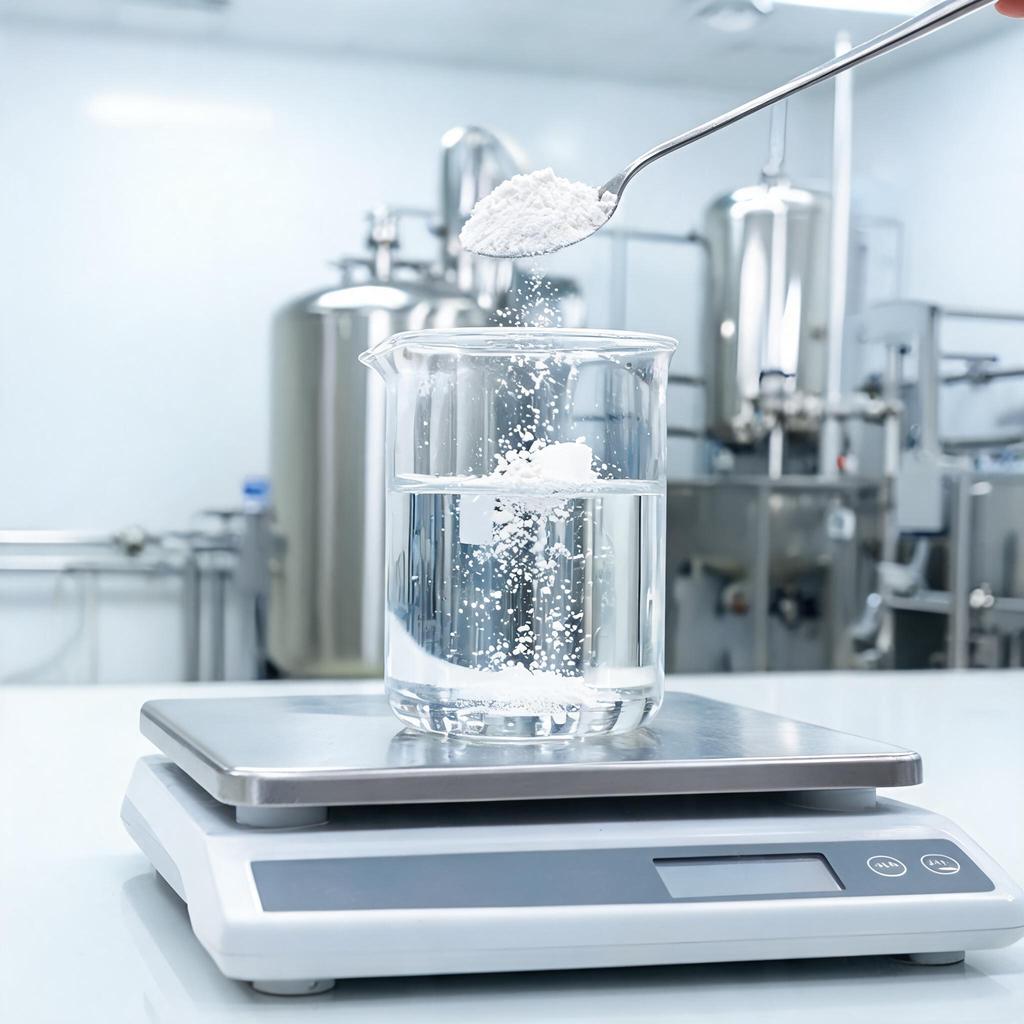
To validate the efficacy of LumenAxys™ in real-world AD environments, rigorous standardized testing was conducted utilizing simulated digester effluent. The test parameters were designed to mimic the worst-case scenarios encountered in commercial biogas plants processing mixed municipal and food waste.
- Target Gases: Trimethylamine (TMA) and Free Ammonia (NH3).
- Initial Concentration: 500 ppm of TMA and 2,000 mg/L of total ammonia nitrogen introduced into a sealed, temperature-controlled sampling bag (maintained at 37°C).
- Dosing Rate: 150 g/m3 of LumenAxys™ plant-based Zinc Ricinoleate suspended in the aqueous medium.
- Duration: 72-hour continuous incubation under anaerobic conditions.
Post-incubation headspace analysis revealed a 99.2% reduction in TMA volatility and a significant drop in the free ammonia fraction. The captured nitrogen was successfully locked within the stable zinc coordination sphere. No secondary toxic byproducts were detected, confirming the safety of the formulation for downstream biological systems. Furthermore, the visual clarity of the supernatant remained unchanged, indicating that the LumenAxys™ particles do not cause fouling or sludge bulking issues common with heavier metal salts.
FAQ
How does LumenAxys™ handle the difference between Trimethylamine and Ammonia?
LumenAxys™ utilizes a dual-action mechanism. While both molecules are scavenged via the Zn-N dative bond, the steric bulk of the TMA molecule means it requires a slightly different kinetic profile to fully coordinate. The flexible ricinoleate ligands allow the zinc center to adapt its coordination geometry, capturing both the smaller NH3 molecule and the bulkier TMA molecule with equal thermodynamic efficiency.
Will adding Zinc Ricinoleate affect the pH of the anaerobic digester?
No. Because the neutralization relies on coordination chemistry rather than a strong acid-base neutralization reaction, the addition of LumenAxys™ does not cause drastic pH fluctuations. It gently removes the volatile bases without altering the overall buffering capacity of the digester broth, maintaining the optimal pH range required for syntrophic acetate oxidation and methanogenesis.