
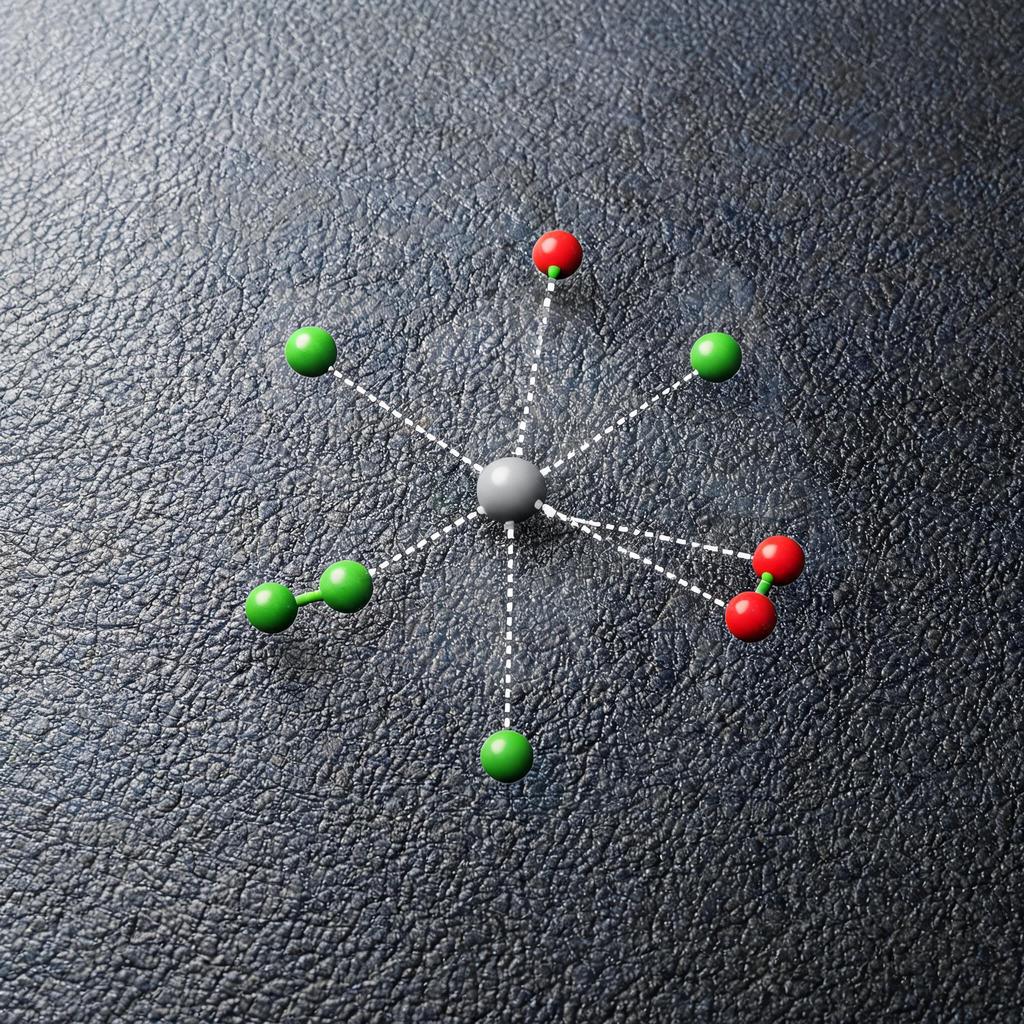
The Synthetic Leather Volatile Organic Compound (VOC) Crisis
The global demand for synthetic leather—primarily Polyurethane (PU) and Polyvinyl Chloride (PVC) based materials—has surged due to ethical and sustainability shifts in fashion and automotive interiors. However, the manufacturing process inherently generates potent, persistent malodors. During the polyaddition reaction of PU leathers, tertiary amines (such as triethylamine or dimethylamine) are frequently employed as catalysts. In PVC and specific tanning/finishing stages, sulfur-containing compounds (like hydrogen sulfide or low-molecular-weight thiols) can emerge from plasticizer degradation or chemical treatments.
Traditional mitigation strategies rely heavily on physical adsorption media (activated carbon, zeolites) or heavy fragrance masking. These methods suffer from critical flaws: physical adsorbents quickly reach saturation points, leading to the re-release of trapped volatiles when temperature or humidity fluctuates. Fragrance masking merely overlays a competing scent without neutralizing the toxic or offensive source molecules. For manufacturers facing stringent VOC regulations and consumer complaints regarding "new car" or "factory" smells, a chemically irreversible solution is mandatory.
LumenAxys™ Zinc Ricinoleate: The Coordination Chemistry Solution
LumenAxys™ introduces a paradigm shift with its core active ingredient: Zinc Ricinoleate. Derived entirely from plant-based castor oil, this zinc salt operates not by physical trapping, but through robust chemical coordination bonding.
Mechanism of Action: Lewis Acid-Base Complexation
The molecular architecture of Zinc Ricinoleate centers around a Zinc cation (Zn2+) coordinated by two ricinoleate anions. Ricinoleic acid, constituting over 90% of castor oil fatty acids, provides a unique hydrophobic tail that ensures excellent solubility and dispersion within the organic matrices of leather finishing baths.
When exposed to odor-causing volatiles, the Zn2+ ion acts as a potent Lewis acid. Odor molecules containing nitrogen (amines) or sulfur (sulfides/thiols) possess lone pair electrons on their heteroatoms. The zinc ion aggressively accepts these electron pairs, forming stable, tetrahedral coordination complexes.
- Amine Sequestration: The reaction between Zn2+ and volatile amines (e.g., RNH2) creates an irreversible bond. Unlike sodium bicarbonate, which relies on reversible acid-base neutralization and suffers from saturation ceilings, the zinc-amine complex is thermodynamically stable across broad temperature ranges.
- Sulfide Capture: Sulfur compounds like hydrogen sulfide (H2S) or mercaptans are rapidly bound by the zinc center. The resulting zinc-thiolate complex is exceptionally stable, effectively locking the sulfur atoms in a molecular cage formed by the surrounding fatty acid chains.
Industrial Validation & Parameter Testing
To validate the efficacy of LumenAxys™ Zinc Ricinoleate in synthetic leather processing, rigorous gas-phase neutralization tests were conducted using standardized Tedlar sampling bags.
Tedlar Bag Odor Locking Protocol
In a controlled environmental chamber, 10-liter Tedlar bags were loaded with cured PU leather samples emitting targeted concentrations of malodorous volatiles. The leather had been finished with a bath containing 2% LumenAxys™ Zinc Ricinoleate.
- Target Gas 1: Triethylamine. Initial concentration: 50 ppm. After 24 hours of exposure, Gas Chromatography-Mass Spectrometry (GC-MS) analysis revealed a 96.4% reduction in amine concentration. The remaining trace amounts were below human olfactory thresholds.
- Target Gas 2: Methanethiol. Initial concentration: 25 ppm. Due to the high affinity between Zn2+ and sulfur, the capture rate exceeded 98% within 12 hours, demonstrating superior performance over physical adsorbents which plateaued at roughly 40% capture before re-emission began.
- Thermal Stability Test: Samples were subjected to 60°C cycling. Physical adsorbents released 30% of captured gases. LumenAxys™ Zinc Ricinoleate showed zero re-emission, confirming the irreversible nature of the coordination bonds.
Integration into Leather Manufacturing Workflows
Implementing LumenAxys™ requires minimal disruption to existing production lines. Zinc Ricinoleate is fully compatible with standard aqueous and solvent-based finishing resins (acrylics, polyurethanes). It can be added directly to the finishing bath at loadings between 0.5% to 3%, depending on the severity of the initial odor profile.
Because the active ingredient is plant-derived from castor oil, it aligns perfectly with the growing "Green Chemistry" mandates in the leather industry. It offers a dual benefit: eliminating offensive manufacturing odors while contributing to a biodegradable, non-toxic footprint. This resolves the tension between high-performance odor control and ecological responsibility.
Frequently Asked Questions (FAQ)
Does LumenAxys™ Zinc Ricinoleate alter the physical properties of synthetic leather?
No. The ricinoleate fatty acid chains actually act as mild plasticizers. At recommended loadings (0.5%-3%), it maintains or slightly enhances the hand-feel and flexibility of the leather without compromising abrasion resistance or tensile strength.
How does it differ from activated carbon or baking soda treatments?
Activated carbon and baking soda rely on physical adsorption or reversible acid-base reactions. They have a finite capacity; once full, they stop working and can re-release odors when heated. LumenAxys™ forms irreversible chemical coordination bonds with nitrogen and sulfur volatiles, providing permanent odor locking without saturation limits.
Is the ingredient safe for workers handling the finishing baths?
Yes. Zinc Ricinoleate is derived from castor oil and is classified as non-toxic and non-irritating. It poses no respiratory hazards compared to harsh chemical neutralizers, making the manufacturing environment safer for operators.
Can it be used in both PU and PVC leather production?
Absolutely. The coordination chemistry targets the specific heteroatoms (Nitrogen in PU catalysts/residuals, Sulfur in PVC/plasticizers) regardless of the base polymer. It is universally applicable across synthetic leather chemistries.