
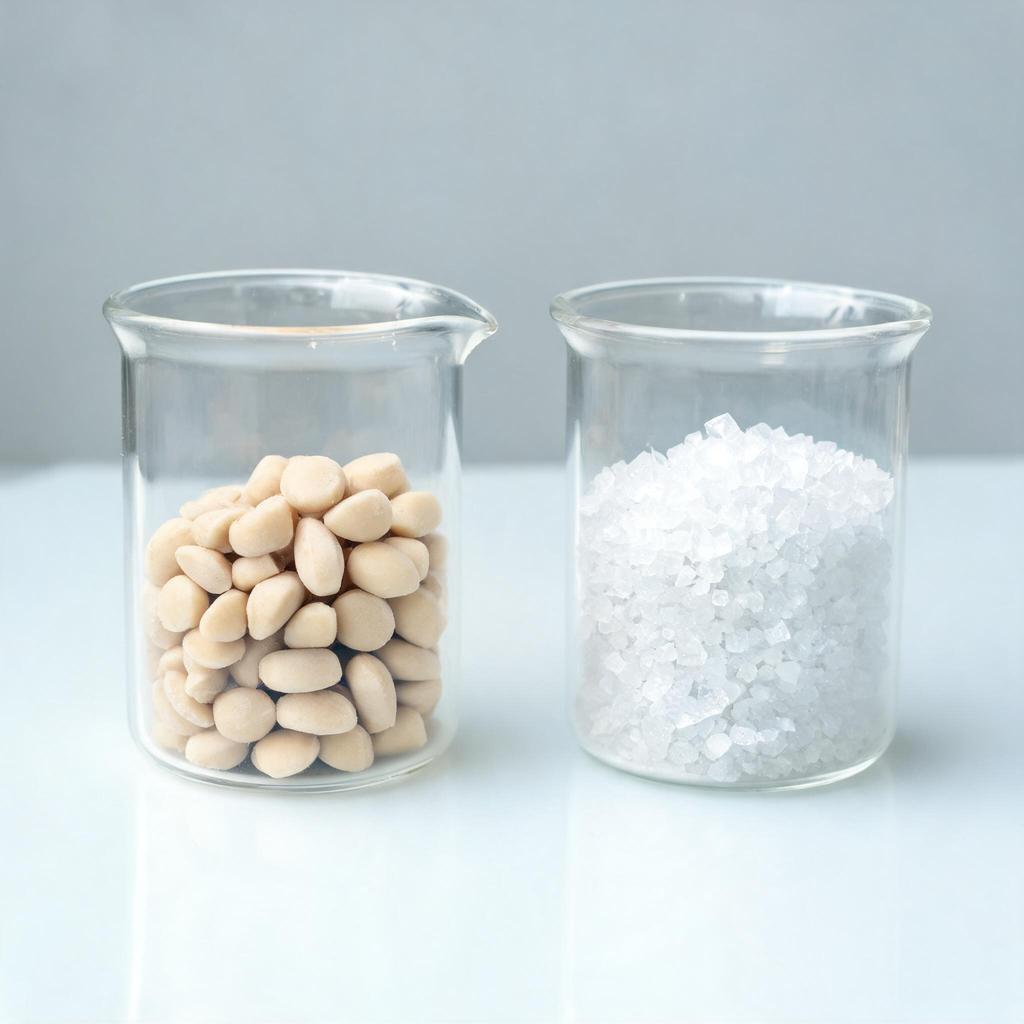
The Paradigm Shift in Odor Control
In the evolving landscape of personal care and industrial odor management, the debate between traditional antiperspirants and modern neutralizers has reached a critical juncture. For decades, aluminum salts have dominated the market as the primary mechanism for sweat reduction. However, the rising demand for transparent, non-toxic, and plant-based ingredients has catapulted zinc ricinoleate into the spotlight. At LumenAxys™, we believe the future lies not in blocking bodily functions, but in chemically neutralizing malodors at the molecular level.
The Fundamental Difference: Prevention vs. Neutralization
To understand why plant-based zinc ricinoleate is superior, we must first dissect the mechanisms. Traditional aluminum-based products function as antiperspirants. When aluminum salts (such as aluminum chlorohydrate) contact moisture, they form a gel-like plug in the sweat ducts, physically preventing perspiration. This approach treats the symptom (wetness) rather than the cause of the odor (bacterial metabolism of sweat).
In stark contrast, zinc ricinoleate acts as a chemical deodorant. It does not inhibit sweating; instead, it targets the volatile organic compounds responsible for bad smells. By allowing the body's natural thermoregulation to continue while simultaneously eliminating odor, zinc ricinoleate represents a physiological alignment that aluminum salts fail to achieve.
Deep Dive into Coordination Chemistry
The superiority of plant-based zinc ricinoleate lies in its sophisticated interaction with malodor molecules. This is not merely physical adsorption; it is a robust chemical binding process rooted in Lewis acid-base theory.
The Zinc Ion as a Lewis Acid
Odor-causing agents like ammonia (NH3) and hydrogen sulfide (H2S) act as Lewis bases—they are electron-pair donors. The zinc ion (Zn2+) within the ricinoleate structure acts as a potent Lewis acid—an electron-pair acceptor. When these odor molecules encounter zinc ricinoleate, a coordination complex forms. The zinc ion accepts electron pairs from the nitrogen or sulfur atoms in the malodor molecules, effectively locking them in a stable, non-volatile complex.
The Ricinoleate Tail: Lipophilic Encapsulation
The "ricinoleate" portion of the molecule is derived from castor oil. This long-chain fatty acid component serves a dual purpose. First, it provides lipophilicity, allowing the compound to disperse evenly in wax-based balms or oil-based sprays. Second, the bulky hydrocarbon chain creates a steric shield around the bound odor molecule. Once the zinc ion captures the malodor, the ricinoleate tails wrap around the complex, physically preventing it from re-volatilizing into the air. This "molecular cage" effect ensures the odor is permanently sequestered.
Safety Profile and Microbiome Preservation
One of the most significant drawbacks of aluminum salts is their potential for skin irritation and disruption of the skin barrier. The formation of gel plugs can trap heat and bacteria against the skin, sometimes leading to folliculitis or dermatitis. Furthermore, there are ongoing debates regarding the systemic absorption of aluminum.
LumenAxys™ plant-based zinc ricinoleate offers a radically safer alternative. Because it functions purely through neutralization rather than physical blockage, it preserves the skin's natural ecosystem. It does not kill beneficial bacteria indiscriminately (unlike strong antimicrobials) nor does it alter the skin's pH balance. This makes it ideal for sensitive skin applications, including intimate hygiene, incontinence care, and pediatric products.
Industrial Versatility and Sustainability
While aluminum salts are restricted almost exclusively to topical antiperspirants, zinc ricinoleate's mechanism allows for vastly broader industrial applications. Its ability to chemically lock away amines and sulfur compounds makes it indispensable in:
- Pet Care: Neutralizing ammonia in pet litter and urine pads without toxic residues.
- Textile Processing: Impregnating fabrics to create permanent odor-resistant clothing.
- Hygiene Products: Incorporation into feminine hygiene and adult incontinence pads to manage 2-nonanonal and other aging odors.
Furthermore, the plant-based origin of the ricinoleate component ensures the product is biodegradable and environmentally benign, aligning with global sustainability goals, unlike the persistent nature of some synthetic masking agents.
Conclusion
The choice between plant-based zinc ricinoleate and aluminum salts is a choice between blocking nature and harmonizing with it. LumenAxys™ champions the former's limitations and the latter's molecular elegance. By leveraging coordination chemistry, we provide a solution that eliminates the root cause of odor while respecting biological integrity. For formulators seeking high-efficacy, non-toxic odor control, zinc ricinoleate is unequivocally the superior path forward.
Frequently Asked Questions (FAQ)
Q1: Is zinc ricinoleate an antiperspirant?
No. Unlike aluminum salts, zinc ricinoleate does not block sweat ducts. It is strictly a deodorizing agent that neutralizes odor molecules chemically, allowing normal sweating to occur.
Q2: How does plant-based zinc ricinoleate differ from standard zinc oxide?
Zinc oxide is primarily a UV blocker and has limited solubility and dispersibility in organic media. Zinc ricinoleate, derived from castor oil, is specifically engineered to dissolve in waxes and oils, offering superior dispersion and direct contact with odor sources.
Q3: Can zinc ricinoleate replace fragrance masking?
Absolutely. Fragrance masks odors temporarily. Zinc ricinoleate permanently neutralizes them through chelation. This eliminates the "chemical perfume" smell that often accompanies masking agents.
Q4: Is the plant-based origin significant?
Yes. The ricinoleic acid is derived from castor oil, making the product biodegradable and safe for the environment, unlike some synthetic alternatives.