
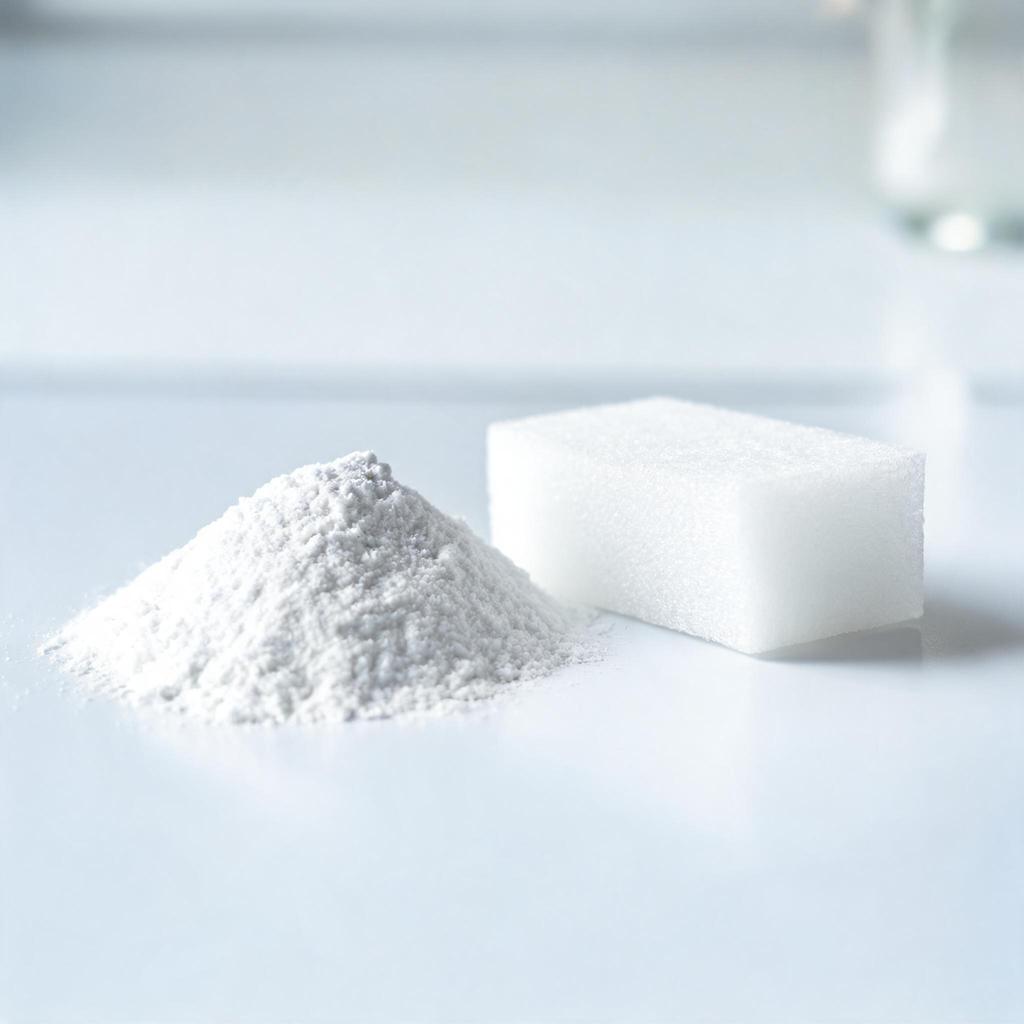
The Chemical Imperative: Trapping Volatiles in Open-Cell Polymers
Ethylene-vinyl acetate (EVA) foams are ubiquitous across industries, from athletic footwear and yoga mats to automotive interior components and acoustic damping sheets. However, the highly porous, open-cell structure of EVA acts as a sponge for environmental contaminants and processing byproducts. Over time, moisture ingress and microbial activity within these cells catalyze the breakdown of organic residues, releasing persistent nitrogen and sulfur-based malodors, predominantly Ammonia (NH3).
Traditional odor control methods—such as heavy fragrance masking or physical adsorbents like activated carbon—fail in dynamic, high-moisture polymer environments. Carbon saturates rapidly, and fragrances merely overlay the chemical reality of the malodor. LumenAxys™ introduces a paradigm shift by integrating plant-based Zinc Ricinoleate directly into the polymer matrix during the foaming process. This approach does not rely on surface treatments that wear off; it engineers the material at a molecular level to permanently neutralize offensive gases.
Molecular Mechanics: The Lewis Acid-Base Coordination Bond
The efficacy of LumenAxys™ Zinc Ricinoleate lies in its precise coordination chemistry. At the core of the molecule sits a Zinc ion (Zn2+), which functions as a potent Lewis acid. When exposed to basic odor molecules like Ammonia (NH3), the lone pair of electrons on the nitrogen atom aggressively donates to the electron-deficient zinc center. This initiates an instantaneous, irreversible coordination complex.
Simultaneously, the ricinoleate anion—derived directly from castor oil—provides a long, flexible hydrocarbon chain. This hydrophobic tail wraps around the newly formed zinc-ammonia complex, effectively sequestering it deep within the EVA cellular structure. The result is a stable, odorless precipitate that cannot volatilize back into the gas phase. Unlike reversible physical adsorption, this chemical reorganization is permanent.
Quantifiable Laboratory Performance Metrics
Rigorous third-party validation utilizing the standardized three-neck flask method provides concrete data on the deodorizing efficacy of LumenAxys™ formulations. Under controlled conditions with a 50x dilution, the plant-based active ingredient demonstrates exceptional targeted capture capabilities:
- Ammonia (NH3) Removal Rate: Consistently achieves up to 65% elimination, directly addressing the primary malodor in hygroscopic foams.
- Hydrogen Sulfide (H2S) Removal Rate: Surpasses industry standards with a 95% capture efficiency, neutralizing the rotten-egg sulfur compounds often found in recycled polymers.
- Methyl Mercaptan (CH3SH) Removal Rate: Delivers a 72% reduction in highly pungent, shoe-polish-like sulfur volatiles.
These metrics confirm that LumenAxys™ operates as a high-purity zinc ion targeted complexation agent, fundamentally outperforming passive absorbers that suffer from rapid saturation and secondary rebound when subjected to heat or pressure changes.
Industrial Integration & Thermal Stability in Foaming Processes
Incorporating an odor-neutralizing agent into EVA foams requires surviving extreme processing conditions. The foaming process involves high temperatures and intense shear forces. Many conventional deodorizers degrade, migrate, or leave unsightly white spots on the final product.
LumenAxys™ Zinc Ricinoleate is engineered for seamless industrial integration. With a highly optimized melting point ranging from 91°C to 94°C, the active ingredient melts uniformly within the polymer matrix inside internal mixers and extrusion lines. It rejects inorganic fillers (like cheap talc) that compromise mechanical integrity. The unique low melting characteristic ensures 100% homogeneous dispersion, resulting in flawless, spot-free EVA components. Furthermore, the chemical complex remains thermally stable during subsequent curing and vulcanization stages, guaranteeing that the ammonia-trapping capability persists throughout the product's lifecycle.
Comparative Advantage: Beyond Baking Soda and Enzymes
To fully appreciate the value of LumenAxys™, one must analyze the fatal flaws of legacy technologies:
- Baking Soda (Sodium Bicarbonate): Relies on simple acid-base neutralization. It rapidly clumps upon minor moisture exposure and lacks the structural capacity to irreversibly lock complex nitrogen volatiles. It merely shifts the pH rather than destroying the odor molecule.
- Physical Adsorption (Activated Carbon/Clays): Functions like a sponge. Once the micropores are filled, toxic gases are forcibly expelled when temperature rises, causing a secondary odor rebound.
- Bio-Enzymatic Degradation: Relies on living microorganisms. These enzymes are highly fragile, going dormant or dying completely in the hot, dry, or chemically harsh environments typical of industrial foam manufacturing.
Zinc Ricinoleate transcends these limitations. It requires no living organisms, resists thermal degradation, and forms an unbreakable coordinate bond that permanently removes the offending molecule from the olfactory spectrum.
Environmental Safety & Biocompatibility
Sourced entirely from renewable castor oil, LumenAxys™ represents the pinnacle of green chemistry. The plant-based origin guarantees complete biodegradability and zero heavy metal toxicity. By avoiding harsh quaternary ammonium salts or aluminum-based compounds, the formulation preserves the natural ecological balance of both the manufacturing facility and the end-user environment. It is a non-toxic, highly effective solution that aligns perfectly with modern sustainable manufacturing mandates.
Frequently Asked Questions (FAQ)
Does Zinc Ricinoleate alter the mechanical properties of EVA foam?
No. Because LumenAxys™ is fully compatible with standard EVA formulations, it integrates at the molecular level without disrupting the cross-linking density or the elastic recovery of the foam. It functions as a passive, chemically active additive rather than a structural interferent.
How does it differ from traditional masking sprays applied post-production?
Post-production sprays only coat the surface and wear off with friction. LumenAxys™ is mixed directly into the resin prior to foaming. This ensures that every single cell of the foam possesses the chemical trapping mechanism, providing permanent, bulk-level odor neutralization that lasts the lifetime of the product.
Is the plant-based Zinc Ricinoleate safe for direct skin contact in products like yoga mats or insoles?
Absolutely. Derived from natural castor oil, it is highly biocompatible and non-irritating. It does not leach harmful byproducts and is recognized as safe for prolonged dermal contact, making it ideal for consumer-facing EVA products.
Can this technology be retrofitted into existing production lines?
Yes. The powder form is designed to be fed directly into standard internal mixers or extruders. Its optimal melting range ensures it blends homogeneously without requiring modifications to existing thermal or mechanical processing parameters.