
The Acoustic Paradox in Electric Vehicle Engineering
The rapid electrification of the automotive industry has fundamentally altered the acoustic landscape of vehicle cabins. With the elimination of internal combustion engine noise, secondary sources—such as tire roar, wind turbulence, and high-frequency motor whine—become disproportionately audible. This shift places immense pressure on Noise, Vibration, and Harshness (NVH) control strategies. High-performance damping sheets, predominantly formulated from butyl rubber, are the industry standard for dissipating vibrational energy through viscoelastic deformation.
However, a critical secondary issue has emerged alongside acoustic optimization: the management of cabin air quality. Traditional asphalt-based damping materials released heavy volatile organic compounds (VOCs). While modern butyl formulations are marketed as "low odor," they often rely on passive carbon absorption or fragrance masking, which fails under the thermal cycling typical of automotive applications. The integration of a chemically active odor absorber directly into the damping matrix has become a critical engineering requirement for premium EV platforms.
Molecular Trapping: Beyond Physical Adsorption
To achieve true odor elimination within constrained layer damping systems, the industry must move beyond physical adsorption mechanisms. Activated carbon, a common additive, operates by physically trapping malodorous molecules within its porous structure. This method is inherently limited by saturation; once the pores are filled, the material becomes a source of re-emission, particularly under the high temperatures found near battery packs or engine bays.
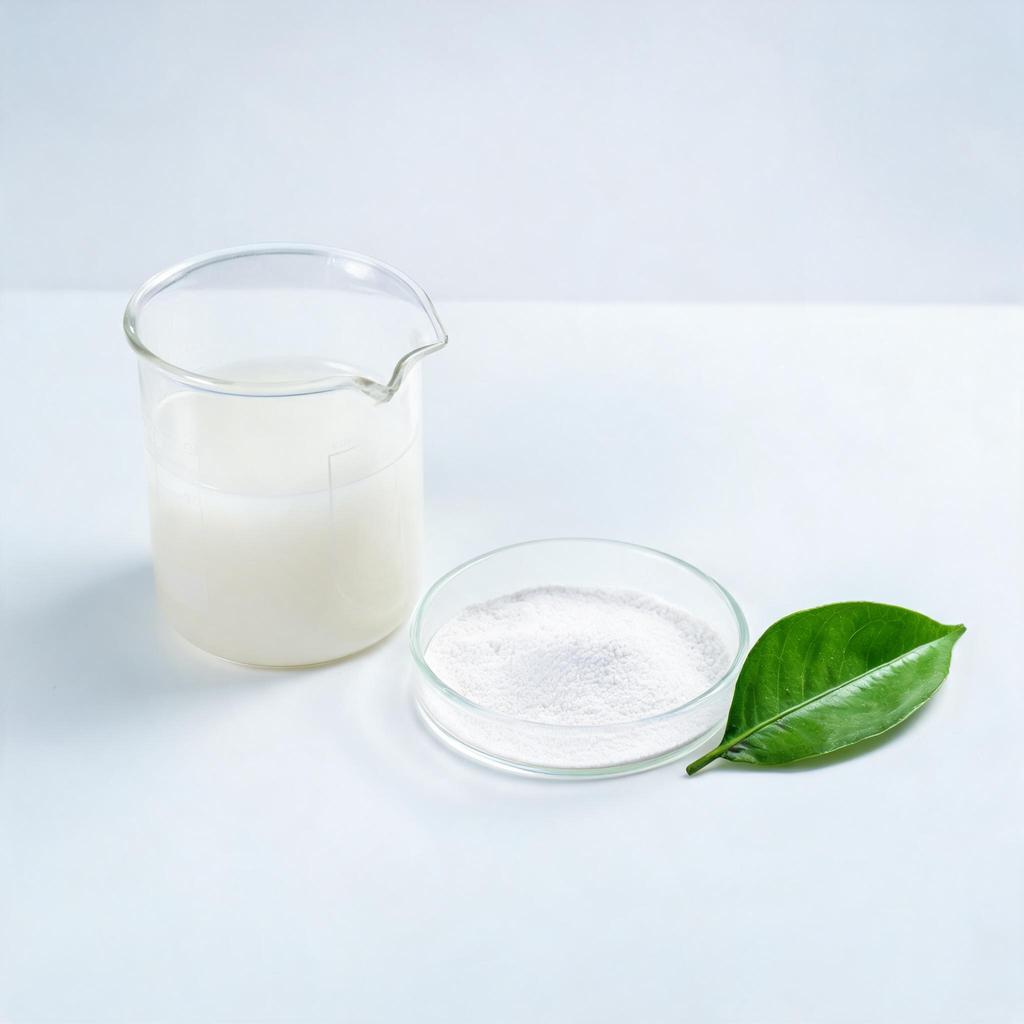
LumenAxys™ Zinc Ricinoleate introduces a paradigm shift from passive absorption to active chemical neutralization. As a plant-based additive, it functions as a potent Lewis acid. Its molecular architecture allows the central zinc ion (Zn2+) to act as an electron-pair acceptor, facilitating irreversible coordination bonding with malodorous gases.
The Chemistry of Irreversible Coordination Bonding
The efficacy of LumenAxys™ in automotive NVH damping sheets lies in its ability to form stable coordination complexes with nitrogenous and sulfur-bearing volatiles. The primary targets in automotive environments are ammonia (NH3) and hydrogen sulfide (H2S).
When these gases encounter the zinc ricinoleate dispersed within the butyl rubber matrix, a precise chemical reaction occurs:
- Ammonia Neutralization: The lone electron pair on the nitrogen atom in NH3 donates to the vacant orbitals of the Zn2+ ion, forming a stable [Zn(NH3]2+ coordination complex.
- Hydrogen Sulfide Trapping: Similarly, the sulfur atom in H2S acts as a Lewis base, donating electrons to the zinc center to form a robust coordination bond, permanently locking the sulfur compound.
This mechanism ensures that odor-causing molecules are chemically transformed and immobilized within the polymer matrix, preventing re-emission regardless of thermal fluctuations.
Industrial Implementation: Masterbatch Dispersion in Butyl Matrices
Integrating LumenAxys™ into high-performance damping sheets requires precise formulation control. The plant-based zinc ricinoleate is typically compounded into a masterbatch, which is subsequently melt-blended into the butyl rubber during the extrusion or calendering process.
Critical technical parameters must be maintained to preserve the viscoelastic properties of the damping sheet:
- Dispersion Homogeneity: The additive must be uniformly distributed to prevent localized softening of the butyl rubber, which could compromise the constrained layer damping efficiency.
- Thermal Stability: The formulation must withstand processing temperatures (often exceeding 150°C) without degrading the ricinoleate structure.
- Adhesive Compatibility: The additive must not interfere with the self-adhesive backing typically laminated to damping sheets for OEM installation.
Quantitative Validation: Gas-Phase Neutralization Testing
To validate the performance of LumenAxys™ infused damping sheets, rigorous gas-phase neutralization testing is conducted using the Tedlar Bag Method (ASTM E1941 equivalent protocols). In a standard validation protocol:
A 10-liter Tedlar bag is charged with a known concentration of target gases (e.g., 50 ppm Ammonia). A standardized sample of the damping sheet is introduced. Over a 24-hour monitoring period, gas chromatography analysis reveals a rapid decline in gas concentration, demonstrating the active chemical scavenging capability of the zinc ricinoleate additive compared to control samples utilizing only physical carbon absorption.
Future Directions in Sustainable Acoustic Engineering
As automakers prioritize circularity, the plant-based origin of LumenAxys™ aligns perfectly with sustainable material mandates. Unlike synthetic metal salts derived from petrochemical precursors, zinc ricinoleate offers a renewable pathway for odor control. This dual benefit—superior acoustic damping coupled with active air purification—positions it as a critical component for next-generation EV interior architectures.
Frequently Asked Questions (FAQ)
How does LumenAxys™ differ from activated carbon in damping sheets?
Activated carbon relies on physical adsorption, which saturates and can lead to odor re-emission. LumenAxys™ utilizes chemical coordination bonding to permanently neutralize malodorous gases, providing irreversible odor elimination without saturation limits.
Does the additive affect the acoustic performance of butyl rubber?
No. When properly compounded into the masterbatch, LumenAxys™ maintains the high loss factor and viscoelastic properties of the butyl rubber, ensuring optimal vibration dissipation while simultaneously acting as an odor absorber.
Is the plant-based formulation safe for cabin air quality?
Yes. LumenAxys™ Zinc Ricinoleate is non-toxic and designed to meet stringent automotive emission standards, actively improving cabin air quality by removing nitrogen and sulfur volatiles.