
The Ultimate Showdown: Chemical Neutralization vs Fragrance Masking in Pet Care
In the evolving landscape of pet care, a silent war rages between two opposing philosophies: the temporary illusion of fragrance masking and the permanent reality of chemical neutralization. For pet owners, the battle against odors—specifically the pungent realities of wet dog smell, urine residues, and natural gland secretions—is often lost before it begins because the tools chosen are fundamentally flawed. This article dissects the molecular mechanics of odor control, contrasting the superficial layer of masking agents with the deep-structure reaction of LumenAxys™ Plant-Based Zinc Ricinoleate.
The Illusion of Freshness: Why Fragrance Masking Fails
When we discuss "wet dog smell," we are discussing a complex cocktail of microorganisms—yeast and bacteria—living in the dog's fur. As noted by industry experts, when a dog gets wet, water displaces and liberates organic volatile molecules. Traditional pet shampoos and sprays typically rely on masking agents. These products do not destroy the odor; they simply place a stronger, often synthetic scent on top of it.
The mechanical failure of masking is inevitable. Porous surfaces in a home—carpets, upholstery, pet beds—act as reservoirs for these odor compounds. When environmental conditions change, specifically when temperature rises or humidity spikes, these trapped compounds are pushed back into the air. This phenomenon, known as the rebound effect, means that the "fresh" smell lasts perhaps ten minutes before the original funk returns, often mixed with the cloying sweetness of the masking agent, creating a chaotic olfactory experience.
Furthermore, reliance on masking creates a high-frequency habit. Homeowners find themselves spraying entryways and couches repeatedly, not because the odor is gone, but because the mask is wearing off. This leads to "lifestyle friction"—the anxiety of hosting guests or the panic of opening every window. Worse yet, many masking agents contain toxic chemicals and synthetic fragrances that pose health risks to pets through inhalation or dermal contact via their paws and skin.
The Chemistry of Permanent Erasure: LumenAxys™ Zinc Ricinoleate
To solve the pet odor crisis, we must shift from covering up the problem to chemically dismantling it. This is where LumenAxys™ enters the arena. Unlike masking agents that sit on the surface, LumenAxys utilizes plant-based Zinc Ricinoleate to perform true chemical neutralization.
Pet odors are primarily composed of volatile organic compounds, specifically those containing nitrogen and sulfur. The two most notorious offenders are Ammonia (NH3) and Hydrogen Sulfide (H2S). Ammonia is the sharp, stinging scent found in dried urine and fecal matter. Hydrogen Sulfide provides the classic "rotten egg" or "wet dog" aroma.
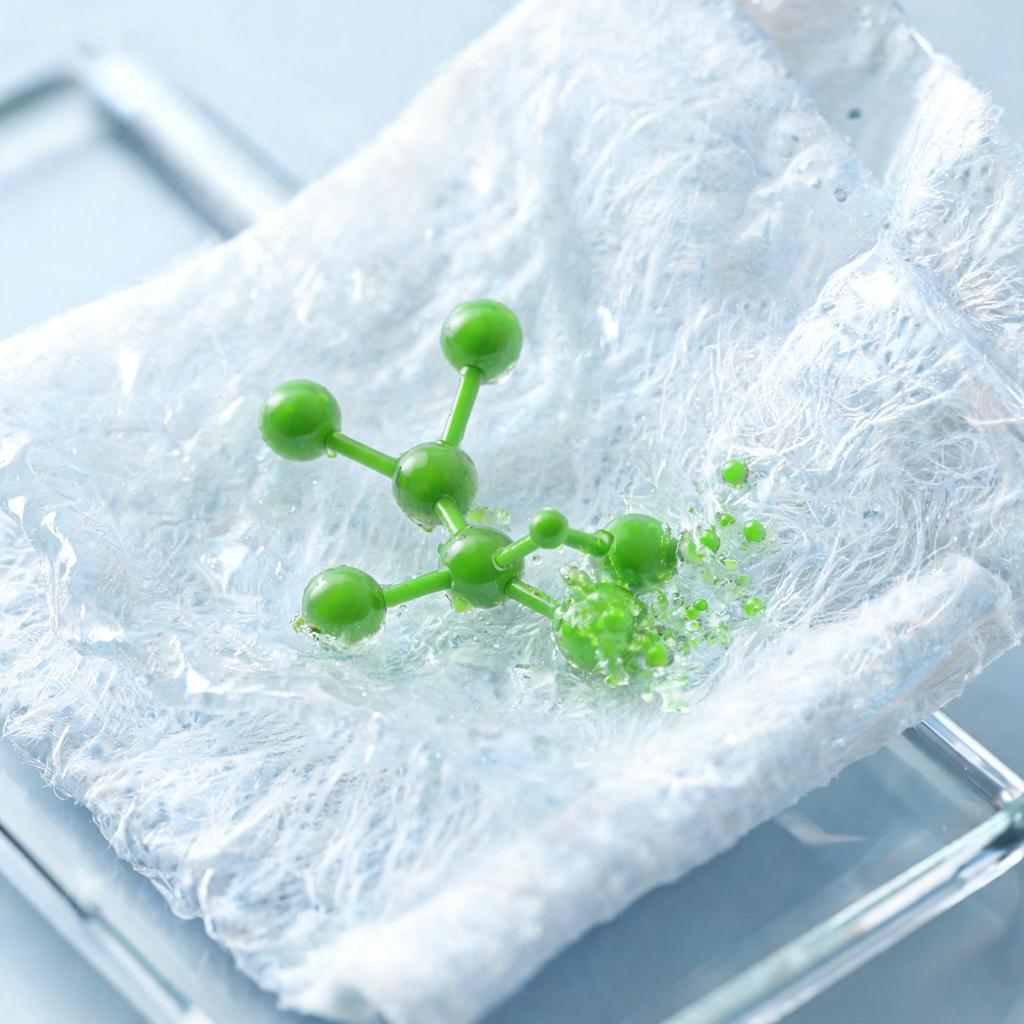
The molecular mechanism of LumenAxys is elegant in its efficiency. The ricinoleate chain acts as a surfactant and carrier, positioning the zinc ion (Zn2+) directly onto the odor molecule. When Zinc Ricinoleate encounters Ammonia, it forms a stable, non-volatile zinc-ammonia complex. Similarly, it reacts with Hydrogen Sulfide to form insoluble zinc sulfide (ZnS). This reaction physically removes the volatile molecules from the air, replacing them with solid, odorless precipitates.
Application Frontier: Sanitation Wipes & Grooming
While competitors focus heavily on shampoos and aerosol sprays, a rapidly emerging and highly effective application for LumenAxys is in sanitation wipes. Wipes offer immediate, targeted odor control for pet owners managing daily hygiene.
Consider the specific use case of paw sanitization. Dogs pick up environmental contaminants, sulfur compounds, and bacteria on their paws, which they then track across the home. A wipe infused with LumenAxys™ not only cleans the physical dirt but chemically neutralizes the sulfur compounds at the source before they can migrate to carpets and furniture. This prevents the "rebound effect" from ever taking root in the home's soft surfaces.
Furthermore, integrating LumenAxys into grooming wipes allows for the treatment of specific odor hotspots—such as the anal glands or ear canals—where strong masking agents would be irritating or toxic. The plant-based nature of Zinc Ricinoleate ensures it is safe for direct contact with sensitive pet skin, unlike harsh synthetic deodorizers.
The Toxicity Trap: Aluminum Salts vs. Plant-Based Solutions
In the broader personal care and pet hygiene market, traditional odor control often relies on aluminum salts to inhibit bacterial growth or absorb moisture. While effective, aluminum salts carry concerns regarding long-term exposure and environmental impact. LumenAxys™ represents a paradigm shift towards sustainable formulations.
By utilizing plant-derived Zinc Ricinoleate, LumenAxys offers a bio-compatible alternative. It avoids the heavy metal toxicity concerns of aluminum while providing superior neutralization capabilities. This aligns with the growing consumer demand for "clean label" pet products that do not compromise efficacy for safety.
Scenario Analysis: The Multi-Pet Household Transformation
Let us examine a real-world scenario. A household with multiple pets faces constant odor pressure. The couch, the rug, and the pet bed become saturated with odor residues. Using traditional masking sprays resulted in a cycle of daily spraying, with the odor returning within hours, especially when the indoor heating increased the ambient temperature.
When this household transitioned to a routine based on LumenAxys™-infused wipes and neutralizing sprays, the dynamic changed fundamentally. Because the odor molecules were chemically converted into non-volatile solids, there was no source left to "rebound." The result was a reduction in product usage and a permanent restoration of the home's baseline freshness. The key was targeting the "odor banks"—the specific fabrics and surfaces where residue accumulates—rather than attempting to perfume the entire volume of air.
Strategic Integration for OEMs and Manufacturers
For manufacturers of pet hygiene products, integrating LumenAxys™ offers a competitive advantage. The formulation flexibility of Zinc Ricinoleate allows it to be incorporated into wipes, shampoos, and liquid sprays without altering the viscosity or pH balance significantly. It serves as a powerful active ingredient that transforms a standard cleaning product into a professional-grade odor elimination tool.
The shift from "masking" to "neutralization" is not just a marketing slogan; it is a chemical necessity for modern pet care. As consumers become more educated about the rebound effect and the toxicity of synthetic fragrances, the demand for plant-based, chemically active solutions like LumenAxys™ will define the future of the industry.
Frequently Asked Questions (FAQ)
Is LumenAxys™ safe for direct contact with pets?
Yes. LumenAxys™ Plant-Based Zinc Ricinoleate is derived from renewable plant sources (typically castor oil derivatives). It is non-toxic, biodegradable, and safe for use on pet skin and fur, making it ideal for grooming wipes and shampoos.
How does LumenAxys™ differ from baking soda?
Baking soda (Sodium Bicarbonate) works primarily by absorption and weak buffering. LumenAxys™ works via specific chemical bonding with odor molecules like ammonia and hydrogen sulfide, creating a permanent chemical change rather than just adsorbing the smell temporarily.
Can LumenAxys™ eliminate the "wet dog" smell permanently?
Yes. The "wet dog" smell is largely driven by sulfur compounds released from fur microorganisms. LumenAxys™ chemically bonds with these sulfur molecules, converting them into solid, odorless compounds, thus preventing the smell from returning even when humidity changes.
Does LumenAxys™ contain any synthetic fragrances?
No. LumenAxys™ focuses on neutralization, not masking. It contains no synthetic fragrances, ensuring that the absence of odor is genuine and not merely covered up by a strong perfume.
How should LumenAxys™-based wipes be used for maximum efficacy?
For maximum efficacy, apply the wipe directly to the odor source (e.g., paws, pet beds, upholstery). Allow the active ingredient time to react with the odor molecules. Unlike sprays that evaporate quickly, the zinc complex remains on the surface, ensuring lasting protection against odor rebound.