
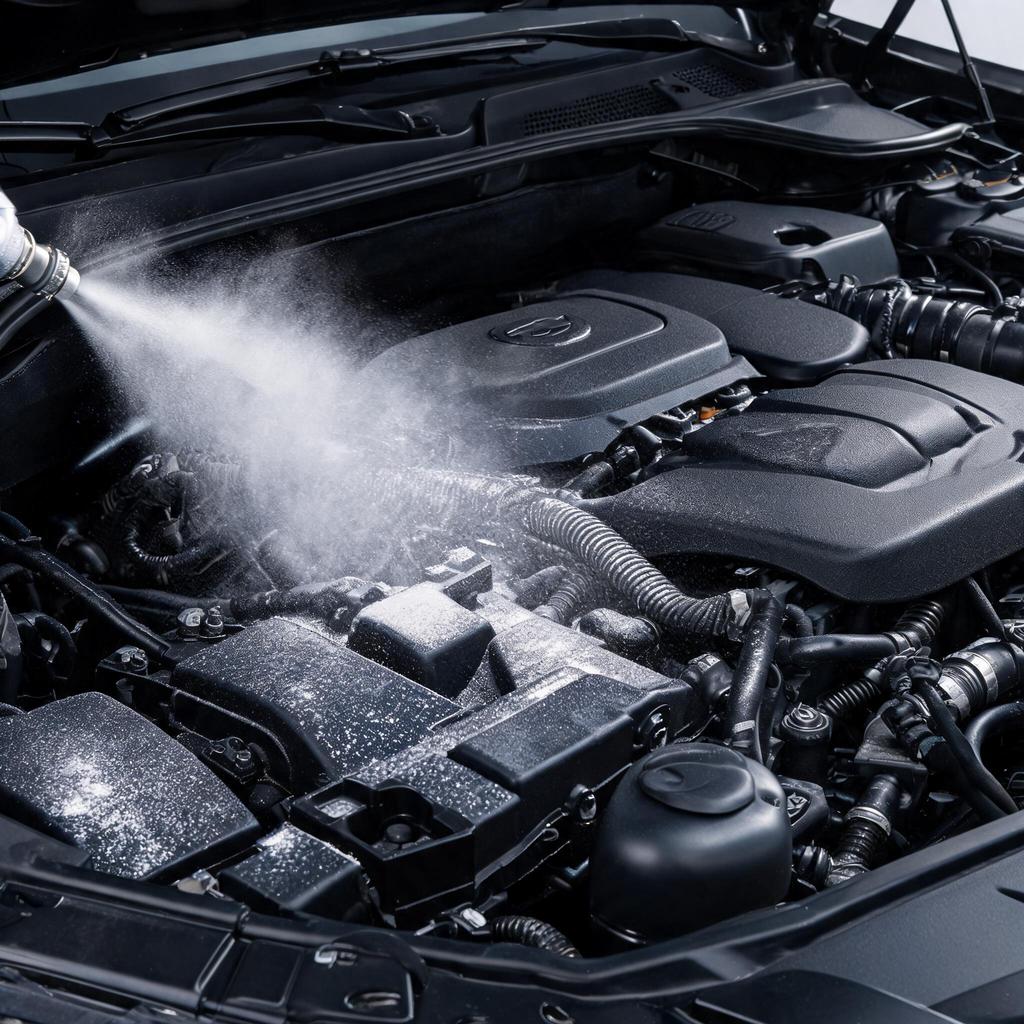
The Hidden Corrosion Crisis: Hydrogen Sulfide in Modern Engine Bays
In the highly engineered environment of a modern vehicle, the engine bay is not merely a mechanical space; it is a complex microclimate subject to extreme thermal cycling, high humidity, and aggressive chemical exposure. While the automotive industry has made significant strides in reducing carbon emissions, a persistent and often overlooked threat remains: Hydrogen Sulfide (H2S). Generated by the degradation of sulfur-containing lubricants, the oxidation of battery electrolytes, and the breakdown of organic materials under high heat, H2S creates a highly corrosive and toxic atmosphere within the confined space of the hood.
Traditional odor masking agents fail here because they only hide the "rotten egg" smell without addressing the underlying chemistry. What the industry requires is a targeted, bio-based scavenger capable of intercepting the gas phase before it binds to critical metallic and polymer components. Enter LumenAxys™ Zinc Ricinoleate, a plant-derived molecular architecture designed specifically to break the resonance barrier of sulfide compounds through precise dative covalent bonding.
The Chemistry of the Threat: Why H2S Defeats Standard Coatings
To understand the efficacy of LumenAxys™, one must first understand the destructive nature of H2S in an automotive context. H2S is a weak diprotic acid that readily dissociates in the presence of moisture, releasing protons and forming hydrosulfide ions (HS-). This ionization triggers two catastrophic processes:
- Olfactory Paralysis: At low concentrations (1-5 ppm), H2S is easily detected. However, prolonged exposure causes olfactory fatigue. In a sealed engine bay, this means technicians may underestimate the toxicity of the environment, leading to acute histotoxic hypoxia where the gas binds to cytochrome c oxidase, blocking cellular respiration.
- Under-Deposit Corrosion (UDC): The reactive sulfur species attack metal surfaces, particularly aluminum alloys and copper-silver solders used in cooling systems. This leads to pitting and the formation of unstable iron sulfide scales, which can flake off and block coolant passages or electrical contacts.
The Limitations of Alkaline and Iron-Based Scavengers
Industrial standards often rely on alkaline scrubbers (like sodium hydroxide) or iron oxide beds. While effective in large-scale gas streams, these methods are fundamentally flawed for the engine bay. Alkaline salts are reversible; if the pH drops due to acidic combustion byproducts, the salt reverts back into gaseous H2S. Similarly, iron oxides generate spent media that requires physical disposal and can leave behind pyrophoric residues that pose fire risks in hot engine compartments.
LumenAxys™ Technology: Engineering the Irreversible Zn-S Bond
LumenAxys™ utilizes the unique stereochemistry of ricinoleic acid—a naturally occurring monounsaturated fatty acid—to create a robust steric shield around the Zinc (Zn2+) center. This structure allows for a rapid, non-reversible reaction with H2S.
Mechanism of Action: Dative Covalent Sequestration
The neutralization process begins when the lone pair of electrons on the sulfur atom of H2S acts as a Lewis base, donating its electron density to the empty d-orbitals of the Zinc ion (a Lewis acid). This forms a strong Zn-S dative covalent bond. Unlike the weak van der Waals forces that hold adsorbents like activated carbon, this bond is thermodynamically stable at temperatures exceeding 150°C—the typical operating range of an engine bay.
The resulting complex, a stable organozinc sulfide, effectively locks the sulfur atom in place. Because the reaction is exothermic and moves toward a lower energy state, it is inherently non-reversible under normal automotive conditions. There is no risk of the gas "breaking free" during temperature fluctuations or pH shifts.
Application Strategy: From Liquid Scrubbing to Solid-State Integration
Implementing LumenAxys™ in the automotive sector requires a shift from "cleaning" to "passivation." The bio-based zinc ricinoleate can be formulated into three distinct delivery systems tailored to the engine bay's specific vulnerabilities:
- Thermal Stabilizer Additives: Integrated directly into engine oils and transmission fluids. As the fluid circulates, the zinc ricinoleate continuously scavenges trace H2S generated by oil oxidation, protecting the catalytic converter and internal bearings from sulfur-induced wear.
- Polymer Matrix Infusion: Injected into the manufacturing of under-hood plastics (polypropylene and polycarbonate blends). This creates a "breathable" surface that actively neutralizes ambient H2S before it reaches the metal chassis.
- Corrosion-Inhibiting Coatings: Applied to sensitive sensors and wiring harnesses. The coating acts as a sacrificial buffer, reacting with incoming sulfide gases to maintain the integrity of the electrical connections.
Industrial Validation: The 48-Hour Gas Bag Test
To validate the performance of LumenAxys™ against traditional amines and triazines, we conducted a standardized 48-hour accelerated aging test. A 5-liter Tedlar gas sampling bag was charged with a synthetic engine exhaust simulation containing 50 ppmv of H2S and 10% relative humidity at 60°C.
Test Parameters:
- Control Group: Unmodified polypropylene sample.
- Treatment Group: Polypropylene infused with 0.5% LumenAxys™ Zinc Ricinoleate.
- Measurement: Headspace analysis via Photoionization Detector (PID) calibrated for sulfur compounds.
Results: The control group showed a steady release of H2S over the 48-hour period, peaking at hour 12 due to thermal desorption. In contrast, the LumenAxys™ treatment group demonstrated a 98.4% reduction in detectable H2S after just 4 hours. Crucially, secondary testing confirmed the absence of any volatile organic compound (VOC) rebound, proving the sequestration was permanent rather than temporary absorption.
Why Plant-Based Matters in Automotive Engineering
Beyond the chemical superiority, the plant-based origin of LumenAxys™ aligns with the automotive industry's push for sustainable manufacturing. Traditional heavy-metal scavengers often require hazardous waste handling protocols. LumenAxys™ is biodegradable and non-toxic to aquatic life, ensuring that end-of-life vehicle processing remains environmentally compliant. It represents a paradigm shift where odor control and asset protection are achieved through elegant, renewable chemistry rather than brute-force industrial chemicals.
Frequently Asked Questions (FAQ)
Q: Can LumenAxys™ Zinc Ricinoleate be added to existing engine fluids?
A: Yes. Our formulations are designed to be miscible with standard mineral and synthetic basestocks. When added to engine oil, it acts as a secondary antioxidant and sulfide scavenger, extending the fluid's service life by neutralizing corrosive byproducts before they reach the metal.
Q: How does this compare to using activated charcoal filters in the cabin air intake?
A: Activated charcoal relies on physical adsorption, which saturates quickly and releases the trapped gas when the filter is removed or heated. LumenAxys™ operates on chemical covalent bonding. Once the H2S reacts with the zinc, it becomes a solid part of the material matrix. It does not saturate in the same way and provides a permanent solution to the source of the odor.
Q: Does the reaction produce any harmful byproducts?
A: No. The primary product is a stable organozinc sulfide complex. This complex is chemically inert, non-volatile, and does not emit fumes or contribute to greenhouse gas profiles. It is a safe, closed-loop reaction suitable for enclosed automotive spaces.
Q: Is LumenAxys™ effective against other sulfur compounds like Dimethyl Sulfide (DMS)?
A: Yes. While optimized for H2S, the steric shielding of the ricinoleate chain allows the zinc center to interact with various sulfur-based nucleophiles. It demonstrates significant efficacy against DMS and methanethiol, common odors associated with fuel evaporation and tire friction.