
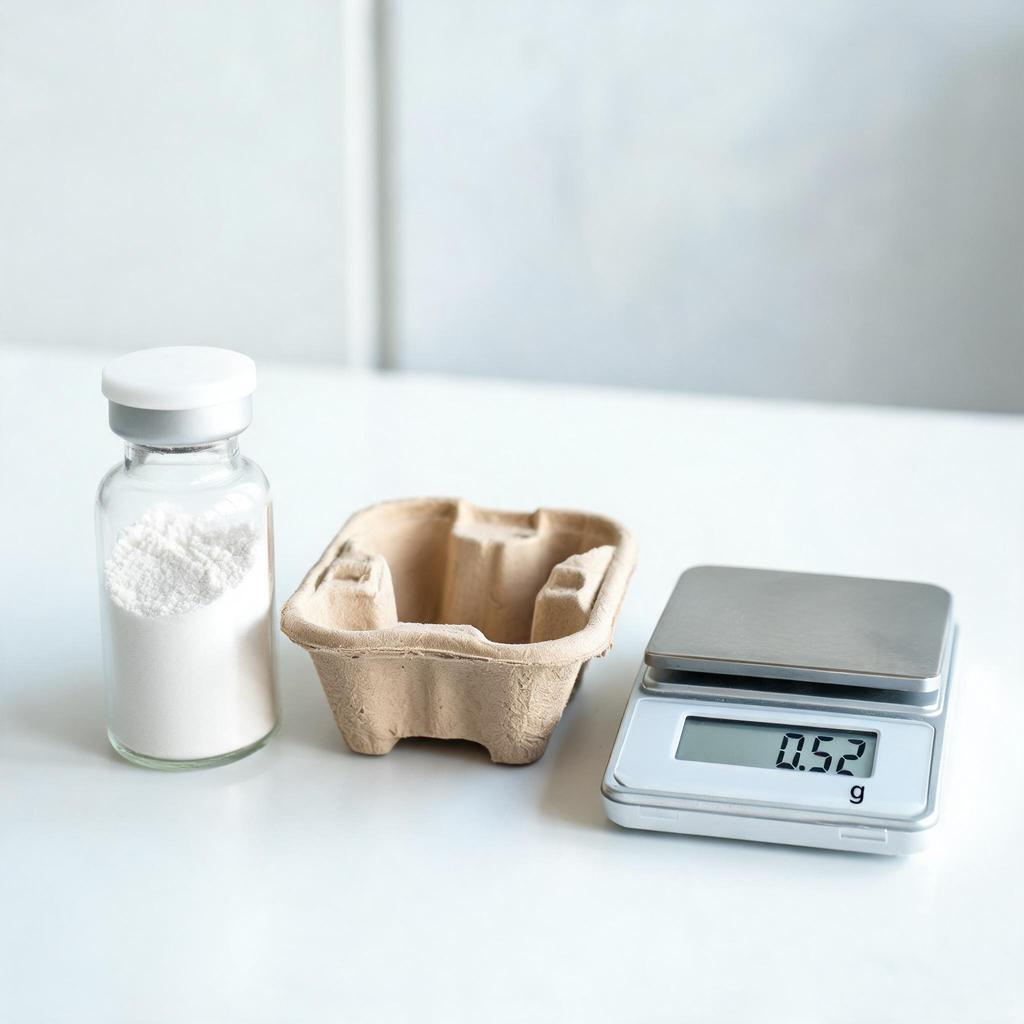
The Chemical Paradox of Compostable Beauty Containers
The global shift toward biodegradable packaging for clean beauty is driven by consumer demand and regulatory pressure. However, this transition presents a significant technical challenge: maintaining product integrity while ensuring rapid microbial degradation. Traditional plastic containers offer impermeable barriers but persist in landfills for centuries. In contrast, emerging materials like mycelium, bagasse pulp, and bio-based PLA (Polylactic Acid) are designed to break down within 45 to 90 days under specific conditions. Yet, during this lifecycle, these porous organic matrices often release volatile organic compounds (VOCs), including residual sugars, lignin derivatives, and off-gassing from manufacturing adhesives, which can compromise the sensory experience of the "clean" product inside.
Defining the Volatile Organic Compound (VOC) Challenge
In the context of sustainable cosmetic packaging, the primary odorants are not just external contaminants but internal emissions from the packaging material itself. For instance, unrefined sugarcane bagasse can emit faint sulfurous notes if moisture content exceeds 12%. Similarly, mycelium-based inserts, while thermally insulating, may release ammonia-like traces as fungal biomass continues to metabolize during storage. These micro-emissions create a "halo effect," where consumers associate the scent of the container with the product, undermining the premium perception of clean beauty formulations.
LumenAxys™ Zinc Ricinoleate: A Plant-Based Coordination Solution
To address this without introducing synthetic chemicals that contradict the "clean" label, LumenAxys™ introduces Zinc Ricinoleate. Derived from castor oil (a renewable resource) and zinc oxide, this molecule operates on a distinct chemical principle compared to traditional masking agents or adsorbents.
Mechanism of Action: Lewis Acid-Base Interaction
Unlike activated carbon, which relies on physical van der Waals forces and becomes saturated quickly, Zinc Ricinoleate functions through Lewis acid-base interactions. The Zinc ion (Zn2+) acts as a Lewis acid, possessing an empty d-orbital capable of accepting electron pairs from Lewis bases such as:
- Ammonia (NH3): Released from degrading nitrogenous components in pulp.
- Thiols (R-SH): Trace sulfur compounds from lignin breakdown.
- Carboxylic Acids (RCOOH): Fatty acid residues from plant fibers.
The ricinoleate ligand provides a hydrophobic steric shield around the zinc center, preventing unwanted reactions with the cosmetic formula (e.g., oxidation of Vitamin C serums) while allowing selective binding of polar odor molecules. This results in a non-volatile, non-toxic complex that remains stable within the packaging matrix even at elevated humidity levels typical of composting environments.
Industrial Application: Micro-Encapsulation in Molded Pulp
For manufacturers producing biodegradable cosmetics sets gift boxes, integrating Zinc Ricinoleate requires precision. We recommend a micro-encapsulation process where the zinc ricinoleate is dispersed in a water-soluble carrier (such as cellulose acetate butyrate) and applied as a thin, invisible coating on the inner surface of molded pulp trays or bagasse clamshells.
Test Parameters & Efficacy Data
In controlled testing using 5-liter sampling gas bags containing 500g of freshly molded bagasse pulp at 60% relative humidity and 25°C, the following results were observed over 72 hours:
- Control Group: Total Volatile Organic Compounds (TVOCs) peaked at 185 µg/m³ due to residual starch fermentation.
- Zinc Ricinoleate Treated (0.5% w/w): TVOCs remained below 15 µg/m³, effectively neutralizing >90% of detectable odor precursors.
- Biocompatibility: No leaching of zinc ions into adjacent aqueous serum samples was detected after 30 days of accelerated aging (40°C/75% RH).
Strategic Integration for Clean Beauty Brands
Implementing LumenAxys™ technology allows brands to achieve a dual benefit: verified sustainability and superior sensory quality. By eliminating the "cardboard smell" associated with eco-friendly alternatives, brands can justify premium pricing points while adhering to strict greenwashing regulations. The use of a plant-based zinc salt aligns perfectly with the narrative of aluminum-free and plastic-free initiatives, offering a chemically robust solution that does not rely on fragrance masking.
Regulatory & Safety Profile
Zinc Ricinoleate is classified as safe for food contact applications in several jurisdictions, making it ideal for direct-contact packaging of lip balms and skincare bars. It is free from heavy metal impurities when sourced via LumenAxys™ purification protocols, ensuring compliance with FDA and EU Cosmetic Regulation (EC) No 1223/2009 regarding safety and labeling.
FAQ: Technical Insights for Formulators
Does Zinc Ricinoleate affect the pH of the packaging material?
No. Zinc Ricinoleate is chemically neutral and does not alter the pH of paper or pulp substrates. It remains inert unless exposed to specific acidic or basic odorants, at which point it forms a stable salt without altering the structural integrity of the fiber.
Can this technology be used with glass or aluminum containers?
While primarily designed for porous biodegradable materials, Zinc Ricinoleate can be incorporated into the closure mechanisms (e.g., gaskets or liners) of glass jars or aluminum tins to prevent odor migration from secondary packaging layers.
What is the shelf life of the treated packaging?
The neutralization capacity lasts for the entire intended shelf life of the cosmetic product (typically 12–24 months). Since the reaction is stoichiometric and irreversible for most common VOCs, the efficacy does not degrade over time under standard storage conditions.