
The Fundamental Architecture of Dative Covalent Bonding
In the vast landscape of industrial chemical engineering, the transition from reactive volatility to stable molecular sequestration relies entirely on one specific class of interaction: the coordinate (dative) covalent bond. While standard covalent bonds are formed by the mutual sharing of electrons—where each participating atom contributes a single electron to the shared pair—coordinate bonding operates on an asymmetric principle. In this mechanism, both electrons in the shared pair originate from the same atom.
This distinction is not merely academic; it is the foundational physics that dictates how industrial odorants can be permanently captured rather than simply masked or temporarily trapped. As G.N. Lewis established over a century ago, the covalent bond is fundamentally defined by the sharing of an electron pair. However, coordination chemistry requires us to look beyond simple symmetry. It explores the dynamic interplay between an electron-pair donor and an electron-pair acceptor.
The formation of a coordinate bond occurs when an orbital on one atom, typically possessing a lone pair of electrons, donates those electrons into an empty orbital on a partner atom. This process is often represented conceptually as A+:D → A:D, where the arrow indicates the direction of electron donation. Once this bond is formed, the resulting structure is thermodynamically indistinguishable from a standard covalent bond. However, the pathway to reach this state reveals critical insights into the binding energy, steric accessibility, and ultimate stability of the resulting complex. For advanced odor control systems, understanding these parameters is essential to designing molecules that do not just interact with volatile compounds, but permanently lock them into inert matrices.
Lewis Acid-Base Interactions and the Ammonia Paradigm
To understand the practical application of dative bonding in industrial settings, we must examine the classic paradigm: the reaction between ammonia (NH3) and hydrogen chloride (HCl). When these two colorless gases mix, they form a thick white smoke of solid ammonium chloride (NH4Cl).
In this reaction, the ammonia molecule acts as the electron-pair donor. Nitrogen possesses a lone pair of electrons in its valence shell. The hydrogen chloride molecule, acting as the proton donor, transfers a hydrogen ion (a bare proton) to the ammonia. Crucially, the hydrogen's original electron remains behind on the chlorine atom, forming a negative chloride ion. The nitrogen atom accepts the proton using its lone pair, forming a fourth N-H bond.
This fourth bond is a pure coordinate covalent bond. Only the nucleus of the hydrogen was transferred; the bonding electron pair was supplied entirely by the nitrogen. The result is the ammonium ion (NH4+), which exhibits a tetrahedral geometry. Because all four N-H bonds in the final NH4+ ion are equivalent, the initial distinction between the "shared" bonds and the "donated" bond disappears. Yet, the energetic favorability of this complexation is profound. The drive toward this state demonstrates a core principle of coordination chemistry: 'naked' ions or isolated polar molecules are energetically unstable compared to their complexed forms. The whole is inherently more stable than the sum of its parts.
Expanding the Donor-Acceptor Model
While ammonia is the most classical ligand, the capacity to supply an electron pair is not restricted to nitrogen. The key characteristic required of any coordinating entity is the presence of one or more lone pairs of electrons on an electronegative donor atom. Heteroatoms such as oxygen (O), sulfur (S), and phosphorus (P), as well as halide ions, routinely act as donors. Furthermore, the acceptor does not have to be a simple proton. In advanced metallurgy and polymer chemistry, the acceptor is frequently a metal cation.
When a metal ion acts as the acceptor, the simple valence shell model becomes insufficient. The number of new bonds generated through complexation does not always match the apparent vacancies in the metal's valence shell. Instead, the metal utilizes hybridized orbitals to accommodate multiple ligands simultaneously. A prime example is the hexafluorosilicate anion (SiF62-). Here, the silicon center (acting as a Si4+ acceptor) binds six fluoride anions. Each fluoride provides a lone pair to overlap with empty hybrid orbitals on the silicon, arranged in a precise octahedral array. This results in six equivalent covalent bonds, creating a highly stable, symmetrical molecular ion that defies the traditional octet rule.
Translating Coordination Chemistry to Plant-Based Zinc Ricinoleate
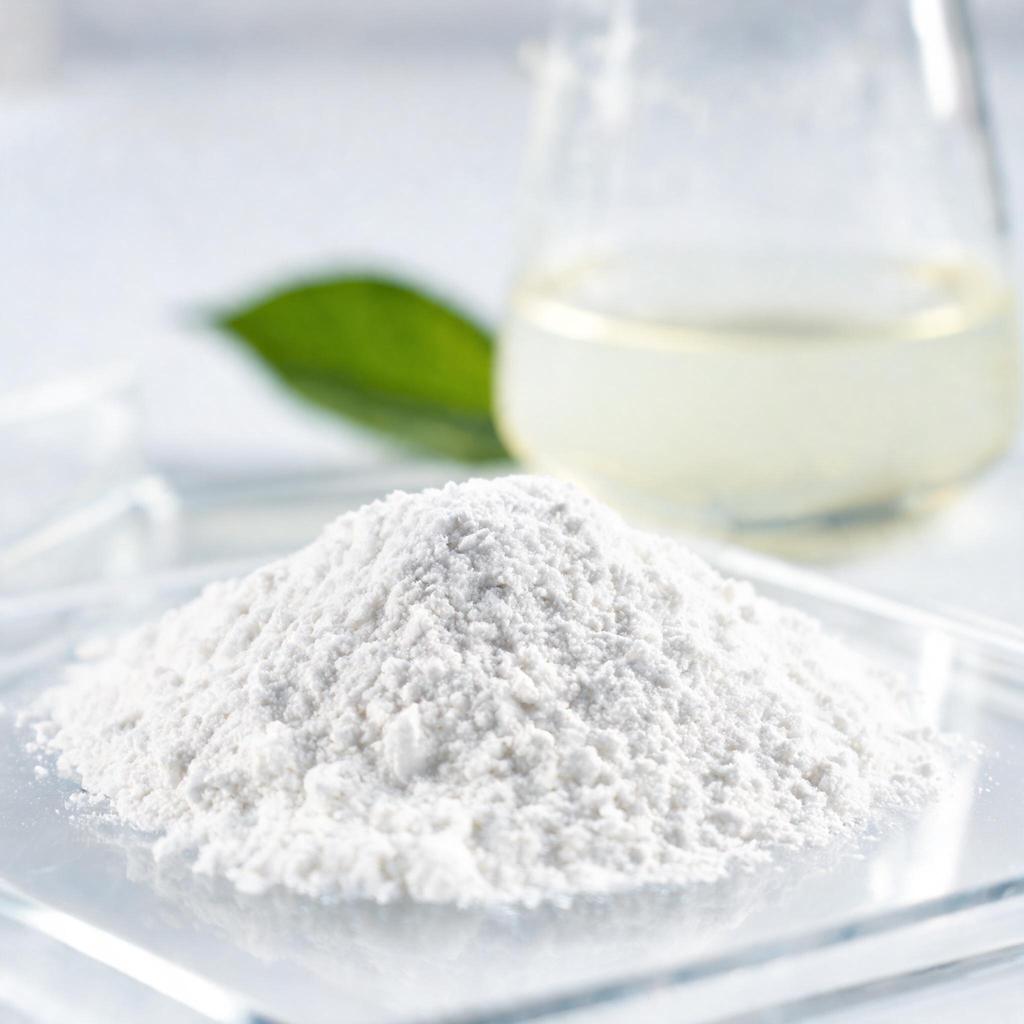
The theoretical elegance of dative bonding finds its most potent industrial expression in the formulation of advanced odor neutralizers. LumenAxys™ has engineered a plant-based Zinc Ricinoleate system specifically designed to exploit these coordination principles at a macro scale. Traditional deodorizing agents often rely on weak van der Waals forces or physical adsorption, leading to rapid saturation and eventual desorption of odorants. LumenAxys™ bypasses these limitations by utilizing the robust chemistry of zinc as a multivalent electron-pair acceptor.
Zinc (Zn2+) is an exceptional Lewis acid. It possesses vacant orbitals capable of accepting electron pairs from a wide variety of heteroatom-rich odorants. By pairing the zinc cation with ricinoleic acid—a naturally occurring fatty acid extracted from castor beans—the resulting zinc ricinoleate salt presents a dual-action architecture. The carboxylate group (-COO-) anchors the zinc securely within a lipid matrix, while the surrounding hydrocarbon chain creates a hydrophobic environment that concentrates polar odorants near the active zinc sites.
Thermodynamic Locking of Volatile Amines and Sulfides
When a volatile amine (such as ammonia or trimethylamine) or a sulfide (such as dimethyl sulfide) enters the microenvironment of the LumenAxys™ matrix, it encounters the exposed Zn2+ centers. The lone pairs on the nitrogen or sulfur atoms of the odorant donate directly into the empty orbitals of the zinc, forming strong coordinate covalent bonds.
Unlike the reversible nature of some weaker interactions, the thermodynamics of the zinc-heteroatom dative bond are heavily skewed toward product formation. The activation energy required to break these specific Zn-N or Zn-S bonds is significantly higher than the thermal energy present in ambient industrial environments. Consequently, once the odorant is captured via dative coordination, it is effectively locked into a stable, non-volatile complex. The odorant loses its ability to partition back into the gas phase, achieving true neutralization rather than temporary masking.
Engineering the Matrix: Sterics and Kinetics in Complexation
Understanding the quantum mechanics of the dative bond is only half the equation; the other half is engineering the physical matrix to maximize the kinetics of capture. In the context of the LumenAxys™ system, the ricinoleate backbone plays a crucial role in tuning the steric environment around the zinc acceptor.
If the active sites were completely exposed in an aqueous solution, the zinc would rapidly precipitate or react with unwanted species. By embedding the zinc within the structured lipid network of the ricinoleate, the approach trajectory of incoming odorants is carefully filtered. Small, highly volatile molecules like NH3 and H2S can easily navigate the hydrophobic channels to reach the Zn2+ centers, while larger, less problematic molecules are excluded. This size-selective gating ensures that the coordination capacity of the zinc is reserved exclusively for high-impact odorants.
Furthermore, the distribution of the zinc ricinoleate domains ensures a high density of accessible acceptor sites. This maximizes the collision frequency between the odorant donors and the zinc acceptors, accelerating the rate of complexation. In high-throughput industrial applications—such as processing facilities handling heavy biological waste or synthetic materials—this kinetic efficiency is vital. The system must achieve maximum sequestration before the odorant plume can escape the containment zone.
Comparative Stability: Coordinate Bonds vs. Physical Adsorption
To fully appreciate the superiority of dative covalent bonding in odor control, it is necessary to compare it against the dominant alternative: physical adsorption. Carbon-based filters and zeolites operate primarily through van der Waals forces. These forces are relatively weak, with binding energies typically in the range of 5 to 50 kJ/mol. As a result, physical adsorbents are highly susceptible to temperature fluctuations and competitive displacement. Once the concentration gradient reverses, the trapped molecules readily desorb, releasing the odor back into the environment.
In contrast, the coordinate covalent bonds formed in the LumenAxys™ system possess binding energies that rival or exceed standard covalent interactions, often exceeding 100 kJ/mol. This immense thermodynamic barrier makes desorption practically impossible under normal operating conditions. The odorant does not merely sit on the surface of the adsorbent; it becomes an integral part of a new, stable chemical species. This fundamental difference explains why coordination-based systems exhibit vastly superior longevity and resistance to breakthrough, even in environments subjected to continuous, high-concentration odorant exposure.
FAQs: Molecular Coordination Bonding in Industrial Applications
What is the primary difference between a coordinate covalent bond and a standard covalent bond?
Answer: In a standard covalent bond, each atom contributes one electron to the shared pair. In a coordinate covalent bond, both electrons in the shared pair are donated by a single atom (the donor) to an empty orbital on another atom (the acceptor). Once formed, however, the two types of bonds are chemically indistinguishable.
How does the use of zinc enhance the effectiveness of dative bonding in odor control?
Answer: Zinc (Zn2+) is a highly effective Lewis acid with multiple vacant orbitals. It can simultaneously accept electron pairs from multiple odorant molecules (ligands), forming highly stable, multi-point coordination complexes that permanently lock the odorants in place.
Why is the ricinoleate matrix critical for the performance of the zinc complex?
Answer: The ricinoleate matrix provides a hydrophobic environment that concentrates polar odorants near the active zinc sites. It also acts as a steric filter, allowing small, volatile odorants to access the zinc centers while preventing premature precipitation or degradation of the active complex.
Can coordinate bonds be broken under normal environmental conditions?
Answer: No. The thermodynamic stability of the coordinate bonds formed between zinc and heteroatom-rich odorants is exceptionally high. The activation energy required to break these bonds far exceeds the thermal energy available in ambient industrial settings, ensuring irreversible sequestration.
How does this mechanism differ from traditional carbon-based filtration?
Answer: Carbon filters rely on weak van der Waals forces for physical adsorption, which allows for easy desorption and breakthrough. Coordinate bonding involves the formation of strong, quasi-covalent chemical bonds, resulting in permanent neutralization without the risk of desorption.