
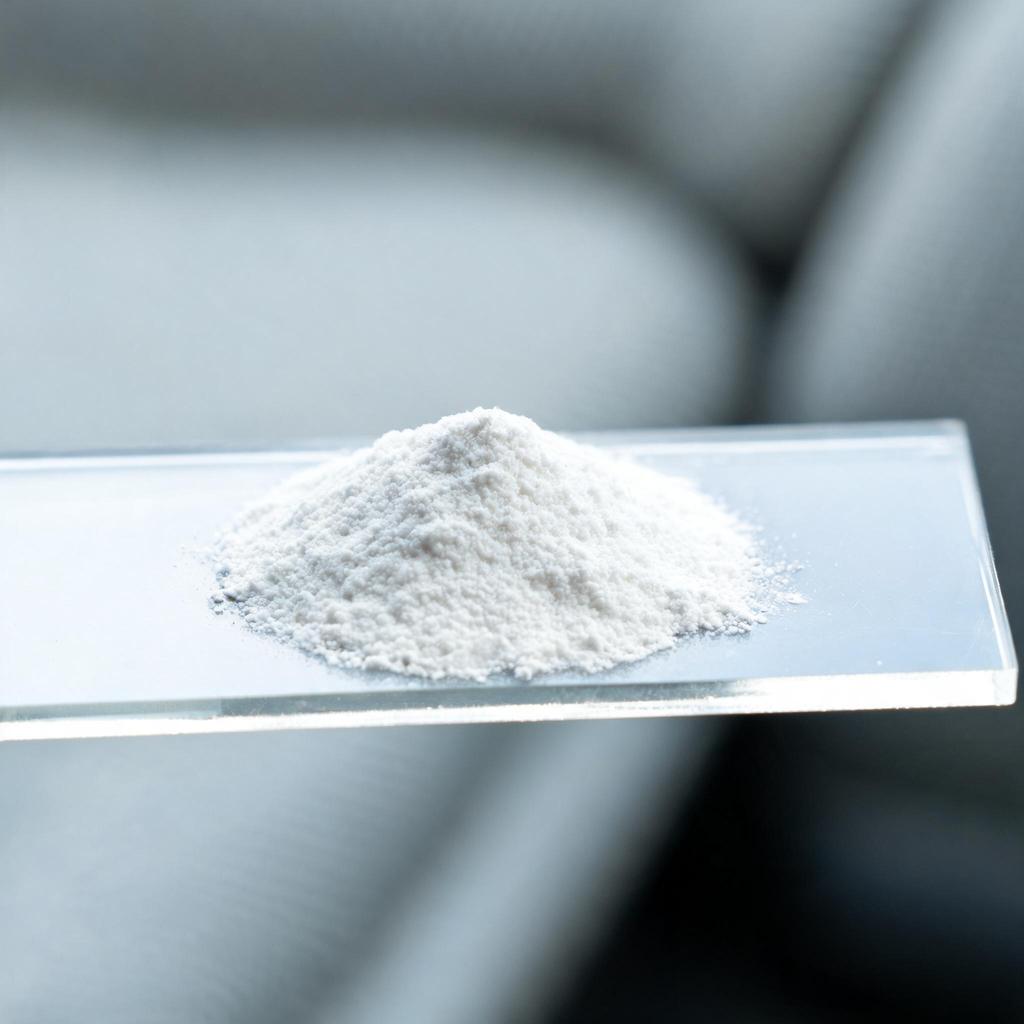
The Regulatory Tsunami: From "New Car Smell" to Toxicological Compliance
The global automotive industry is currently navigating a complex transition where consumer perception and strict environmental regulations are converging. Historically, the focus was on mitigating the subjective "new car smell." Today, the paradigm has shifted entirely toward Vehicle Interior Air Quality (VIAQ) and the mitigation of toxic Volatile Organic Compounds (VOCs). With the European Union proposing a stringent formaldehyde limit of <62 μg/m³ and Japan enforcing a total VOC (TVOC) limit of 400 μg/m³, manufacturers face an unprecedented challenge. Furthermore, the proposed EU End-of-Life Vehicles (ELV) directive mandates that at least 25% of vehicle materials be recycled by 2030. This sustainability goal creates a paradox: recycled plastics and nonwovens often carry residual malodorous VOCs from their previous life cycles, threatening to breach new toxicity limits.
Thermodynamic Off-Gassing: Why Traditional Carbon Fails
To understand how to solve this, we must first understand the chemistry of the problem. The off-gassing of compounds like formaldehyde, acetaldehyde, benzene, and toluene from automotive trim materials is a thermodynamic process driven by temperature and pressure differentials. Standard testing protocols, such as ISO 12219-1:2021, require vehicles to be tested in three distinct modes:
- Ambient Mode: 23 °C - 25 °C with no air exchange.
- Parking Mode: Elevated temperatures specifically for formaldehyde measurement.
- Driving Mode: Simulating high heat after parking in the sun, which accelerates the desorption of carbonyl compounds and styrenes.
Traditional solutions rely on activated carbon filtration or masking fragrances. However, activated carbon operates via physical physisorption. At elevated cabin temperatures (often exceeding 60 °C in direct sunlight), the kinetic energy of the VOC molecules overcomes the weak van der Waals forces holding them to the carbon matrix. The gases simply desorb back into the cabin, leading to what researchers call the "re-emission effect." Fragrances, conversely, merely mask the odor while the underlying toxic aldehydes continue to accumulate, failing to meet IARC carcinogen exposure limits.
The Coordination Chemistry of LumenAxys™ Zinc Ricinoleate
This is where plant-based LumenAxys™ Zinc Ricinoleate provides a definitive technological advantage. Unlike passive carbon, Zinc Ricinoleate acts as an active chemical scavenger through robust metal-ligand coordination. When integrated into the polymer matrix of seat foams, headliners, or dashboard trims, the zinc center (Zn2+) forms highly stable dative covalent bonds with polar organic molecules.
For example, when formaldehyde (HCHO) or acetaldehyde off-gasses from urethane foams or adhesives, the lone pair electrons on the oxygen atom of the aldehyde coordinate with the Zn2+ ion. Because the ricinoleate fatty acid chain provides a massive steric shield, the resulting Zinc-Aldehyde complex becomes thermodynamically locked within the polymer phase. This prevents the aldehyde from ever reaching the gas phase, effectively breaking the off-gassing cycle permanently rather than just delaying it.
Engineering for the Recycled Materials Mandate
As OEMs push to incorporate post-consumer HDPE and bio-based textiles to meet the 25% recycled content mandate, they inherit a heavy burden of trapped volatile compounds. Studies indicate that recycled plastics can contain up to 32 distinct odorous substances at higher concentrations than virgin materials. Integrating LumenAxys™ directly into the extrusion or compounding process of these recycled materials allows the Zinc Ricinoleate to neutralize legacy contaminants before they are molded into the final automotive component. By targeting the source of the emission at the material level, manufacturers can achieve compliant VIAQ levels without adding bulky, aftermarket air purifiers to the vehicle's HVAC system.
Industrial Customization and Testing Protocols
Implementing LumenAxys™ requires precise formulation based on the specific trim material. For PU seat foams, where urea-formaldehyde crosslinkers are common, a loading of 0.5% to 1.5% w/w is typically optimized to ensure complete aldehyde capture during the curing phase. To validate performance, we recommend utilizing closed-chamber sampling tests under simulated driving mode conditions (up to 85 °C). By analyzing the headspace using GC-MS (Gas Chromatography-Mass Spectrometry), our clients can quantify the exact reduction in TVOCs and verify that individual pollutants like toluene and benzene fall well below the UNECE Draft Mutual Resolution (M.R.3) thresholds.
Frequently Asked Questions (FAQ)
Does LumenAxys™ alter the mechanical properties of automotive polymers?
No. Because it is a plant-based lipid salt, LumenAxys™ Zinc Ricinoleate acts as a compatible additive in most standard automotive matrices, including EVA, PU, and polyolefins, without compromising tensile strength or flexibility.
How does it handle nitrogen dioxide (NO2) from outdoor pollution?
While its primary strength is neutralizing off-gassed aldehydes and aromatic hydrocarbons from trim materials, the reactive zinc center also facilitates the oxidation of certain gaseous pollutants like NO2 entering the cabin, contributing to overall Vehicle Interior Air Quality.
Is it effective against the "new car smell" in shared mobility fleets?
Yes. Ride-share vehicles suffer from compounded human odor and continuous HVAC cycling. The permanent chemical locking of both synthetic off-gassing and external malodors ensures the cabin remains fresh over the extended lifecycle of fleet vehicles.