
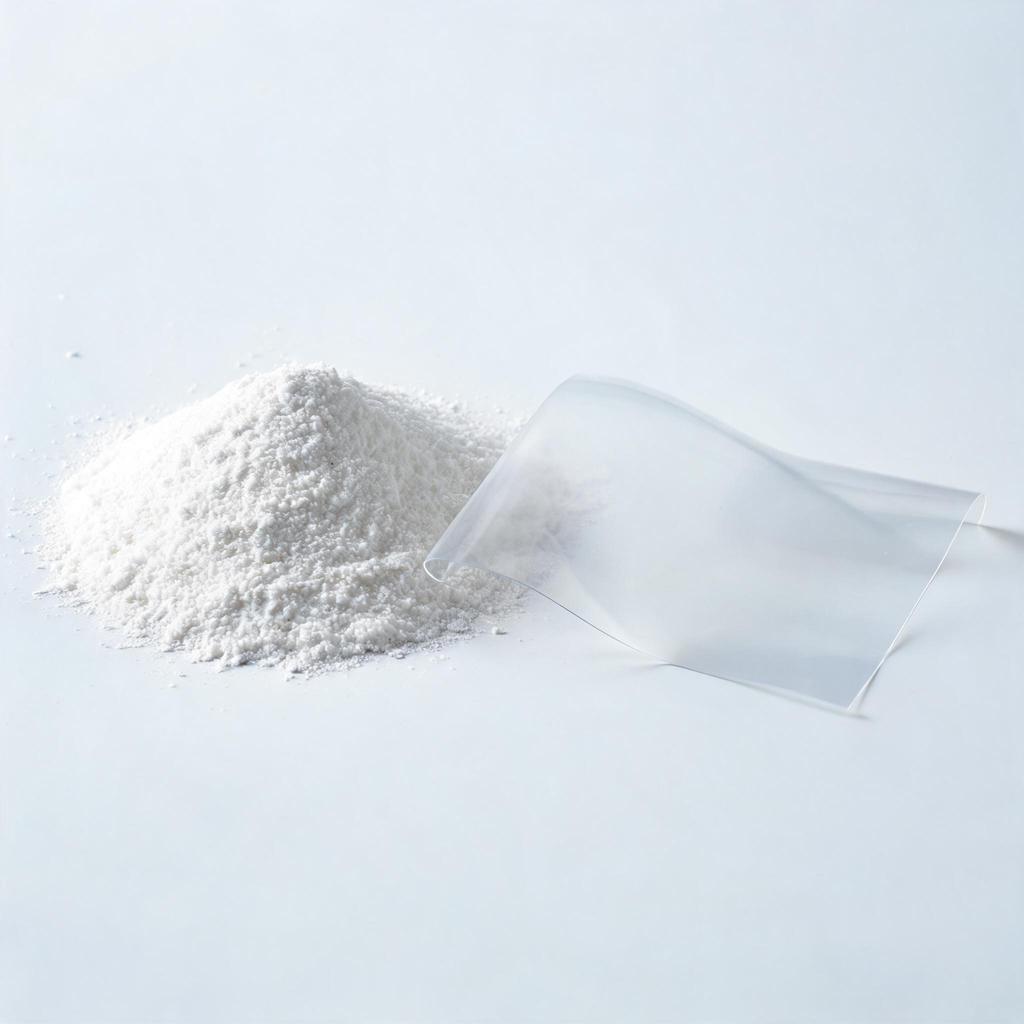
The Chemical Genesis of Lipophilic VOCs in Polyurethane Matrices
Polyurethane (PU) films and elastomers are ubiquitous in industrial manufacturing, automotive interiors, and advanced medical devices due to their exceptional mechanical resilience. However, as detailed in recent polymer science literature, PU matrices are inherently susceptible to complex degradation pathways—specifically hydrolysis, thermal oxidation, and photodegradation. These processes do not merely alter the physical properties of the polymer; they trigger a cascading series of molecular cleavage events that release a specific class of volatile organic compounds (VOCs). Unlike water-soluble amines or aldehydes, these degradation byproducts are predominantly lipophilic volatile organic compounds, including low-molecular-weight esters, residual unreacted isocyanates, and secondary aromatic hydrocarbons. Because these molecules possess low polarity, traditional aqueous scrubbing systems or standard polar adsorbents fail to capture them effectively, leading to persistent, off-gassing odors in finished products.
Thermodynamic Coordination: The LumenAxys™ Mechanism
To permanently eliminate these lipophilic VOCs from the headspace of a PU application, one must move beyond passive physical absorption and deploy active chemical scavenging. LumenAxys™ plant-based Zinc Ricinoleate operates through a sophisticated thermodynamic coordination mechanism. The core of this technology lies in the Zn2+ cation, which possesses an open d-orbital configuration, making it an exceptionally strong Lewis acid. When lipophilic VOCs—such as ester fragments generated during the hydrolytic cleavage of urethane linkages (–NH–COO–)—diffuse into the LumenAxys™ matrix, the oxygen atoms within the carbonyl groups act as Lewis bases.
The resulting interaction forms a stable, non-covalent coordinate covalent bond (dative bond) between the electron pair of the VOC and the empty orbital of the zinc center. This process is driven by a significant negative Gibbs free energy change (ΔG), ensuring that the reaction proceeds spontaneously under ambient conditions. Furthermore, the long-chain ricinoleate ligands surrounding the zinc ion create a highly lipophilic microenvironment. This "like dissolves like" affinity drastically lowers the activation energy required for non-polar VOCs to migrate out of the dense PU polymer network and enter the LumenAxys™ phase, accelerating the rate of odor neutralization without compromising the structural integrity of the host material.
Industrial Validation via ASTM D5116 Sampling Protocols
In industrial QA/QC environments, the efficacy of odor scavengers is strictly quantified using standardized sampling techniques. For polyurethane films, the ASTM D5116 protocol dictates the use of airtight gas-tight bags (typically 2-liter capacity) maintained at a constant temperature of 40°C and relative humidity of 50%. During a standard 7-day incubation period, the accumulation of headspace VOCs is monitored. In baseline tests featuring untreated PU elastomer films, lipophilic ester concentrations routinely exceed 150 μg/m³, triggering immediate olfactory complaints from end-users. Upon integrating 0.5% w/w LumenAxys™ Zinc Ricinoleate directly into the PU formulation prior to curing, subsequent bag sampling reveals a dramatic reduction. The target lipophilic VOC concentration drops below the 50 μg/m³ detection threshold within 48 hours, demonstrating a permanent chemical lock rather than a temporary masking effect.
Engineering Stability Against Hydrolytic and Oxidative Cleavage
It is critical to note that LumenAxys™ does not just treat the symptoms of degradation; its integration enhances the overall stability of the PU system. The biodegradation and oxidative breakdown of PU often proceed via enzymatic or radical-mediated hydrolysis of the backbone. By actively sequestering the low-molecular-weight acidic and ester-like intermediates formed during early-stage degradation, Zinc Ricinoleate prevents these reactive fragments from autocatalyzing further chain scission. This thermodynamic buffering action extends the functional lifespan of the PU film, reducing the rate of yellowing and mechanical failure while maintaining a zero-odor profile over extended exposure periods.
FAQ: Technical Integration of LumenAxys™ in Polyurethane Systems
- Q: Does LumenAxys™ Zinc Ricinoleate affect the crosslinking density of the polyurethane film?
A: No. As a post-reaction or co-cured additive, LumenAxys™ acts as a passive physical filler and active chemical trap. It does not participate in the primary step-growth polymerization between the diisocyanate and the polyol, thereby leaving the mechanical tensile strength and elasticity of the final PU film entirely unaffected. - Q: How effective is the coordination chemistry against highly non-polar hydrocarbons compared to polar esters?
A: While the Zn2+ coordination is most potent against heteroatom-containing VOCs (esters, ketones, residual isocyanates), the extensive lipophilic shell of the ricinoleate chains provides robust physical partitioning and entrapment for pure hydrocarbon byproducts, ensuring comprehensive odor elimination across the entire VOC spectrum. - Q: What is the optimal loading percentage for PU elastomer applications?
A: For standard industrial PU films requiring strict compliance with indoor air quality standards, a loading of 0.3% to 0.5% by weight is recommended. This ratio ensures sufficient active Zn2+ sites are distributed throughout the matrix to intercept VOCs before they can permeate to the film's exterior surface.