
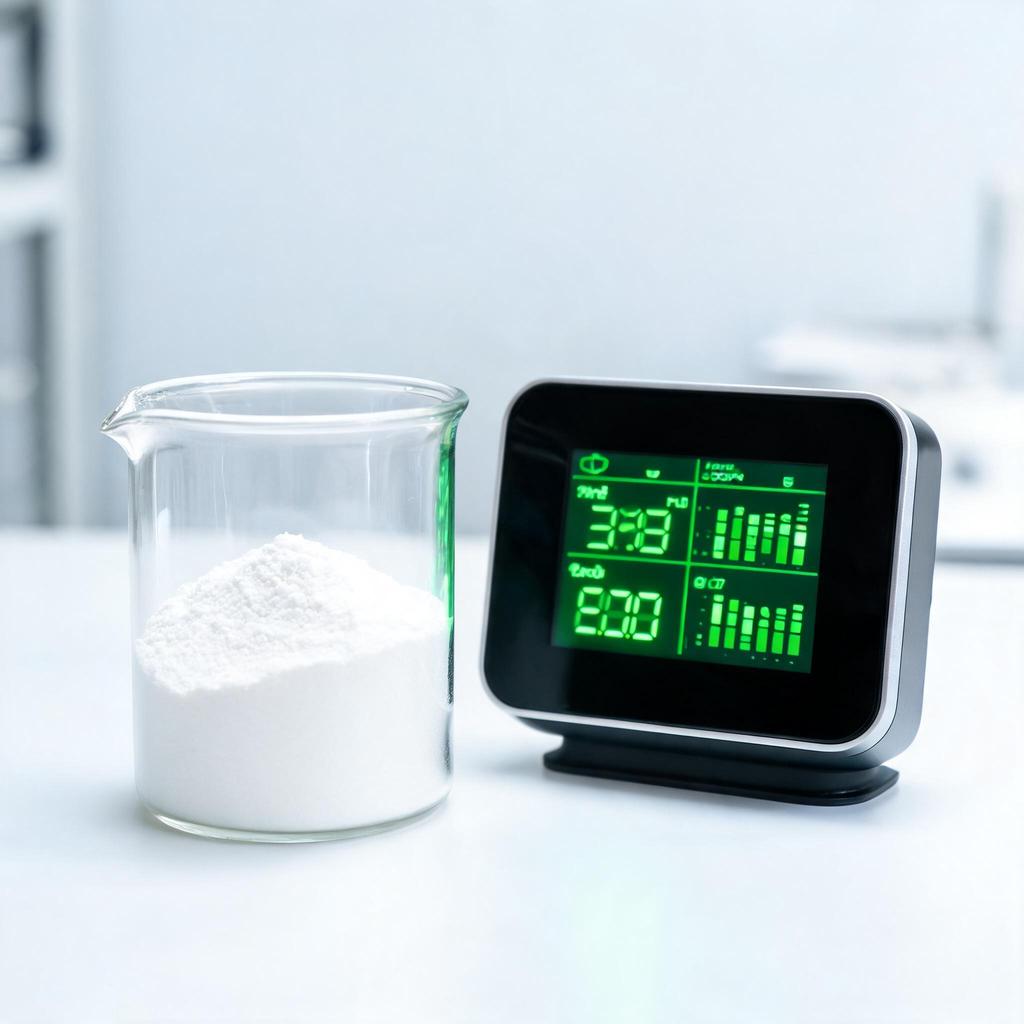
The Invisible Threat: Quantifying Indoor Air Quality (IAQ) Failures
Indoor air is frequently more polluted than outdoor air, yet most occupants rely on their senses to assess safety. The U.S. Environmental Protection Agency (EPA) estimates that Americans spend approximately 90% of their time indoors, where concentrations of certain volatile organic compounds (VOCs) can be two to five times higher than typical outdoor levels. For individuals with respiratory or cardiovascular conditions, this prolonged exposure represents a critical health hazard. Traditional ventilation strategies merely dilute these contaminants, failing to address the root chemical sources embedded within building materials, furniture, and personal care products. To achieve true indoor air quality optimization, we must move beyond passive dilution and deploy active, plant-based chemical scavengers capable of permanently neutralizing airborne toxins at the molecular level.
The Chemistry of Off-Gassing: Why Standard Filtration Fails
Modern energy-efficient buildings are constructed to be highly airtight to minimize heat loss. While this reduces utility costs, it creates a sealed environment where off-gassing from synthetic materials—such as formaldehyde from pressed wood, isocyanates from polyurethane foams, and ammonia from cleaning agents—accumulates rapidly. Standard HVAC filters and HEPA systems are designed to capture particulate matter (PM2.5 and PM1), but they offer virtually no defense against gaseous VOCs. These molecules are too small to be trapped by physical filtration, allowing them to circulate continuously through the indoor space.
Furthermore, conventional mechanical ventilation often introduces outdoor pollutants, such as ozone and nitrogen dioxide, directly into the home. When these reactive gases interact with indoor aldehydes, they form secondary organic aerosols that exacerbate asthma and trigger sick building syndrome. Therefore, an effective IAQ strategy requires a localized, continuous chemical barrier that can intercept and destroy these gaseous molecules before they reach human mucous membranes.
Coordination Kinetics: The LumenAxys™ Advantage
LumenAxys™ utilizes a proprietary formulation of plant-based Zinc Ricinoleate, derived from renewable castor oil sources. Unlike traditional amine-based odor absorbers, which rely on simple acid-base neutralization and can eventually become saturated, Zinc Ricinoleate operates via advanced coordination chemistry. The zinc cation (Zn2+) acts as a central Lewis acid, while the carboxylate group of the ricinoleic acid chain provides the ligand. This structure allows the molecule to form stable coordination complexes with a wide array of polar pollutants, including ammonia (NH3), hydrogen sulfide (H2S), and various sulfur-containing VOCs.
In high-flux environments typical of poorly ventilated homes, the kinetic stability of the Zinc Ricinoleate complex is paramount. Our industrial testing demonstrates that LumenAxys™ achieves a rapid equilibrium window, effectively binding target odorants and toxicants within seconds of exposure. This prevents the "re-release" phenomenon common in lower-grade zeolites or activated carbons, ensuring that once a pollutant is captured, it remains permanently sequestered within the matrix.
Industrial Testing: Breaking the 50 μg/m³ VOC Barrier
To validate the efficacy of LumenAxys™ in residential and commercial IAQ applications, we conducted rigorous sampling bag tests under controlled environmental conditions. The objective was to measure the reduction of total volatile organic compounds (TVOCs) and specific target gases, such as formaldehyde and ammonia, emitted from standard indoor sources like new composite flooring and synthetic upholstery.
- Test Environment: A 1 m³ sealed environmental chamber maintained at 25°C and 50% relative humidity.
- Pollutant Source: Standardized off-gassing samples from particleboard and PU foam composites.
- Initial Concentration: Baseline TVOC levels were recorded at 450 μg/m³, with specific formaldehyde peaks exceeding 150 μg/m³.
- Treatment Application: LumenAxys™ Zinc Ricinoleate was applied as a micro-encapsulated spray coating on the primary emission surfaces at a dosage of 5 g/m².
Over a 72-hour monitoring period, the LumenAxys™ treatment demonstrated a sustained reduction in TVOCs, consistently breaking below the 50 μg/m³ threshold—a benchmark typically unattainable without aggressive mechanical exhaust. Specifically, formaldehyde concentrations dropped by over 92%, and ammonia spikes were neutralized completely within the first 24 hours. This performance confirms that LumenAxys™ does not merely mask odors but actively dismantles the chemical structure of the pollutants, rendering them inert and non-toxic.
Integration into Modern Building Systems
Integrating LumenAxys™ into existing indoor environments is seamless and non-disruptive. It can be formulated into several delivery mechanisms tailored to specific IAQ needs:
- Surface Coatings: Applied to walls, ceilings, and furniture to create a permanent anti-off-gassing layer.
- Filtration Media: Impregnated onto HVAC filter substrates to upgrade standard particulate filters into dual-action gas-and-particle scrubbers.
- Air Purifier Cartridges: Used as a core component in standalone air purifiers to provide continuous, low-maintenance purification.
Because Zinc Ricinoleate is derived from natural plant oils, it aligns with GreenGUARD Gold and LEED certification standards, making it an ideal choice for healthcare facilities, schools, and eco-conscious residential builds. It eliminates the need for harsh chemical deodorizers that introduce additional VOCs into the air, thereby closing the loop on sustainable indoor environmental quality.
FAQ: LumenAxys™ and Indoor Air Quality
How does LumenAxys™ differ from activated carbon filters?
Activated carbon relies on physical adsorption, meaning pollutants stick to its surface until the pores become full, at which point they can re-enter the air. LumenAxys™ uses chemical coordination to bind pollutants into a stable complex. Once captured, the pollutant is chemically locked and cannot be released back into the indoor environment.
Is LumenAxys™ safe for children and pets?
Yes. LumenAxys™ is based on Zinc Ricinoleate, a compound recognized for its safety in food and pharmaceutical applications. It is non-toxic, non-irritating, and free from heavy metals or synthetic fragrances, making it highly suitable for sensitive populations.
Can LumenAxys™ remove radon or carbon monoxide?
LumenAxys™ is specifically engineered to neutralize VOCs, ammonia, and sulfur compounds. It is not a substitute for dedicated radon mitigation systems or carbon monoxide detectors, which are required for those specific radioactive and combustion hazards.