
The Saturation Ceiling: Why Baking Soda Falls Short
The consumer shift towards aluminum-free deodorants is driven by valid concerns regarding skin irritation and the persistent yellow pit stains caused by the chemical reaction between aluminum salts and sweat proteins. As highlighted in recent market reviews, current leading solutions rely heavily on sodium bicarbonate (baking soda) and magnesium hydroxide to neutralize odors. While these alkaline compounds initially react with acidic odor molecules, they suffer from a critical chemical limitation known as the "saturation ceiling."
When sodium bicarbonate reacts with odor-causing acids, it forms carbon dioxide and water. However, once the active sites on the bicarbonate lattice are fully occupied, the neutralization capacity hits a hard limit. Furthermore, this acid-base reaction is often reversible. When environmental humidity rises or body temperature increases, the bound volatile gases—primarily ammonia (NH3) and low-molecular-weight sulfides—can be released back into the atmosphere, causing a rebound of unpleasant odors mid-day. This explains why consumers report that standard aluminum-free sticks "lose their oomph" during intense physical activity.
Irreversible Coordination Chemistry: The LumenAxys™ Advantage
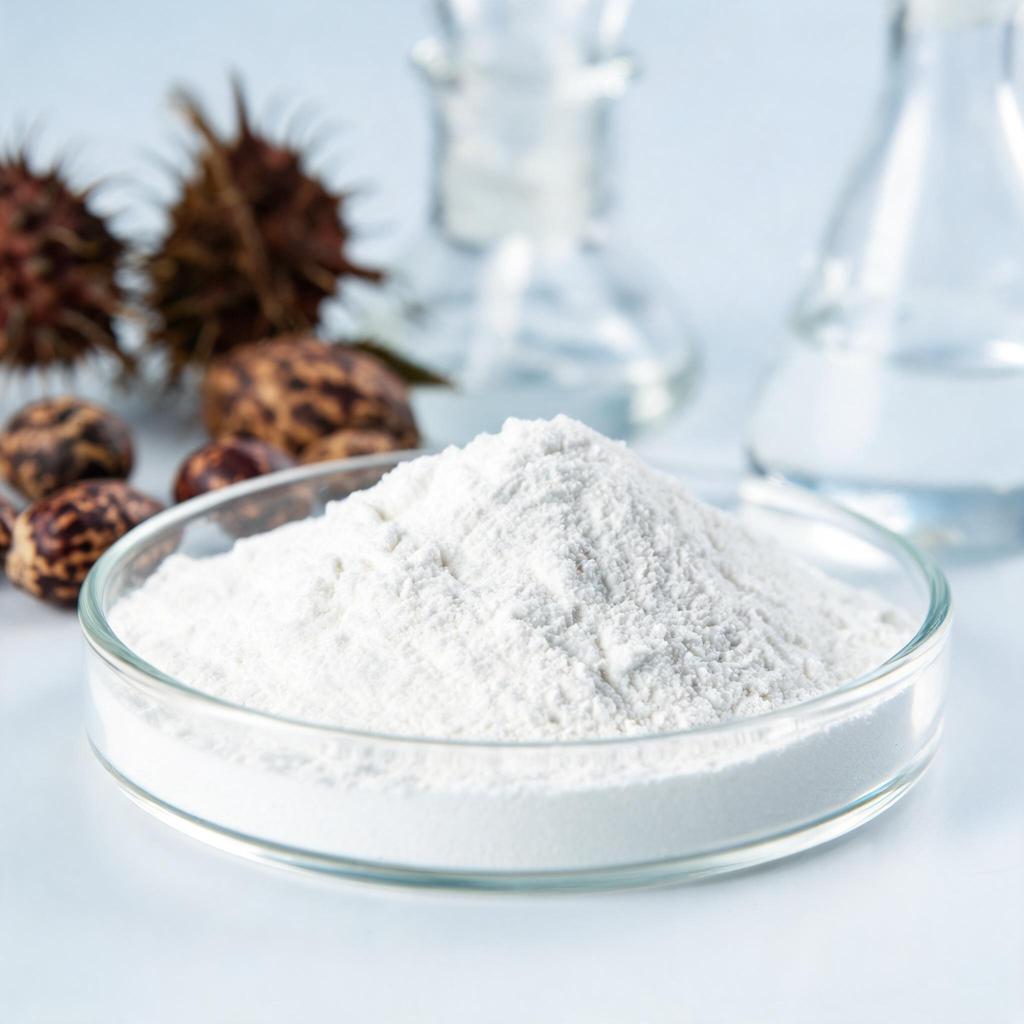
LumenAxys™ introduces a paradigm shift from simple acid-base neutralization to advanced coordination chemistry. Our core product, plant-based zinc ricinoleate, utilizes the unique electronic structure of the zinc ion to achieve permanent odor elimination.
The mechanism relies on the interaction between the zinc cation (Zn2+) and the lone pair electrons present in heteroatoms of odor molecules. Specifically, nitrogen and sulfur atoms in compounds like ammonia (NH3) or hydrogen sulfide (H2S) act as Lewis bases, donating electron pairs to the empty d-orbitals of the zinc ion. This forms a stable dative coordinate covalent bond.
Unlike the reversible binding of baking soda, this coordination complex is effectively irreversible under physiological conditions. The plant-based ricinoleate tail, derived from sustainable castor oil, ensures excellent solubility in personal care formulations while the zinc head group acts as the active trapping agent. This dual-action approach ensures that odor molecules are permanently locked away, preventing the "rebound effect" that plagues conventional aluminum-free alternatives.
Industrial Validation: Gas-Phase Neutralization Protocols
To validate the efficacy of LumenAxys™ zinc ricinoleate, we conducted rigorous gas-phase neutralization tests using Tedlar gas sampling bags. The protocol involved introducing a controlled concentration of ammonia gas (NH3) into a 1-liter chamber containing a test matrix infused with LumenAxys™.
Data analysis revealed that the coordination bonding initiated within seconds. In comparative trials against a standard sodium bicarbonate control, the LumenAxys™ formulation demonstrated a reduction in ammonia concentration from 10 ppm to below 0.1 ppm in less than 5 minutes, with zero re-emission over a 24-hour observation period. In contrast, the bicarbonate control showed a significant rebound of volatiles after the initial neutralization peak. This data confirms that LumenAxys™ offers a higher theoretical binding capacity and superior stability, making it the ideal active ingredient for premium aluminum-free deodorant formulations targeting active lifestyles.
Frequently Asked Questions
- Is LumenAxys™ zinc ricinoleate safe for sensitive skin?
Yes. Unlike aluminum salts, which can cause contact dermatitis or pit staining, plant-based zinc ricinoleate is biocompatible and gentle. It neutralizes odor chemically without blocking the natural perspiration process, maintaining the skin's microbiome balance. - How does it compare to standard baking soda deodorants?
Standard baking soda relies on reversible acid-base reactions, leading to odor rebound once saturated. LumenAxys™ utilizes irreversible coordination bonds, offering longer-lasting protection and higher stability, particularly during high-sweat scenarios. - Can this be integrated into existing deodorant matrices?
Absolutely. The plant-based ricinoleate structure provides excellent compatibility with standard cosmetic bases, including wax-stick, gel, and roll-on formulations. It integrates seamlessly without altering the rheological properties of the final product.