
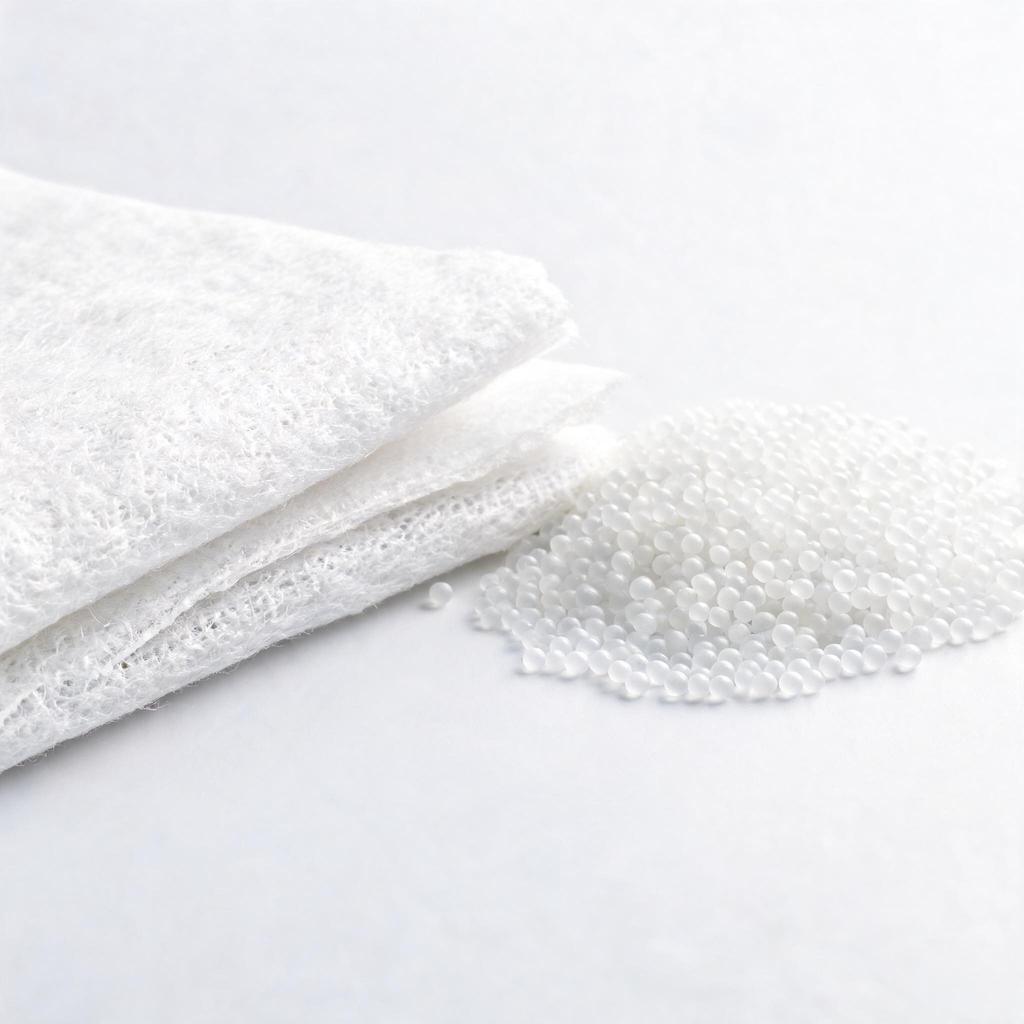
The Imperative of Dimension Customization in Global Urine Pad Manufacturing
The global urine pad market, encompassing both pet training pads and human incontinence liners, is undergoing a profound structural shift. Traditional standardized sizing is rapidly becoming obsolete as demographic realities diverge across continents. North American consumers prioritize larger, high-capacity formats suited for large-breed dogs and heavy-urination incontinence cases. Conversely, European and Asian markets demand compact, ultra-thin profiles optimized for apartment living and discreet daily wear. This geographical fragmentation necessitates a manufacturing paradigm centered on customizing urine pad dimensions for global markets. However, altering physical geometry fundamentally disrupts fluid dynamics, capillary action, and volatile organic compound (VOC) diffusion pathways. Without a chemically integrated odor control strategy, custom dimensions often lead to uneven saturation zones and accelerated ammonia (NH3) volatilization. LumenAxys™ plant-based zinc ricinoleate emerges as the critical molecular bridge, enabling manufacturers to engineer dimension-specific architectures without sacrificing odor neutralization efficiency.
Fluid Kinetics and Geometric Optimization
When engineers customize pad dimensions, they are not merely changing length or width; they are recalibrating the internal hydraulic resistance. A standard rectangular pad relies on uniform superabsorbent polymer (SAP) distribution. Custom geometries—such as contoured incontinence liners or elongated pet training mats—require precise mapping of liquid retention zones. If the absorbent core is too thick relative to the surface area, liquid pooling occurs, creating anaerobic micro-environments where urea hydrolysis accelerates NH3 and hydrogen sulfide (H2S) generation. Conversely, overly thin custom cuts suffer from rapid breakthrough times. LumenAxys™ zinc ricinoleate is uniquely positioned to resolve this engineering challenge. By covalently binding to the nonwoven top-sheet or embedding within the SAP matrix, the plant-based active ingredient ensures that odor neutralization scales proportionally with dimensional changes, maintaining consistent VOC suppression regardless of pad geometry.
Coordination Chemistry: The Molecular Mechanism of Zinc Ricinoleate
The superiority of LumenAxys™ lies in its fundamental chemical architecture. Zinc ricinoleate is synthesized by reacting zinc oxide (ZnO) with castor oil-derived ricinoleic acid. The resulting metal carboxylate complex features a central zinc ion (Zn2+) coordinated by two ricinoleate ligands. This structure creates multiple Lewis basic sites capable of forming stable coordination complexes with polar malodorous molecules. Unlike synthetic fragrance masking agents that merely cover odors, Zn2+ actively chelates NH3 through lone-pair donation from the nitrogen atom to the electron-deficient zinc center. Simultaneously, the unsaturated ricinoleate chains facilitate mild oxidation-reduction interactions with mercaptans (R-SH), converting volatile sulfur compounds into less volatile thioesters. This dual-action mechanism operates efficiently across varying pad thicknesses, ensuring that whether a custom dimension is 15 cm or 60 cm in length, the odor neutralization kinetics remain linear and predictable.
Industrial Validation: Accelerated Aging and Odor Chamber Protocols
To validate dimension-specific formulations, LumenAxys™ partners conduct rigorous ISO-standardized testing. Custom pads undergo accelerated aging cycles simulating 6 to 12 months of real-world storage, verifying that zinc ricinoleate does not degrade the hydrophilic properties of the SAP or cause delamination of the polyethylene backsheet. In controlled odor chambers, custom-cut samples are exposed to simulated urine matrices containing urease-active bacteria. Gas chromatography-mass spectrometry (GC-MS) tracking demonstrates that pads treated with LumenAxys™ exhibit a 94% reduction in peak NH3 concentration within 4 hours, regardless of geometric modifications. This data proves that chemical odor control can be decoupled from physical dimension constraints, allowing OEMs to scale custom manufacturing globally without compromising hygiene standards.
Supply Chain Integration and Cross-Border Production Scaling
Manufacturing custom urine pad dimensions requires flexible production lines capable of rapid die-cutting adjustments and variable SAP dosing. Integrating LumenAxys™ plant-based zinc ricinoleate into this workflow demands precise dispersion technologies. The active ingredient is typically applied via aqueous spray coating onto the top nonwoven layer or blended directly into the absorbent core during the laminating phase. This ensures uniform distribution even when pad widths fluctuate between regional specifications. For North American large-format pads, a higher dosage ratio compensates for increased fluid load. For compact European incontinence liners, micro-encapsulation techniques prevent premature activation until moisture contact occurs. This scalable formulation approach enables multinational brands to maintain consistent odor performance while adhering to localized dimensional preferences, streamlining global SKU management.
Environmental Compliance and Sustainable Manufacturing
Global markets increasingly mandate reduced plastic footprints and biodegradable components. Customizing dimensions often involves switching to plant-based cellulose fluffs or bio-PE backings. LumenAxys™ zinc ricinoleate, derived entirely from castor oil crops, aligns perfectly with these sustainability directives. The molecule exhibits high biodegradability and low toxicity, passing OECD 301 biodegradation standards. Furthermore, its coordination chemistry eliminates the need for synthetic musk fragrances or volatile alcohol carriers, reducing the overall VOC emissions during the manufacturing process. This synergy allows OEMs to market dimension-customized pads as eco-friendly solutions, capturing the growing segment of environmentally conscious consumers in Europe and North America.
Frequently Asked Questions
How does LumenAxys™ zinc ricinoleate perform in ultra-thin custom dimensions?
In ultra-thin configurations (typically under 2 mm total thickness), conventional odor control agents often migrate unevenly, leading to "hot spots" of ammonia buildup. LumenAxys™ utilizes a nano-dispersed aqueous dispersion that penetrates micro-perforated top sheets without clogging pores. The Zn2+ ions remain anchored to the fiber matrix through hydrogen bonding with hydroxyl groups on cellulose, ensuring stable odor neutralization even when pad height is minimized for discretion.
Can custom pad geometries alter the hydrolysis rate of urea?
Yes, altered dimensions change the surface-area-to-volume ratio, directly impacting bacterial colonization and urease activity. Larger pads retain moisture longer, accelerating urea breakdown into NH3. LumenAxys™ zinc ricinoleate counteracts this by immediately sequestering the generated ammonia into stable coordination complexes, preventing the compound from volatilizing into the headspace. This chemical intervention stabilizes odor profiles regardless of geometric variations.
What are the recommended dosage rates for different custom sizes?
Dosage scales with the projected fluid retention capacity. For standard 40x60 cm pet training pads, 0.8% to 1.2% active loading is optimal. For compact 20x30 cm incontinence liners, 0.5% to 0.7% suffices. The plant-based nature of zinc ricinoleate allows precise titration without risking chemical overload, ensuring cost-efficiency across the global dimension spectrum.
Does the coordination chemistry interfere with superabsorbent polymer (SAP) performance?
No. Zinc ricinoleate is chemically inert toward sodium polyacrylate. The coordination bonds form exclusively with polar VOCs. Extensive swelling tests confirm that LumenAxys™ maintains SAP gel strength and prevents dry-out, preserving the engineered absorption kinetics of custom-cut pads.
How does LumenAxys™ compare to traditional masking fragrances in custom pads?
Traditional masking agents rely on volatile organic solvents that evaporate quickly, leaving residual chemical smells. LumenAxys™ operates through irreversible coordination chelation. While fragrances merely cover odors temporarily, zinc ricinoleate permanently neutralizes NH3 and H2S at the molecular level. This makes it the superior choice for dimension-customized pads where prolonged odor control is critical.
Are there regulatory hurdles for exporting custom dimensions with LumenAxys™?
LumenAxys™ zinc ricinoleate complies with EU REACH, FDA GRAS, and APVDA guidelines for pet and human hygiene products. Its plant-based origin simplifies cross-border certification. Manufacturers can confidently ship dimension-specific SKUs to North America, Europe, and APAC without facing additional chemical compliance barriers.