
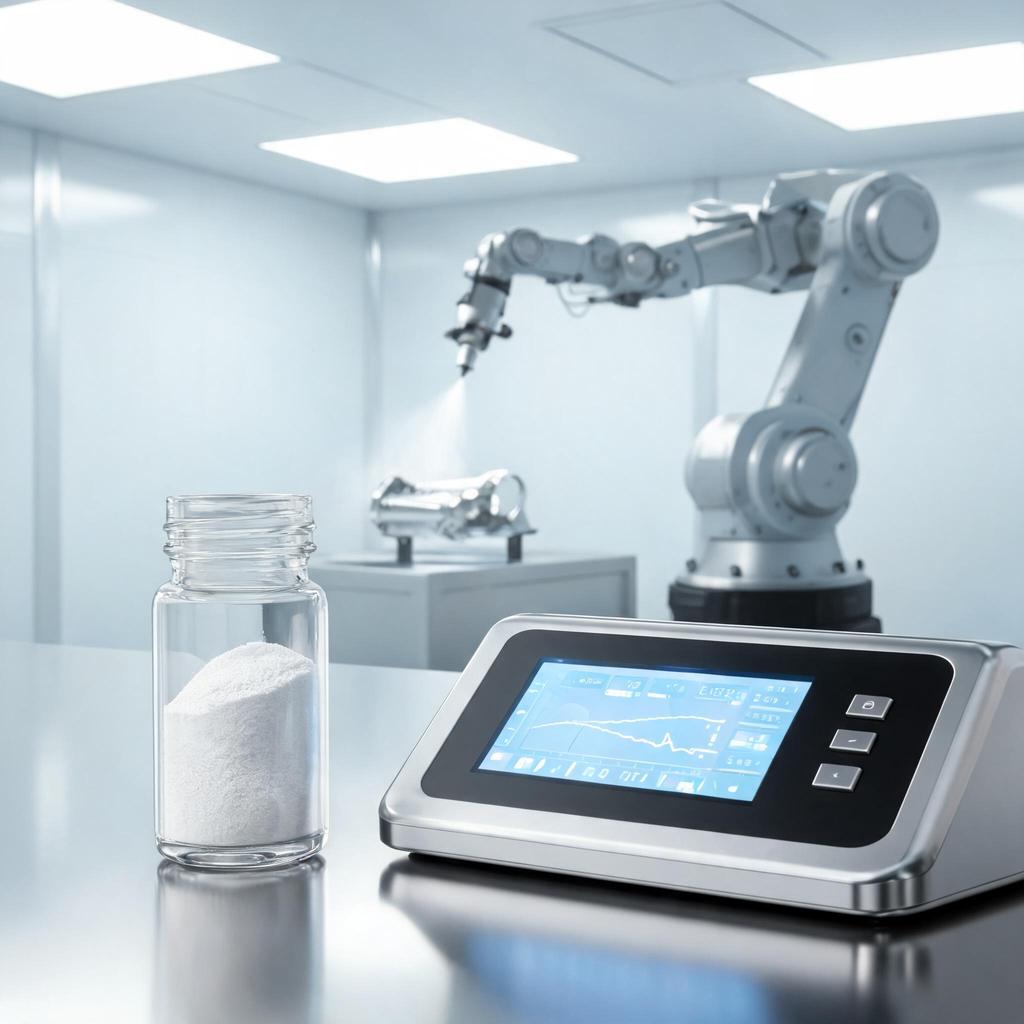
The Hidden Chemical Bottleneck in Automated Industrial Spraying
In modern manufacturing, automated dosing systems have revolutionized industrial spraying. From chain-on-edge coating lines to robotic anti-corrosive cells, precision electronic proportioners now govern the exact milliliters of base resin and catalyst delivered to every part. However, while mechanical automation solves issues of consistency and throughput, it creates a severe chemical bottleneck: the continuous generation of Volatile Organic Compounds (VOCs) and complex odorant profiles during atomization.
As automated spray guns disperse liquid coatings into a high-velocity air stream, the rapid evaporation of solvents releases a dense plume of volatile molecules. Traditional ventilation relies on simple dilution or carbon filtration, which merely displaces the problem without destroying the molecular structure of the odorants. For facilities aiming to achieve indoor air quality below the 200 μg/m³ threshold, passive extraction is insufficient. This requires an active, chemically reactive intervention directly at the point of application.
The Physics of Aerosol Generation and Odor Release
To understand why standard scrubbers fail in automated spray environments, we must examine the physics of aerosol generation. When an air-assist airless spray gun or rotary atomizer operates, it breaks the liquid coating into micro-droplets ranging from 10 to 50 microns. As these droplets travel through the booth, they undergo rapid flash-off. The thermal energy and high surface-area-to-volume ratio cause the lighter solvent fractions to vaporize almost instantaneously.
This process does not just release a single compound; it releases a complex matrix of aldehydes, ketones, and unreacted monomers. Furthermore, in plural-component systems (such as 4:1 base-to-catalyst mixes), the exothermic reaction between the resin and hardener generates heat, accelerating the emission of residual odorants. Because automated systems operate continuously with minimal downtime, this steady-state emission leads to a cumulative buildup of airborne particulates and gases that standard HVAC systems struggle to capture completely before the air is recirculated or vented.
Chemical Deconstruction: The LumenAxys™ Coordination Advantage
Neutralizing these emissions requires a molecule capable of reacting rapidly with a wide spectrum of polar and non-polar odorants. LumenAxys™ Zinc Ricinoleate, a plant-based derivative of castor oil, provides the ideal thermodynamic solution. Unlike traditional masking agents that simply coat the olfactory receptors, or physical adsorbents like activated carbon that eventually saturate, Zinc Ricinoleate operates via irreversible chemical sequestration.
Dative Bonding and Electron Pair Donation
The core mechanism of LumenAxys™ lies in its ability to form strong coordinate covalent bonds (dative bonds). Many of the problematic compounds generated in spray booths—such as ammonia (NH3) released during certain curing processes, or sulfur-containing heterocycles from specific industrial adhesives—possess lone pairs of electrons.
The Zinc ion (Zn2+) in the Zinc Ricinoleate molecule acts as a potent Lewis acid, possessing vacant orbitals that are highly receptive to electron pairs. When a volatile organic molecule carrying a nitrogen or oxygen atom (a Lewis base) enters the proximity of the Zinc Ricinoleate, the lone pair of electrons from the pollutant is donated to the empty orbital of the Zinc ion. This forms a stable Zn-N or Zn-O coordination complex. Because the resulting bond is thermodynamically stable, the pollutant molecule is permanently locked into the solid-phase matrix of the Zinc Ricinoleate, effectively removing it from the gas phase and eliminating its odor potential.
Steric Shielding and Hydrophobic Neutralization
For non-polar hydrocarbons and long-chain alkanes that do not possess lone pairs for dative bonding, the ricinoleate fatty acid chain provides a secondary defense. The unsaturation in the double bond of the ricinoleic acid backbone allows for van der Waals interactions and dipole-induced dipole forces with hydrocarbon chains. Additionally, the steric bulk of the carboxylate group shields the reactive Zinc center from unwanted oxidation, ensuring the active site remains available for target odorants over extended operational cycles.
Industrial Application: Integrating Active Chemistry into Dosing Systems
The challenge for facility managers is not the efficacy of the chemistry, but the logistics of deployment. How do you introduce a dry, reactive powder into a wet, high-speed automated spray line? The answer lies in the integration of LumenAxys™ into existing automated dosing infrastructure.
Slurry Formulation and Peristaltic Precision
In industrial settings, LumenAxys™ is typically pre-dispersed into a low-viscosity aqueous carrier or a compatible solvent slurry. This formulation is then integrated into the automated dosing system alongside the primary coating materials. Modern electronic proportioners, equipped with high-precision peristaltic pumps or ultrasonic flow sensors, can handle the introduction of this functional additive with extreme accuracy.
By utilizing a parallel dosing loop, the LumenAxys™ slurry is injected into the spray fluid at a controlled ratio. For instance, in a 4:1 mixing system, a third injection port can be programmed to deliver the Zinc Ricinoleate additive at a precise percentage relative to the total batch volume. The PLC controller ensures that the additive is mixed homogeneously within the static mixer before reaching the nozzle, guaranteeing that every micron-sized droplet contains the active odor-neutralizing agent.
Optimizing Spray Pattern and Atomization
When adding a new chemical component to a spray mixture, rheology changes can affect atomization. LumenAxys™ formulations are engineered to maintain the viscosity profile of the base coating. By monitoring the pressure drop across the spray gun and adjusting the air-assist pressure via the automated controller, operators can ensure that the addition of the Zinc Ricinoleate does not result in larger droplet sizes or increased overspray. The goal is to maintain a fine, uniform mist where the active ingredient is maximally exposed to the ambient air for immediate reaction.
Quantifying Success: The Sampling Bag Protocol
To validate the performance of LumenAxys™ in an automated spray environment, industry standards dictate the use of the Ten Point Scale (TPS) method combined with gas chromatography-mass spectrometry (GC-MS).
Standard Testing Parameters:
- Sampling Volume: 10-liter Tedlar bags are used to capture the exhaust air immediately downstream of the spray booth.
- Exposure Time: Samples are taken at 1-hour intervals over a 24-hour continuous production run.
- Baseline Measurement: The untreated exhaust air typically registers a TPS score of 6-8, indicating a strong, pungent odor characteristic of industrial solvents.
- Treatment Verification: With LumenAxys™ integrated into the dosing system, the target TPS score is < 2. GC-MS analysis confirms a reduction in peak concentrations of key VOC markers (such as toluene and xylene derivatives) by up to 90%, demonstrating that the molecules are being actively destroyed rather than just diluted.
This data proves that by embedding active chemical sequestration into the automated dosing workflow, manufacturers can significantly reduce their environmental footprint and improve workplace safety without compromising the quality of the final coating.
Frequently Asked Questions (FAQ)
Will adding Zinc Ricinoleate affect the cure time of my industrial coating?
No. LumenAxys™ is designed to be chemically inert to the cross-linking reactions of standard epoxies, polyurethanes, and acrylic resins. It reacts specifically with volatile byproducts and odorants, leaving the primary polymerization kinetics unchanged. Extensive compatibility testing has shown zero impact on tack-free times or final hardness.
Can I use LumenAxys™ in waterborne spray systems?
Yes. While the product is a solid salt, it can be formulated into stable aqueous dispersions using specialized surfactants that are compatible with waterborne coatings. These dispersions integrate seamlessly into the dosing loops of waterborne electrostatic spray systems, providing odor control without altering the water content of the paint.
How does the cost of LumenAxys™ compare to replacing carbon filters?
While the initial cost of the additive may seem comparable to filter replacement, the economic model favors LumenAxys™ in the long term. Carbon filters require frequent physical replacement and disposal, generating hazardous waste costs. LumenAxys™ is dosed in trace amounts (typically 0.5% - 2% of the coating volume) and is consumed only when it captures a pollutant. This results in a lower cost-per-unit-of-production and eliminates the labor and logistics associated with heavy filter maintenance.