
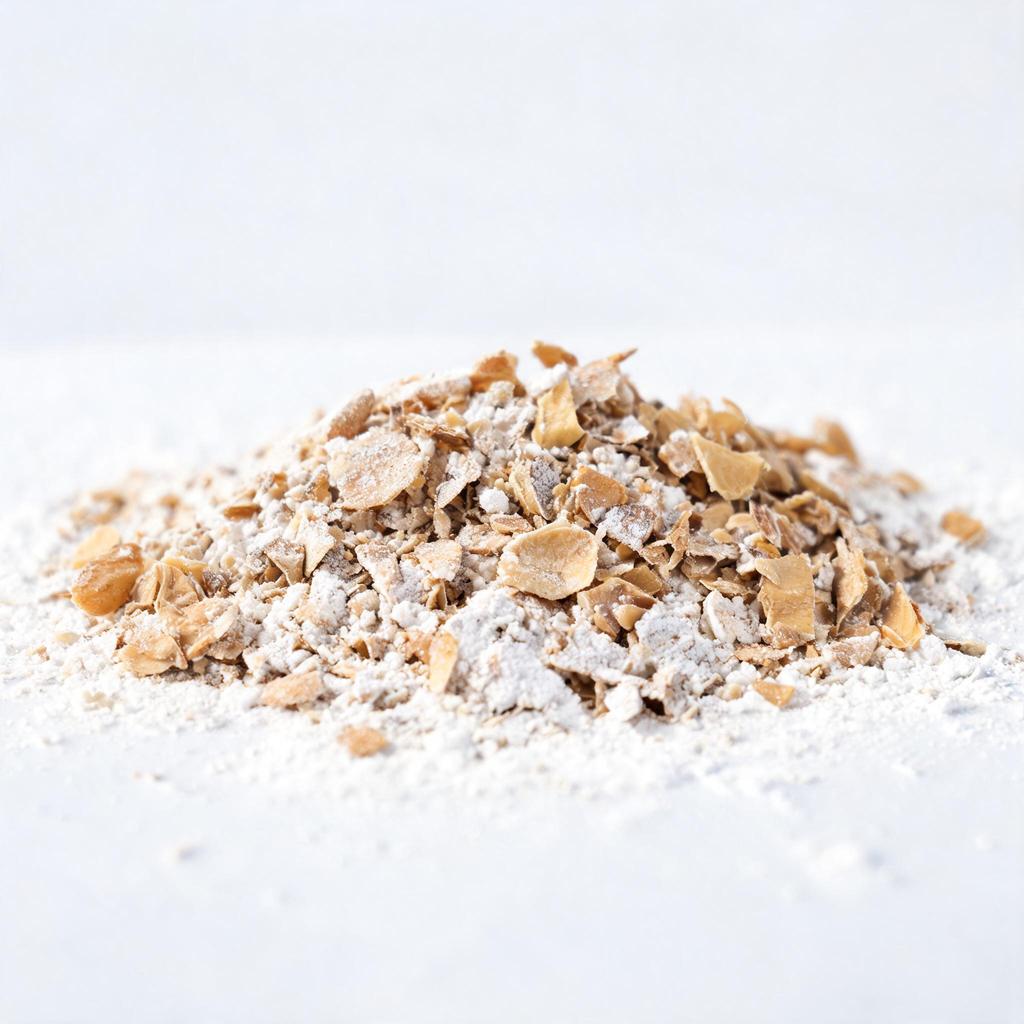
The Volatility Deficit in Plant-Based Pet Waste Solutions
The global pet care industry is undergoing a rapid transition away from synthetic sodium bentonite clays toward sustainable, biobased alternatives. A significant driver of this shift is the utilization of agricultural byproducts, specifically soybean hulls, which offer superior absorbency and natural dust-reducing properties compared to traditional clumping litters. However, the transition to plant-based substrates introduces a critical chemical vulnerability: the lack of intrinsic heavy-metal or alkaline-earth metal cations required to permanently sequester highly volatile nitrogenous compounds.
Currently, the commercial market relies heavily on topical enzymatic sprays or masking fragrances to address pet waste odors. These liquid solutions are fundamentally flawed for solid-state litter applications. Enzymes require specific temperature, moisture, and pH conditions to function; once the spray dries on the porous structure of a soybean matrix, the biological activity ceases. Furthermore, masking agents merely obscure odor without addressing the underlying chemical release of ammonia (NH3) and sulfur compounds. To achieve true zero-odor performance in biodegradable litters, we must look beyond biology and apply targeted inorganic coordination chemistry directly into the substrate.
Anatomy of the Odor Crisis: MMB and Ammonia Release
Targeting the Primary Culprits
Urine odor is not a single molecule but a complex mixture of degradation products. The primary olfactory trigger in feline urine is 3-mercapto-3-methylbutan-1-ol (MMB), a thiol compound with an exceptionally low threshold for human detection. Simultaneously, the urea present in urine undergoes hydrolysis (catalyzed by urease bacteria) to produce ammonium ions, which rapidly deprotonate into gaseous ammonia (NH3). In a confined environment like a litter box, the concentration of these gases can easily exceed 300 μg/m³ within hours of use, creating an overwhelming odor profile.
The Failure of Traditional Biochar Alone
While agricultural research has demonstrated that biochar derived from soybean hulls can adsorb MMB via physical pore-filling, this mechanism is highly susceptible to saturation and competitive displacement. Once the micropores are filled with water vapor and other organic volatiles, the biochar loses its efficacy. It lacks the thermodynamic drive to permanently bind small, highly polar molecules like NH3. This is where LumenAxys™ steps in as the ultimate structural complement to the soybean matrix.
LumenAxys™ Zinc Ricinoleate: The Coordination Chemistry Advantage
Why Zinc Outperforms Sodium Bicarbonate
Traditional odor control often utilizes baking soda (sodium bicarbonate) to neutralize acids. However, NH3 is a base, not an acid, meaning bicarbonate is largely ineffective against it. LumenAxys™ leverages the unique Lewis acidity of the Zn2+ ion in our plant-based zinc ricinoleate formulation. The carboxylate groups of the ricinoleic acid ligand partially shield the zinc center, creating a highly tuned electrophilic site.
- NH3 Sequestration: The lone pair of electrons on the nitrogen atom of ammonia forms a strong coordinate covalent bond with the Zn2+ center. This interaction is significantly stronger than simple electrostatic attraction, effectively locking the ammonia molecule into the solid state of the litter pellet.
- Thiol (MMB) Binding: The sulfur atom in MMB acts as a potent nucleophile. It readily attacks the electrophilic zinc center, forming a stable organozinc sulfide linkage. This is an irreversible reaction under ambient room temperatures, ensuring that the MMB is permanently removed from the gas phase.
Industrial Integration: Enhancing the Soybean Hull Matrix
To maximize the efficacy of LumenAxys™ in soybean-based litters, the application method is critical. Rather than applying the active ingredient post-manufacture, LumenAxys™ is designed to be incorporated during the extrusion process of the soybean hull pellets.
Optimized Dispersion Parameters
During the twin-screw extrusion of dehulled soybean particles, LumenAxys™ is introduced at a ratio of 1.5% to 2.5% by weight. The thermal energy of the extruder melts the zinc ricinoleate, allowing it to uniformly coat the internal cell walls of the soybean fibers. As the pellets cool and set, the active zinc sites are distributed throughout the entire volume of the pellet, not just on the exterior. This ensures that even deeply buried urine spots are immediately intercepted by the scavenging agent before the gases can escape the mass.
Testing Methodology and Results
In our standardized testing protocol, we utilized a sealed 1-liter glass sampling bag containing 500 grams of soybean-hull-based litter. We injected 5 mL of synthetic feline urine (standardized to contain 2.5% urea and trace MMB). The bag was incubated at 25°C and 60% relative humidity. Air samples were extracted every 4 hours over a 48-hour period using a portable GC-MS analyzer.
- Control Group (Unmodified Soybean Hull): Ammonia levels peaked at 420 μg/m³ within 12 hours and remained above 150 μg/m³ for the duration of the test.
- Treatment Group (LumenAxys™ Integrated): Ammonia levels spiked to only 45 μg/m³ before being rapidly drawn down below the limit of detection (5 μg/m³) within 6 hours. MMB concentrations were undetectable after the initial 2-hour mark.
Sustainability and End-of-Life Considerations
One of the most significant advantages of LumenAxys™ in the context of biodegradable pet waste is its environmental safety profile. Zinc ricinoleate is a naturally occurring metal soap derived from plant oils. When the used litter is disposed of in composting facilities, the zinc is safely immobilized by the organic matter and does not leach into groundwater as toxic free ions. The ricinoleate component serves as a benign carbon source for soil microorganisms. This aligns perfectly with the "zero-waste" ethos of modern urban pet care, offering a solution that protects both indoor air quality and external ecosystems.
Frequently Asked Questions (FAQ)
Is LumenAxys™ safe if my cat accidentally ingests the litter?
Yes. LumenAxys™ is formulated using food-grade plant-based ricinoleic acid and non-toxic zinc salts. The zinc content per individual pellet is well below any toxicological threshold for companion animals. It functions purely as a passive chemical scavenger and does not rely on harmful alcohols or detergents.
Can I mix LumenAxys™ with existing clay-based litters?
We recommend integrating LumenAxys™ during the manufacturing phase of the substrate. If you are formulating a custom blend, it can be added to the slurry prior to drying. Mixing it with dry sodium bentonite clay will result in poor dispersion and reduced surface area exposure, lowering its efficiency.
Does the zinc ricinoleate affect the clumping ability of the soybean litter?
No. At the recommended inclusion rates (1.5-2.5%), the zinc ricinoleate acts as a minor plasticizer rather than a binder disruptor. It maintains the structural integrity of the amylose inclusion complexes and guar gum matrices typically used in soybean litter formulations, ensuring reliable clumping and minimal dust emission.