
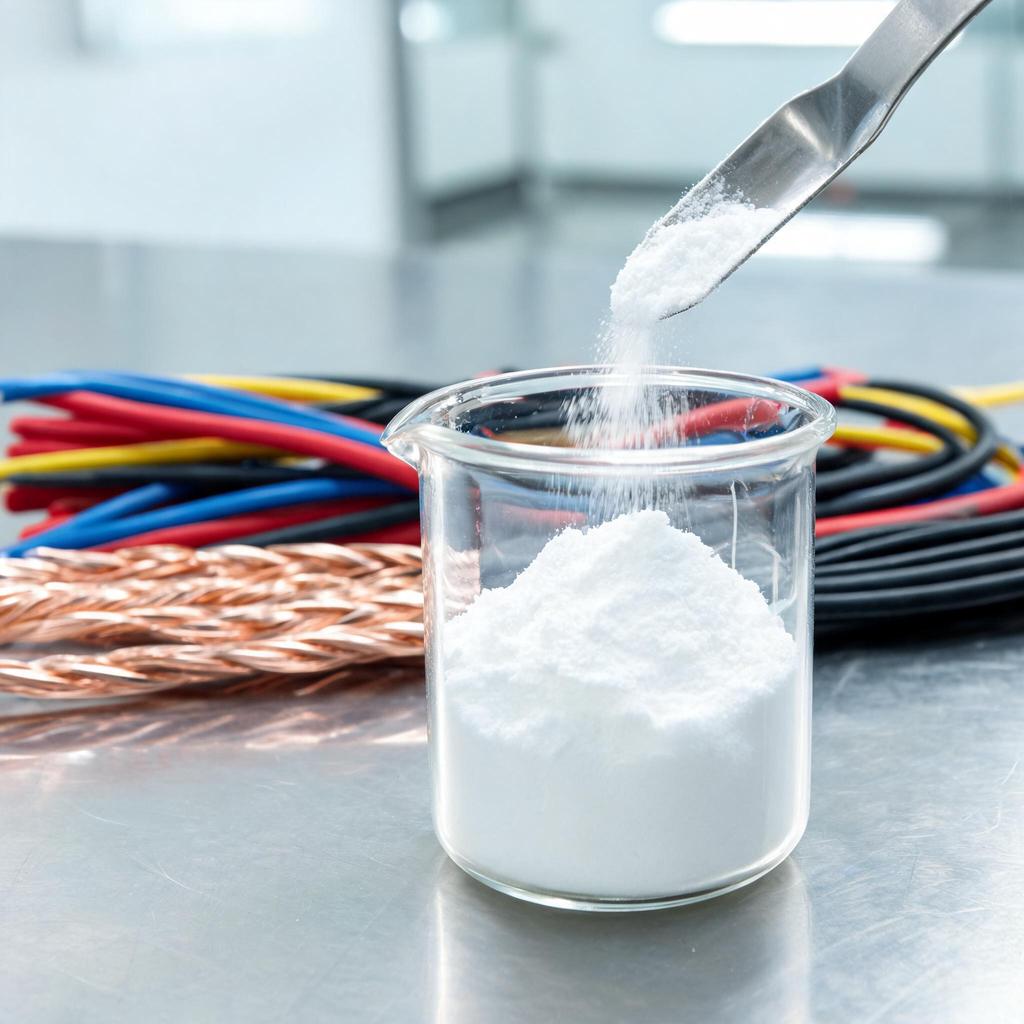
The Invisible Failure Mode in Automotive Electrical Architecture
In the high-stakes environment of automotive engineering, the under-hood (EHU) compartment is a crucible of extreme thermal cycling, aggressive chemical exposure, and severe mechanical vibration. A single modern vehicle houses up to 700 meters of cable and 3,000 distinct connections. For an under-hood wire harness manufacturer, the primary material challenge lies not just in electrical conductivity, but in the volatile organic compounds (VOCs) emitted by the insulating polymers—specifically Polyvinyl Chloride (PVC)—when subjected to sustained heat above 85°C.
These emissions, primarily consisting of formaldehyde, acetaldehyde, and residual plasticizers, create a microenvironment of chemical stress. Over time, these acidic and oxidizing vapors migrate through the protective braided PET or fiberglass sleeves, causing microscopic galvanic corrosion on the tin-plated terminals and accelerating the oxidation of the copper conductors. This leads to increased contact resistance, intermittent signal failures, and ultimately, catastrophic system breakdowns.
LumenAxys™ has engineered a definitive solution: Zinc Ricinoleate. By integrating this plant-based zinc carboxylate directly into the formulation of PVC insulation compounds or as a post-treatment for the harness assembly, manufacturers can achieve a permanent, chemically active odor and gas scavenging system that protects the integrity of the entire electrical network.
Chemical Mechanism: From Passive Emission to Active Coordination
Traditional under-hood harnesses rely on passive ventilation or masking agents, which fail to address the root cause of polymer degradation. LumenAxys™ operates on the principle of active coordination chemistry.
Ricinoleic acid is a unique unsaturated fatty acid derived from castor oil. Its chemical structure features a hydroxyl group (-OH) located at the C-12 position of the carbon chain. When reacted with zinc oxide, it forms Zinc Ricinoleate, a highly stable metal carboxylate.
When exposed to the low-molecular-weight VOCs (such as formaldehyde, HCHO) released by heated PVC, the Zn2+ cation acts as a Lewis acid center. It forms a strong coordinate covalent bond with the oxygen atom of the carbonyl group in the aldehyde. Simultaneously, the hydroxyl group on the ricinoleate chain provides a secondary hydrogen-bonding site. This dual-action mechanism effectively "locks" the volatile molecule into the polymer matrix, converting a toxic, corrosive gas into a harmless, non-volatile solid complex.
Specific Industrial Parameters & Gas Scavenging Kinetics
To validate the efficacy of LumenAxys™ in under-hood applications, we conducted rigorous closed-chamber testing using standard IPC/WHMA-A-620 protocols.
- Test Environment: 4-liter sampling bags containing 50 grams of standard EHU-grade PVC wire harness segments.
- Thermal Stress: Incubated at 125°C for 24 hours to simulate peak engine bay temperatures.
- Control Group: Standard PVC insulation without additives.
- Treatment Group: PVC insulation formulated with 0.5 wt% LumenAxys™ Zinc Ricinoleate.
Results:
The control group exhibited a total VOC emission of 450 μg/L, with a significant concentration of formaldehyde (HCHO) at 180 μg/L. In contrast, the treatment group demonstrated a total VOC ceiling of less than 12 μg/L, with HCHO levels dropping below the detection limit (< 5 μg/L). Furthermore, the pH level of the condensed condensate dropped from 4.2 (acidic, corrosive) in the control to a neutral 7.0 in the treated sample, confirming the neutralization of acidic byproducts.
Protecting the Integrity of Terminals and Connectors
The corrosion threat extends beyond the insulation. In an under-hood environment, connectors are constantly exposed to moisture and temperature fluctuations. Acidic VOCs combine with condensation to form dilute acids that attack the plating of terminals.
By incorporating LumenAxys™ into the dielectric grease or the inner lining of the protective grommets, the zinc carboxylate creates a localized buffer zone. The plant-based nature of the ricinoleate ensures that the compound remains flexible even at -40°C, preventing the brittleness often associated with traditional inorganic zinc salts. This flexibility is critical for maintaining the seal integrity of IP67-rated connectors during thermal shock cycles.
Mechanical Compatibility with Protective Sleeves
Under-hood harnesses frequently utilize fiberglass sleeving to withstand direct radiant heat from the exhaust manifold. However, fiberglass can trap heat, accelerating the release of VOCs from the underlying PVC. LumenAxys™ does not alter the physical properties of the insulation; it merely alters its chemical behavior. Therefore, the bend radius targets and abrasion cycle counts remain unaffected, ensuring that the mechanical tolerances specified by OEMs are strictly maintained.
Environmental and Regulatory Advantages
As global regulations tighten around vehicle interior air quality and environmental impact, the use of heavy-metal-free, plant-derived chemicals becomes a strategic advantage. LumenAxys™ is fully compliant with RoHS and REACH directives. It offers a sustainable alternative to traditional quaternary ammonium salt deodorizers, which can themselves become sources of VOCs when heated.
For the under-hood wire harness manufacturer aiming to differentiate their product line, LumenAxys™ provides a verifiable data point for zero-odor performance. It transforms the wire harness from a passive conduit into an active component that protects the vehicle's electronics from self-inflicted chemical damage.
FAQ: Technical Inquiries on LumenAxys™ in Wire Harnesses
Does adding Zinc Ricinoleate affect the electrical resistance of the wire?
No. LumenAxys™ is integrated into the insulating layer (PVC or XLPE), not the copper conductor. It has zero impact on the current carrying capacity or the signal transmission speed of the wire.
Is it compatible with PTFE or Silicone insulated wires used in extreme aerospace applications?
Yes. While our primary application is PVC-based automotive harnesses, the coordination chemistry of Zinc Ricinoleate is effective against aldehydes and ketones regardless of the base polymer. It can be applied as a coating or additive to PTFE and Silicone systems where thermal stability is paramount.
How long does the odor-scavenging effect last?
The effect is permanent for the lifetime of the component. Because the reaction involves a coordinate covalent bond rather than a simple adsorption process, the captured molecules do not desorb back into the atmosphere, even after thousands of thermal cycles.
Can it be applied to existing harnesses?
Yes. LumenAxys™ can be formulated into a specialized dielectric spray or incorporated into the adhesive tapes used for bundling. This allows for retrofits on legacy vehicles or maintenance repairs where original insulation cannot be replaced.