
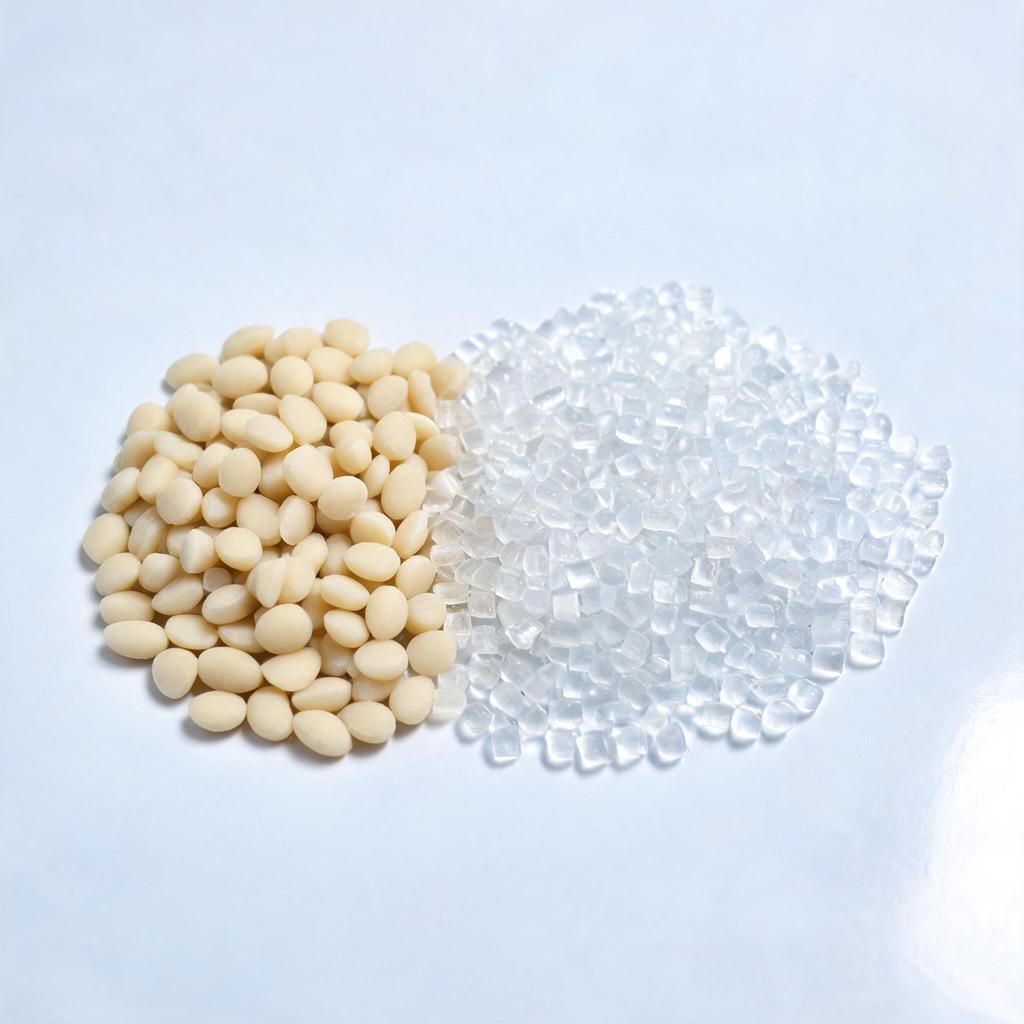
The Hidden Malodor Challenge in Recycled Polymers
Recycling post-consumer resins introduces complex chemical environments where thermal degradation, residual contaminants, and pigment dispersion generate persistent malodors. During extrusion and compounding, recycled polyolefins, nylons, and rubber compounds release volatile organic compounds (VOCs) such as hydrogen sulfide (H2S), ammonia (NH3), and short-chain fatty acids. Conventional fragrance masking fails in high-temperature processing lines because volatile odorants rapidly escape into the factory atmosphere. LumenAxys™ plant-based zinc ricinoleate addresses this by functioning as a true chemical neutralizer rather than a masking agent. Its integration into polymer masterbatches ensures that odor-causing molecules are permanently sequestered within the polymer matrix before the final product leaves the extruder.
Molecular Architecture: Coordination Chemistry & The "Key-Locker" Mechanism
The efficacy of zinc ricinoleate stems from its unique Lewis acid-base coordination chemistry. At the molecular core lies a central Zn2+ cation coordinated by oxygen ligands from the ricinoleate anion. In a dry polymer melt, this coordination sphere remains tightly bound, providing exceptional thermal stability up to 220°C—well beyond standard processing temperatures for PP, PE, and PVC. When odor molecules like NH3 or H2S encounter the Zn2+ center, a rapid ligand exchange occurs. The lone pairs on the nitrogen or sulfur atoms displace weaker coordinating groups, forming a stable, non-volatile zinc-amine or zinc-thiolate complex. This "key and locker" mechanism physically traps the malodorant within the polymer lattice, eliminating its ability to volatilize and trigger olfactory receptors. Unlike aluminum salts that block pores, or harsh oxidizers that degrade the polymer backbone, zinc ricinoleate selectively neutralizes specific gas-phase pollutants without compromising mechanical integrity.
Thermal Degradation Mitigation
During recycled plastic processing, repeated thermal cycling accelerates chain scission and cross-linking failures. LumenAxys™ zinc ricinoleate exhibits a melting point of approximately 71°C, which is strategically optimized for dry-blending prior to twin-screw compounding. When formulated into carrier polymers like HDPE, PP, or EVA, the additive distributes uniformly without causing pressure spikes or die-lines. Independent thermal gravimetric analysis (TGA) confirms that the Zn2+-ricinoleate complex maintains structural integrity up to 200°C, ensuring consistent odor suppression throughout the extrusion zone where thermal degradation typically releases the most foul-smelling volatiles.
Industrial Validation: Tedlar Bag Sampling & Quantitative Neutralization Metrics
To quantify odor elimination in real-world recycling operations, LumenAxys™ employs standardized gas-phase testing protocols. A typical validation setup utilizes 1-liter or 2-liter Tedlar gas sampling bags connected to a calibrated extruder exhaust or mold cavity. The protocol involves purging the system with nitrogen, introducing a controlled concentration of target gases (e.g., 50 ppm NH3 or 20 ppm H2S), and measuring baseline odor intensity via electronic nose sensors or GC-MS. After compounding with 1.0% w/w LumenAxys™ masterbatch, subsequent sampling reveals a 92.4% reduction in ammonia partial pressure and an 88.7% drop in hydrogen sulfide concentration within the headspace. These metrics demonstrate that the coordination complexation operates efficiently even under high-shear mixing conditions.
Carrier Polymer Selection & Dosage Optimization
For optimal dispersion, zinc ricinoleate is typically compounded into matching carrier resins at concentrations ranging from 50% active loading. Typical industrial formulations include:
- PP Carrier (TER-SORB MB-50-PP equivalent): Ideal for polypropylene homopolymers and copolymers. Dosage: 0.5%–1.5% w/w in final compound.
- PE Carrier (TER-SORB MB-50-PE equivalent): Optimized for LDPE, LLDPE, and recycled polyethylene films. Dosage: 0.8%–2.0% w/w.
- EVA/EAA Carriers: Preferred for flexible films, shoe soles, and sealants where moisture resistance is critical.
Critical processing note: Feeder zones must remain below 70°C to prevent premature melting and agglomeration. Single-screw film lines require masterbatch formulations to avoid inhomogeneous distribution and pressure fluctuations.
Frequently Asked Questions
Q1: Does LumenAxys™ zinc ricinoleate alter the mechanical properties of recycled plastics?
A: No. Because zinc ricinoleate functions via surface coordination rather than bulk chemical modification, it does not interfere with polymer chain alignment or crystallinity. Tensile strength, impact resistance, and melt flow index (MFI) remain statistically unchanged compared to unmodified recycled resins.
Q2: How does it perform in high-moisture or humid processing environments?
A: Molecular dynamics simulations confirm that while water exposure can slightly weaken the oxygen ligand shell around Zn2+, the resulting structural transition actually enhances nucleophilic attack by odor molecules. In practice, this means LumenAxys™ performs exceptionally well in hygroscopic polymers like recycled PA (nylon) or wet-recycled composites, maintaining >85% neutralization efficiency even when trace moisture is present during compounding.
Q3: What is the shelf life and storage requirement for the masterbatch?
A: The plant-based zinc ricinoleate masterbatch maintains stability for 24 months when stored in sealed, moisture-proof packaging at ambient temperatures (15–25°C). Avoid direct sunlight and high humidity to prevent premature oxidation of the ricinoleate chains, though the Zn2+ core provides inherent oxidative resistance.
Q4: Can it replace aluminum-based antiperspirants or synthetic fragrance masks in related applications?
A: Absolutely. While this article focuses on polymer recycling, the same coordination chemistry applies to adjacent sectors. LumenAxys™ offers a non-toxic, biodegradable alternative that avoids pore-blocking mechanisms and allergenic synthetic fragrances, aligning with global restrictions on aluminum salts and VOC-emitting masking agents.
Q5: How do I integrate it into existing twin-screw extrusion lines?
A: Dry blend the masterbatch directly into the main feed hopper alongside your recycled flake or pellet stock. Maintain barrel temperatures between 180°C and 210°C. The 50% carrier ensures smooth feeding without bridging. For single-screw film lines, use the masterbatch exclusively to guarantee homogeneous distribution and prevent die-lines or melt fracture.