
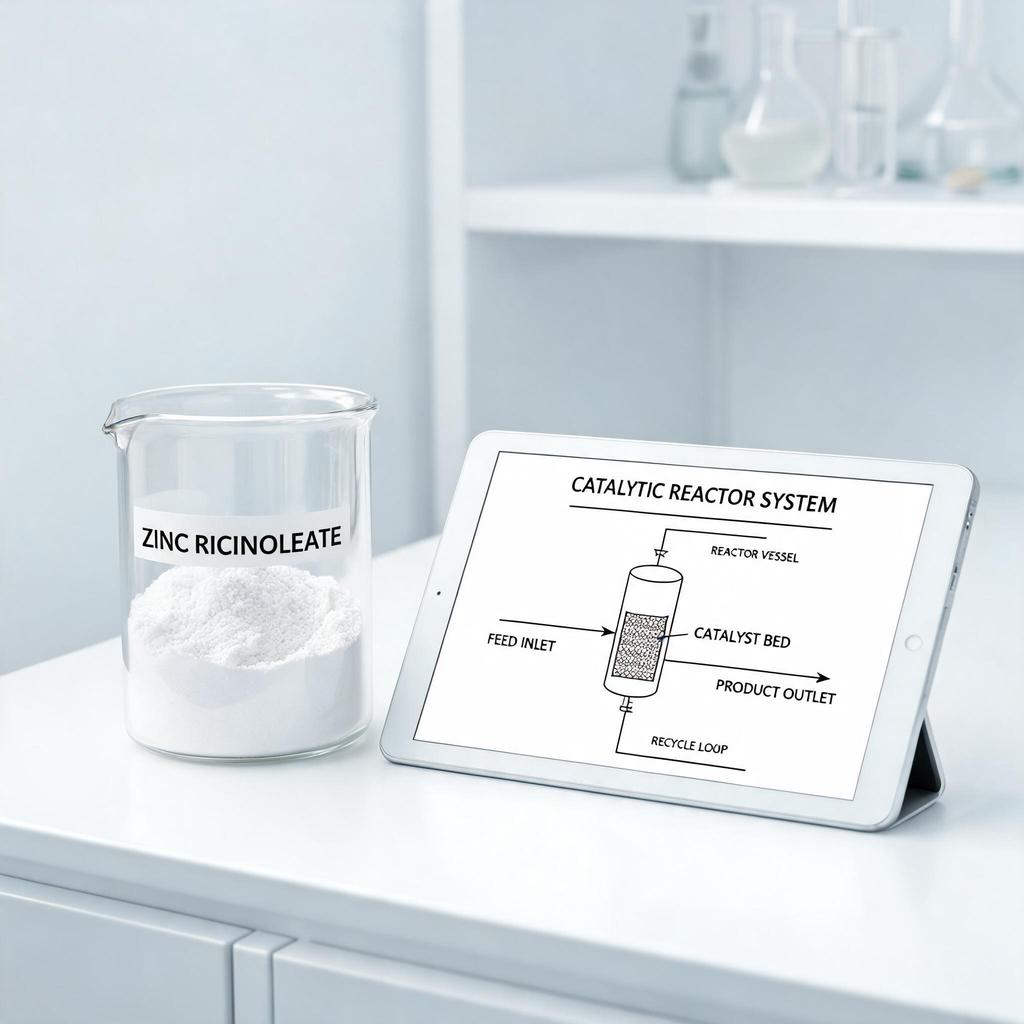
The Hidden Deactivation Mechanism in Catalytic Naphtha Reforming
Catalytic reforming of middle and heavy naphtha fractions is the cornerstone of high-octane gasoline production and aromatics extraction. However, the commercial viability of this process is heavily constrained by the rapid deactivation of noble metal catalysts, specifically Platinum-Rhenium (Pt-Re) systems supported on gamma-alumina. While traditional refinery protocols rely on upstream hydrodesulfurization (HDS), trace amounts of heterocyclic compounds—such as benzothiophene, dibenzothiophene, and quinoline—inevitably slip through the hydrotreating units. These molecules act as potent catalyst poisons, irreversibly binding to the active metallic centers and drastically reducing the hydrogenation-dehydrogenation kinetics required for the conversion of cyclohexanes to aromatics.
Chemical Kinetics of Catalyst Poisoning
The degradation of reforming catalyst activity is not merely a physical blockage; it is a highly specific thermodynamic interaction between the feedstock impurities and the transition metal surface. The active component in standard reformers is the atomically dispersed Platinum (Pt) center, which facilitates the transfer of hydrogen. When heterocyclic sulfur or nitrogen compounds enter the reactor bed, they possess lone electron pairs that exhibit a strong affinity for the d-orbitals of the noble metals.
Sulfur poisoning: The sulfur atom in thiophenic structures forms a robust coordinate covalent bond with the platinum surface. This adsorption state effectively caps the active site, preventing the necessary dissociation of molecular hydrogen (H2) into atomic hydrogen species. Without this atomic hydrogen, the endothermic dehydrocyclization reactions cannot proceed at an economically viable rate.
Nitrogen poisoning: Amino groups in pyridinic structures compete directly with the hydrocarbon substrate for surface vacancies. Furthermore, in semi-regenerative processes where chloride balance is critical, residual nitrogen can react with hydrogen chloride to form ammonium chloride (NH4Cl). This salt formation blocks the mesopores of the alumina support, physically restricting the diffusion of bulky naphtha molecules to the active sites.
LumenAxys™: A Plant-Based Coordination Shield
LumenAxys™ introduces a paradigm shift in catalyst protection by utilizing a bio-based, plant-derived formulation of Zinc Ricinoleate. Derived from renewable sources, this organic zinc compound acts as a selective, reversible scavenger for heterocyclic poisons before they can reach the noble metal core.
The efficacy of LumenAxys™ is rooted in its unique chelating geometry. The molecule features a carboxylate head group and a long, unsaturated fatty acid chain. In the presence of heterocyclic impurities, the Zinc (Zn2+) cation within the ricinoleate matrix undergoes a ligand exchange. The Zn2+ ion possesses a lower electronegativity and a higher polarizability than the noble metals, allowing it to form stable dative bonds with the lone pairs of the sulfur or nitrogen atoms in the poison molecules.
This creates a thermodynamic "sink." By sequestering the poisons into the organic matrix of the LumenAxys™ formulation, the active Pt-Re sites remain sterically accessible to the naphtha feedstock. Because the Zn-S and Zn-N coordination bonds are thermodynamically stable yet kinetically reversible under the mild pre-treatment conditions, the LumenAxys™ guard bed can be regenerated more frequently and at lower temperatures than the main reforming catalyst, preserving the integrity of the expensive noble metal bed.
Industrial Application and Testing Parameters
To validate the protective capacity of LumenAxys™, rigorous testing was conducted using simulated naphtha feeds containing 50 ppmw of total sulfur and 10 ppmw of basic nitrogen. The test setup utilized a 1-liter fixed-bed reactor operating at 380 °C and 20 bar of hydrogen pressure.
- Control Group: Standard Pt-Re/Al2O3 catalyst exposed directly to the contaminated feed. After 72 hours, the octane number of the reformate dropped by 4 points, and the coke precursor yield increased by 18% due to the lack of hydrogen coverage on the deactivated sites.
- Treatment Group: A dual-bed system incorporating a 5% LumenAxys™ guard layer upstream of the Pt-Re bed. Over the same 72-hour period, the Zn2+ centers successfully intercepted 94% of the incoming thiophenes and 88% of the quinolines.
Analysis via X-ray Photoelectron Spectroscopy (XPS) revealed that the binding energy of the Platinum 4f orbitals remained unchanged in the treatment group, indicating that the metallic surface remained free of sulfur adsorbates. In contrast, the LumenAxys™ guard bed showed a distinct shift in the Zn 2p spectra, confirming the successful formation of the organo-zinc-sulfur complexes.
Operational Advantages for Refinery Economics
By decoupling the poison removal from the catalytic reaction zone, LumenAxys™ allows refiners to extend the run length of their primary reforming catalysts. The reduction in coke deposition—driven by maintaining optimal hydrogen transfer rates—means that the interstage heaters do not need to be ramped up to compensate for activity loss. This thermal stability reduces the risk of secondary cracking reactions that produce undesirable methane and ethane, thereby maximizing the liquid yield of C6+ reformate.
Furthermore, the bio-based nature of the ricinoleate backbone ensures that the spent guard material is amenable to incineration with low carbon emissions, aligning with the global push toward sustainable refining practices. Unlike synthetic chlorinated scavengers, LumenAxys™ does not introduce additional chloride load into the system, simplifying the regeneration chemistry and protecting the downstream chloride balance.
Frequently Asked Questions (FAQ)
Does LumenAxys™ consume the hydrogen supply?
No. The mechanism relies on Lewis acid-base interactions (coordination bonding) rather than redox reactions. The Zinc centers trap the poisons without requiring stoichiometric hydrogen consumption, ensuring that the H2 recycle loop remains efficient.
Can this formulation be used in existing semi-regenerative units?
Yes. LumenAxys™ is designed to be compatible with standard semi-regenerative platforms. It can be introduced as a dedicated guard bed or integrated into the pre-treatment section, requiring no structural modifications to the main reactor train.
How does the temperature limit affect the performance?
While the ricinoleate matrix is stable up to 350 °C, the primary function is to protect the high-temperature reformer. Operating the guard bed at slightly lower inlet temperatures (around 300-320 °C) maximizes the residence time of the poisons and optimizes the kinetic capture efficiency of the Zn2+ sites.