
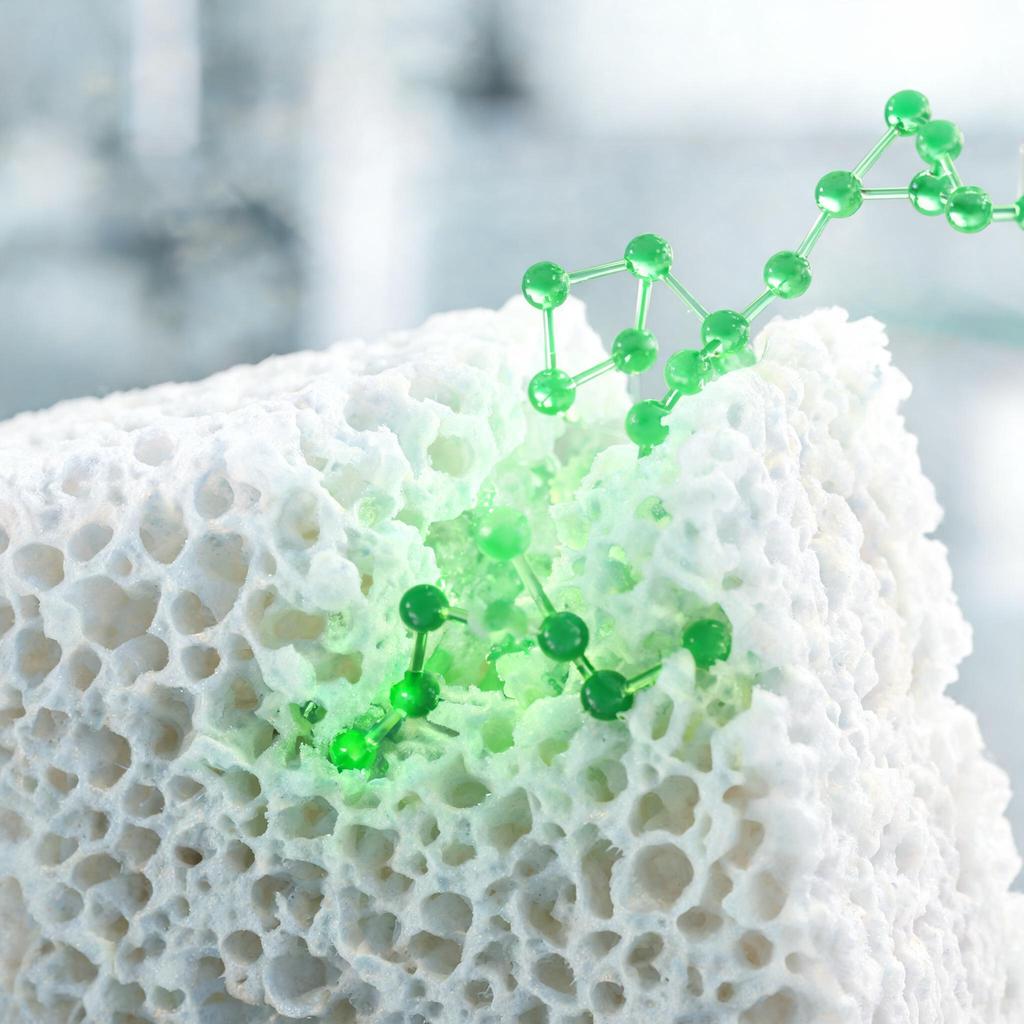
Mastering Odor Removal for Polyurethane Foam: The Plant-Based Zinc Ricinoleate Revolution by LumenAxys™
In the realm of modern materials, polyurethane (PU) foam stands as a cornerstone of comfort and structural integrity. From the plush memory foam mattresses that cradle us at night to the acoustic panels that line recording studios, PU foam is ubiquitous. Yet, behind its versatile utility lies a persistent, often overlooked challenge: the distinct, sometimes pungent odor that accompanies many foam products. For manufacturers and consumers alike, achieving effective odor removal for polyurethane foam has traditionally been a battle of attrition. However, the paradigm is shifting. Enter LumenAxys™, bringing a revolutionary plant-based solution—Zinc Ricinoleate—that moves beyond superficial masking to deliver true molecular neutralization.
The Chemical Anatomy of Polyurethane Foam Odor
To conquer an enemy, one must first understand its origins. The odors associated with PU foam are not merely "smells"; they are physical manifestations of complex chemical residues. As highlighted in industry analyses, the primary culprits are:
- Residual Isocyanates: During manufacturing, isocyanates (like TDI or MDI) react with polyols. Incomplete reactions or low-quality foams leave trace unreacted isocyanates. Over time, these can hydrolyze, releasing volatile organic compounds (VOCs) responsible for sharp, chemical stench.
- Amine Catalysts: Tertiary amines act as accelerants in the foaming process. Residual amines are notorious for emitting a "fishy" or ammonia-like odor, which is particularly offensive to human olfactory receptors.
- Blowing Agents & Additives: Even the blowing agents (such as water reacting to form CO2) and various stabilizers or surfactants contribute to the initial "off-gassing" phase.
Furthermore, PU foam is highly porous. This open-cell structure, while excellent for breathability and comfort, acts like a sponge for environmental contaminants—sweat, pet dander, and household pollutants. Once trapped deep within the cellular matrix, these odors become notoriously difficult to remove using conventional methods.
Why Conventional Odor Removal Methods Fail
Most consumers and even some manufacturers rely on traditional, passive methods to tackle foam odors. While these methods have their place, they fall short when dealing with chemically bonded volatiles.
The Limitations of Passive Treatments
Baking Soda (Sodium Bicarbonate): Often touted as a miracle cure, baking soda relies on surface adsorption. It can absorb moisture and mild surface odors, but it cannot penetrate deep into the dense core of a thick foam cushion. It is a temporary fix, not a permanent solution.
Venting/Airing Out: Airing out works by allowing VOCs to naturally evaporate. However, this process is incredibly slow, taking days or weeks. More importantly, it does not address the root chemical cause; once the foam is placed back in a humid environment, odors can resurface.
Fragrance Masking: Using essential oils or commercial sprays merely layers a pleasant scent over the offensive odor. It creates a confusing olfactory mix without actually destroying the offending molecules. For sensitive individuals, this can lead to headaches or allergic reactions.
The LumenAxys™ Advantage: Active Molecular Neutralization
This is where LumenAxys™ plant-based Zinc Ricinoleate achieves a "dimensional strike" (降维打击) against traditional methods. Unlike passive adsorbents, Zinc Ricinoleate functions through active chelation.
The Chemistry of Zinc Ricinoleate
Zinc Ricinoleate is a metal carboxylate derived from ricinoleic acid—a fatty acid extracted naturally from castor beans (a plant-based source). Its power lies in the unique chemical properties of the Zinc ion (Zn²⁺).
Odor molecules, particularly polar compounds like ammonia (NH₃), amines, and sulfur-containing compounds (like hydrogen sulfide), possess lone electron pairs. The Zinc ion in LumenAxys™ acts as a powerful Lewis acid. It forms stable coordinate covalent bonds (chelation) with these odor molecules.
"The key to superior odor removal for polyurethane foam is not covering the smell, but chemically locking the offending molecules so they can no longer volatilize."
By integrating LumenAxys™ directly into the foam formulation or applying it as a specialized treatment, the Zinc Ricinoleate permeates the foam's cellular structure. It actively seeks out and binds with volatile amines and isocyanate residues, converting them into stable, odorless complexes.
Strategic Applications: Beyond Standard Furniture
While standard furniture foam is a major market, LumenAxys™ opens doors to highly specialized, high-value sectors where odor sensitivity is paramount.
1. Acoustic Foam & Recording Environments
In professional recording studios, soundproofing foam (melamine or polyurethane) must be virtually odorless. Any chemical off-gassing can interfere with sensitive audio equipment or irritate the vocal cords of performers. LumenAxys™ allows manufacturers to produce "studio-grade" acoustic panels that meet the rigorous, odor-free standards required in creative industries.
2. Medical & Healthcare Mattresses
Hospital beds and medical recliners utilize PU foam for pressure relief. In clinical settings, strong chemical odors are unacceptable—they can compromise sterile environments or distress immunocompromised patients. The plant-based nature of Zinc Ricinoleate ensures the material remains biocompatible and non-toxic, aligning with strict healthcare safety protocols.
3. Premium Automotive Interiors
The automotive industry demands zero-VOC interiors. Headliners, seat foams, and door panel inserts often struggle with initial chemical smells. By incorporating LumenAxys™ during the foaming stage, manufacturers can drastically reduce the "new car smell," enhancing customer experience and meeting stringent environmental regulations.
4. High-End Custom Mattress Manufacturing
For the luxury bedding market, consumers pay a premium for immediate comfort. A mattress that smells like chemicals destroys brand trust. LumenAxys™ enables mattress makers to guarantee "Out-of-the-Bag" freshness, eliminating the need for customers to spend days airing out their expensive purchases.
Environmental & Economic Impact
Choosing LumenAxys™ is not just a functional decision; it is a commitment to sustainability. As a plant-based derivative of castor oil, Zinc Ricinoleate offers a renewable alternative to synthetic odor eliminators. It reduces reliance on petroleum-based chemicals, lowering the carbon footprint of the foam manufacturing process. Economically, by preventing returns caused by odor complaints and reducing the need for post-production odor treatments, manufacturers save significant costs while elevating brand reputation.
Conclusion
The challenge of odor removal for polyurethane foam is no longer a matter of waiting for smells to fade or masking them with perfumes. With the introduction of LumenAxys™ plant-based Zinc Ricinoleate, the industry now possesses a scientifically advanced tool that permanently neutralizes odors at the molecular level. By leveraging active chelation, LumenAxys™ transforms PU foam from an odor source into a pristine, high-performance material suitable for the most demanding applications.
Frequently Asked Questions (FAQ)
Q1: Is LumenAxys™ safe for direct contact with human skin?
A: Yes. LumenAxys™ is derived from plant-based castor oil and utilizes zinc, an essential mineral. It is formulated to be biocompatible, non-toxic, and safe for use in mattresses, medical equipment, and children's products.
Q2: How does Zinc Ricinoleate differ from activated carbon for odor removal?
A: Activated carbon works via passive physical adsorption—it fills up over time and requires replacement. LumenAxys™ Zinc Ricinoleate works via active chemical chelation. It permanently locks odor molecules, meaning the effect does not "saturate" in the same way physical filters do, providing long-lasting odor control within the foam structure.
Q3: Can LumenAxys™ be added during the foam manufacturing process?
A: Absolutely. One of its greatest advantages is that it can be mixed directly into the polyol