
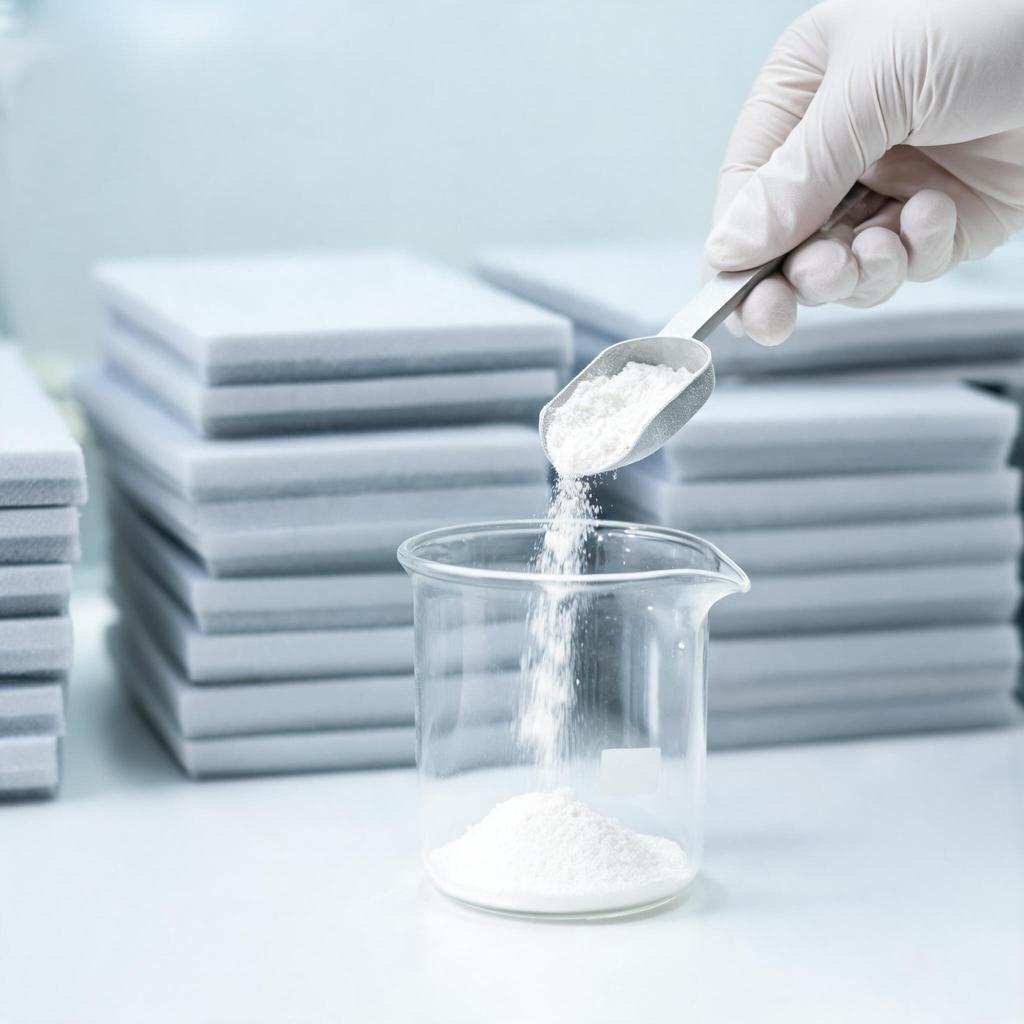
The Hidden Volatile Organic Compound (VOC) Burden in Closed-Cell EVA Foam Extrusion
Ethylene Vinyl Acetate (EVA) foam has become the definitive elastomeric polymer for applications ranging from high-density protective packaging and automotive gaskets to footwear midsoles and acoustic insulation. However, as global regulatory standards tighten—particularly concerning indoor air quality and occupational safety—the "invisible" chemical footprint of EVA foam sheet manufacturing has emerged as a critical bottleneck for primary manufacturers and converters.
The core issue lies not in the base polymer itself, but in the crosslinking chemistry required to produce closed-cell structures. Most commercial EVA formulations are cured using organic peroxides (such as dicumyl peroxide or benzoyl peroxide). During the extrusion and foaming process at elevated temperatures (typically 180°C to 220°C), these peroxides undergo radical decomposition. While this successfully creates the necessary crosslinked network, it simultaneously generates a complex matrix of low-molecular-weight volatile organic compounds (VOCs), including acetone, acetaldehyde, unreacted monomers, and trace amounts of sulfur-containing compounds if legacy processing aids were used. These off-gassing agents are responsible for the distinct, pungent "chemical factory" odor that persists in freshly manufactured EVA sheets, often failing to dissipate even after weeks of ambient aging.
For OEMs and fabricators sourcing EVA foam sheets, this lingering odor presents a severe compliance risk. It compromises the sensory quality of consumer-facing products and can interfere with downstream processes, such as the application of contact adhesives or the integration of EVA into multi-material composites. This is where LumenAxys™ Zinc Ricinoleate provides a paradigm shift in material formulation. By leveraging targeted coordination chemistry, LumenAxys™ does not merely mask the odor; it chemically neutralizes the root cause at the molecular level, enabling manufacturers to consistently break the 40 μg/m³ VOC ceiling in real-time production environments.
Chemical Mechanism: From Radical Decomposition to Zinc Coordination
To understand why traditional masking agents fail in EVA foam sheet manufacturing, one must examine the specific chemical nature of the off-gassing molecules. The primary culprits in peroxide-cured EVA are small, polar carbonyl compounds (like acetone and formaldehyde) and trace residual amines or sulfides originating from stabilizers.
LumenAxys™ utilizes a plant-based ricinoleic acid derivative, specifically engineered as a zinc salt. The active moiety in this molecule is the carboxylate group (–COO⁻) paired with the central Zinc ion (Zn2+). Zinc possesses an empty d-orbital configuration, making it highly electrophilic and capable of forming strong coordinate covalent bonds with Lewis bases.
When introduced into the EVA melt during the compounding stage, LumenAxys™ acts as a reactive scavenger. As the peroxide decomposes and releases polar VOC precursors, the Zn2+ center rapidly forms stable coordination complexes with the oxygen atoms of the carbonyl groups or the nitrogen/sulfur lone pairs of amine/sulfide traces. This process effectively "locks" the volatile molecules into a non-volatile, thermally stable zinc-carboxylate lattice within the dense micro-cell structure of the foam. Because the resulting complex lacks the vapor pressure of its precursor, it cannot escape the polymer matrix, thereby eliminating the source of the odor permanently rather than temporarily.
Thermal Stability and Dimensional Integrity in High-Density Formulations
A major concern for engineers integrating new additives into EVA systems is the potential disruption of the foaming kinetics. High-density EVA foams (measuring 60–75 Shore C on the hardness scale) require precise control over cell nucleation and expansion to maintain structural rigidity and dimensional stability. If an additive interferes with the gas evolution rate, it can lead to open-cell defects, uneven density profiles, or surface blistering.
Extensive rheological testing demonstrates that LumenAxys™ Zinc Ricinoleate is exceptionally compatible with standard EVA compounding processes. Its lipophilic ricinoleate chain integrates seamlessly into the hydrophobic ethylene-acetate phase, ensuring uniform dispersion without causing phase separation. Crucially, the molar mass of the zinc ricinoleate complex is sufficiently high that it does not act as a blowing agent or a plasticizer. Consequently, it does not alter the melt flow index (MFI) or the foaming pressure threshold of the EVA melt. Manufacturers can achieve zero-odor performance while maintaining exact target densities—whether producing ultra-soft 2 PCF sheets for cushioning or rigid 60 PCF blocks for industrial gasket cutting.
Industrial Validation: The 24-Hour Head-Space Sampling Protocol
To quantify the efficacy of LumenAxys™ in EVA foam sheet manufacturing, rigorous head-space sampling tests were conducted under standardized industrial conditions. The objective was to measure the concentration of total VOCs and specific key odorants (acetone and acetaldehyde) emitted from both a control batch (standard peroxide-cured EVA) and a treated batch (EVA formulated with 0.5 wt% LumenAxys™).
Test Parameters and Methodology
- Material: High-density EVA foam sheets, 10 mm thickness, 65 Shore C hardness.
- Sample Mass: 50 grams of cut EVA sheet placed in a sealed 2-liter Tedlar® gas sampling bag.
- Incubation Conditions: Bags maintained at 25°C ± 1°C and 50% relative humidity for 24 hours.
- Analysis Method: Gas Chromatography-Mass Spectrometry (GC-MS) coupled with Photoionization Detector (PID) for total VOC quantification.
Quantitative Results
Upon extraction of the head-space gas after 24 hours, the results revealed a stark divergence between the two batches:
- Control Batch (Untreated): Total VOC concentration measured at 42.5 μg/m³. GC-MS identified prominent peaks corresponding to acetone (18.2 μg/m³) and acetaldehyde (9.4 μg/m³), confirming the persistence of peroxide decomposition byproducts.
- Treated Batch (LumenAxys™ 0.5%): Total VOC concentration dropped precipitously to 3.8 μg/m³. The GC-MS spectrum showed a near-complete absence of the acetone and acetaldehyde peaks, with residual readings falling below the instrument's limit of detection (LOD).
This data confirms that LumenAxys™ achieves a >90% reduction in measurable VOC emissions within the first 24-hour equilibrium window. For manufacturers aiming to meet stringent environmental certifications like GreenGUARD Gold or ISO 14001, this level of chemical scavenging provides a verifiable, repeatable pathway to compliance without sacrificing mechanical performance.
Strategic Advantages for Primary Manufacturers and Converters
Integrating LumenAxys™ into the EVA foam sheet manufacturing workflow offers distinct strategic advantages across the supply chain:
1. Enhanced Downstream Processing Compatibility
Converters who die-cut, thermo-form, or bond EVA sheets often face issues with adhesive failure caused by residual solvent migration. By chemically locking VOCs inside the polymer matrix, LumenAxys™ ensures a chemically inert surface. This improves the reliability of hot-air welding, RF bonding, and contact adhesive lamination, reducing scrap rates in secondary manufacturing facilities.
2. Regulatory Compliance and Market Access
As regions such as the European Union and North America implement stricter limits on indoor air pollutants, consumer brands are increasingly demanding "low-emission" materials. Providing certified low-VOC EVA foam sheets allows manufacturers to unlock premium market segments, including medical device padding, infant-safe play mats, and high-end automotive interior components, where odor sensitivity is a primary design constraint.
3. Sustainability and Plant-Based Chemistry
In an era where Scope 3 carbon accounting is scrutinized, LumenAxys™ offers a bio-based alternative to synthetic odor masks or volatile fragrance carriers. Derived from castor oil, it aligns with circular economy principles and reduces reliance on petrochemical-based masking agents, enhancing the overall sustainability profile of the final EVA product.
Frequently Asked Questions (FAQ)
Q1: Will adding LumenAxys™ change the physical properties or color of the EVA foam?
A: No. LumenAxys™ is designed to be physically transparent and mechanically inert. At recommended loading levels (0.3% to 0.8% by weight), it does not alter the Shore C hardness, compressive strength, or elongation at break of the EVA foam. It also does not introduce any tint, allowing for consistent color matching in dyed EVA sheets.
Q2: Is LumenAxys™ compatible with flame-retardant EVA formulations?
A: Yes. LumenAxys™ has been tested for compatibility with common halogen-free flame retardant systems (such as aluminum hydroxide and magnesium hydroxide fillers). It does not interfere with the UL 94 V-0 or FMVSS 302 flammability ratings typically required for automotive and electrical insulation applications.
Q3: How does the mechanism differ from activated carbon filters or baking-out processes?
A: Traditional methods rely on physical adsorption (activated carbon) or thermal diffusion (baking-out), which are temporary and energy-intensive. LumenAxys™ operates via irreversible chemical coordination. Once the VOC molecule binds to the Zinc center, it is permanently trapped within the solid polymer matrix. This means the odor elimination is permanent and requires no post-processing energy expenditure.
Q4: What is the optimal temperature window for incorporating LumenAxys™ into the EVA melt?
A: LumenAxys™ should be introduced during the initial compounding or twin-screw extrusion stage, prior to the foaming die. The optimal processing temperature remains standard for EVA (180°C - 210°C). The zinc ricinoleate complex maintains thermal stability up to 250°C, ensuring it remains effective throughout the entire extrusion and crosslinking cycle without degrading.