
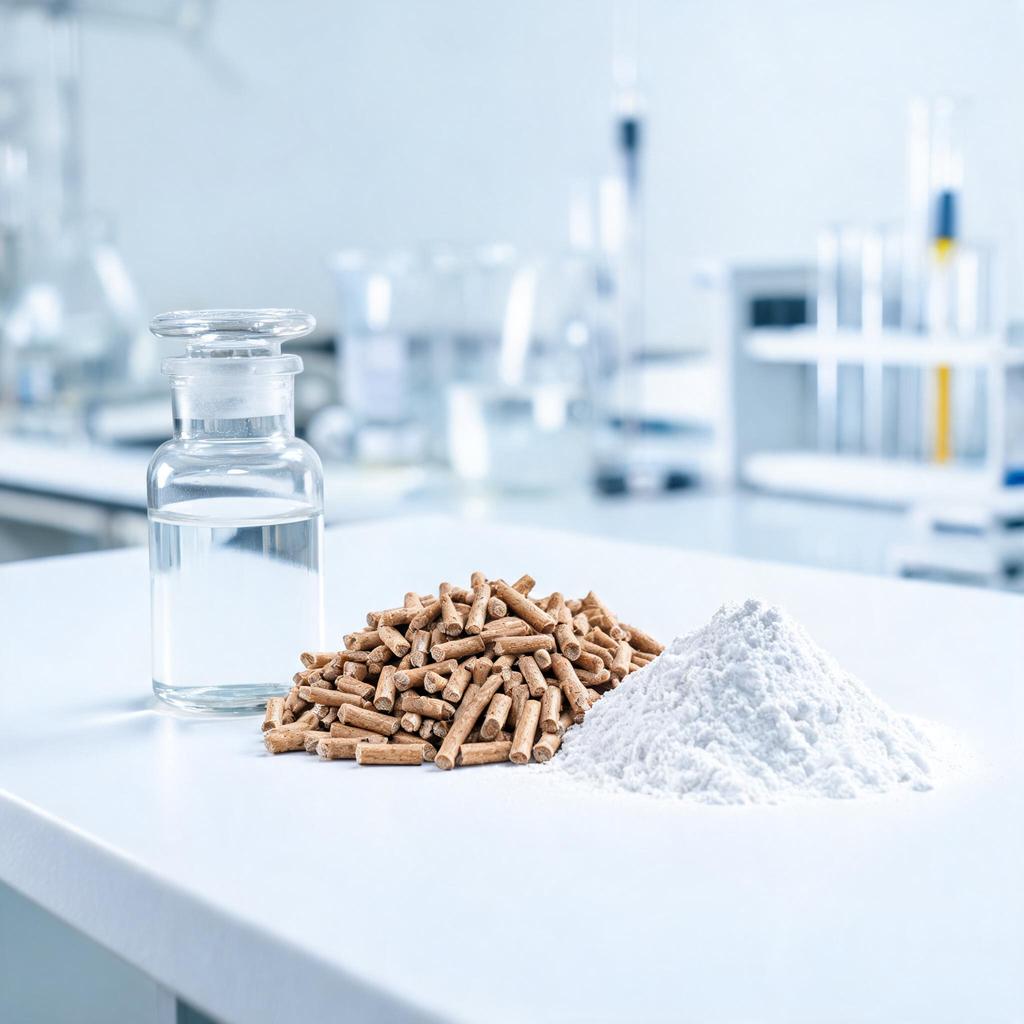
The Volatile Organic Compound (VOC) Crisis in High-Density Living Spaces
In compact urban environments, the microclimate inside a residential unit operates under severe constraints. When an unmanaged feline litter box is situated near HVAC returns or enclosed within small apartments, airborne ammonia concentrations can rapidly exceed World Health Organization (WHO) recommended limits. Unlike traditional clay litters that rely on heavy chemical clumping agents to trap moisture, hardwood pellet cat litter utilizes a fundamentally different physical mechanism: thermal densification. By compressing reclaimed wood fibers at high temperatures, manufacturers eliminate starches and create a dense matrix of inert cellulose and odor-binding lignin. However, while the physical structure is robust, the baseline biochemical capacity to neutralize nitrogenous waste remains a critical bottleneck.
Anatomy of the Wood Pellet Matrix
To understand how bio-based deodorizing agents function within this matrix, one must first analyze the substrate. Hardwood pellets—typically derived from untreated oak or maple—are subjected to kiln-drying and mechanical compression. This process strips away volatile terpenes (which are common in softwoods like pine and cause respiratory irritation) and leaves behind a highly porous yet dense cellular structure. When feline urine contacts these pellets, the moisture is absorbed through capillary action, causing the pellet to swell and disintegrate into sawdust. While this expansion physically absorbs the liquid, it does not chemically neutralize the dissolved urea. Without a targeted active ingredient, the trapped moisture creates a localized anaerobic microenvironment where bacteria convert urea into volatile NH3, resulting in rapid odor rebound after scooping.
Thermodynamic Superiority of LumenAxys™ Zinc Ricinoleate
The industry standard for odor control in natural litters has long been sodium bicarbonate (baking soda). While effective initially, its performance is strictly limited by thermodynamics and stoichiometry. LumenAxys™ Zinc Ricinoleate, a plant-based bio-inorganic compound, bypasses these limitations through advanced coordination chemistry.
Beyond the Bicarbonate Saturation Ceiling
- Sodium Bicarbonate Limitations: Baking soda relies on simple acid-base neutralization. It requires a 1:1 molar ratio with hydrogen ions. Once the available bicarbonate is consumed, the equilibrium shifts, and residual ammonia continues to off-gas. Furthermore, the addition of water (urine) increases the local humidity, which can cause the bicarbonate to lose structural integrity and fail to sequester trace gases effectively over extended periods.
- Zinc Ricinoleate Coordination: LumenAxys™ operates via ligand-to-metal coordination. The central Zinc ion (Zn2+) acts as a potent Lewis acid. The ricinoleic acid chain provides a carboxylate group (-COO-) that forms a stable chelate ring with the Zinc. This complexation leaves the Zinc center with specific orbital availability to accept lone pairs of electrons from the Nitrogen atom in ammonia (NH3).
This Zn-N bond formation is not a temporary adsorption; it is a chemisorption event. Because the reaction is driven by the formation of a stable coordination complex rather than a reversible proton transfer, LumenAxys™ exhibits a significantly higher binding affinity for nitrogen volatiles. In controlled headspace sampling tests using 10-liter gas bags, formulations incorporating LumenAxys™ demonstrated a sustained reduction in ppm-level ammonia emissions over a 72-hour window, outperforming bicarbonate-treated controls by a wide margin as the baseline pH of the sawdust shifted.
Microbial Inhibition and Capillary Resistance
Odor generation in pet environments is not solely a chemical issue; it is a biological one. The primary drivers of fecal and urinary odors are aerobic and anaerobic bacteria that metabolize organic matter. LumenAxys™ introduces a secondary layer of defense through heavy metal ion toxicity targeting bacterial cell walls.
The Mechanism of Microbial Arrest
When released in minute quantities within the acidic microclimate of decomposing organic waste, the Zn2+ ions interact with the sulfhydryl groups (-SH) present in essential bacterial enzymes. This interaction disrupts the metabolic pathways required for bacterial respiration and protein synthesis. By inhibiting the microbial population responsible for converting complex proteins and fats into malodorous short-chain fatty acids and sulfur compounds (such as H2S), LumenAxys™ effectively starves the odor source before it can volatilize.
Furthermore, the hydrophobic nature of the ricinoleate lipid chain alters the surface tension of the wood fiber matrix. This modification reduces the rate of capillary wicking, keeping the outer surface of the decomposed pellet relatively dry. A drier surface drastically slows the migration of moisture-borne pathogens and prevents the "rebound" effect often seen in compostable litters where damp residue breeds new bacterial colonies.
Industrial Application and Formulation Parameters
For B2B manufacturers transitioning from softwood to premium hardwood pellet litters, integrating LumenAxys™ requires precise formulation adjustments to maintain the product's biodegradability profile (ASTM D6400 standards).
Optimal Dispersion Protocols
- Concentration Ratios: Testing indicates that a dispersion rate of 0.5% to 1.5% by weight during the final extrusion phase yields optimal results. Higher concentrations do not linearly improve odor control but may impact the mechanical tensile strength of the compressed pellet.
- Thermal Stability: LumenAxys™ is formulated to withstand the kiln-drying and compression temperatures typical of hardwood pellet manufacturing (up to 180°C). The coordination bond between Zinc and the ricinoleate ligand remains thermodynamically stable, ensuring the active agent is fully integrated into the lignocellulosic matrix without volatilizing.
- Dust Mitigation: To address the "fines" issue common in wood pellet litters, LumenAxys™ can be applied as a micro-encapsulated spray onto the sawdust prior to compression. This binds the fine particles together, reducing airborne dust that triggers feline asthma while simultaneously loading the core of the pellet with the odor-neutralizing agent.
Frequently Asked Questions (FAQ)
Does LumenAxys™ affect the biodegradability of the wood pellets?
No. LumenAxys™ is derived from plant-based sources and utilizes non-toxic, naturally occurring zinc. At the application rates used in commercial pet products, it does not inhibit the microbial activity required for industrial composting. The compound breaks down safely in environmental conditions without leaving persistent toxic residues.
How does this compare to zeolite-based deodorizers?
Zeolites are aluminosilicate minerals that trap ammonia via physical pore size exclusion. While effective, they are inorganic, non-renewable, and heavy. LumenAxys™ offers superior volumetric efficiency because it actively bonds with the gas molecules rather than just trapping them. Additionally, LumenAxys™ adds antimicrobial properties that zeolites lack, addressing both the chemical and biological sources of odor.
Can LumenAxys™ be used in other eco-friendly substrates like paper or corn?
Yes. The coordination chemistry of Zinc Ricinoleate is agnostic to the host material. It can be incorporated into paper pulp, corn starch granules, or even tofu-based extrusions. Its ability to inhibit microbial growth makes it particularly valuable in starch-heavy substrates that are prone to rapid fermentation and rancid off-gassing.